
Athens in 2 Days: A Complete Itinerary for First Timers (2026)
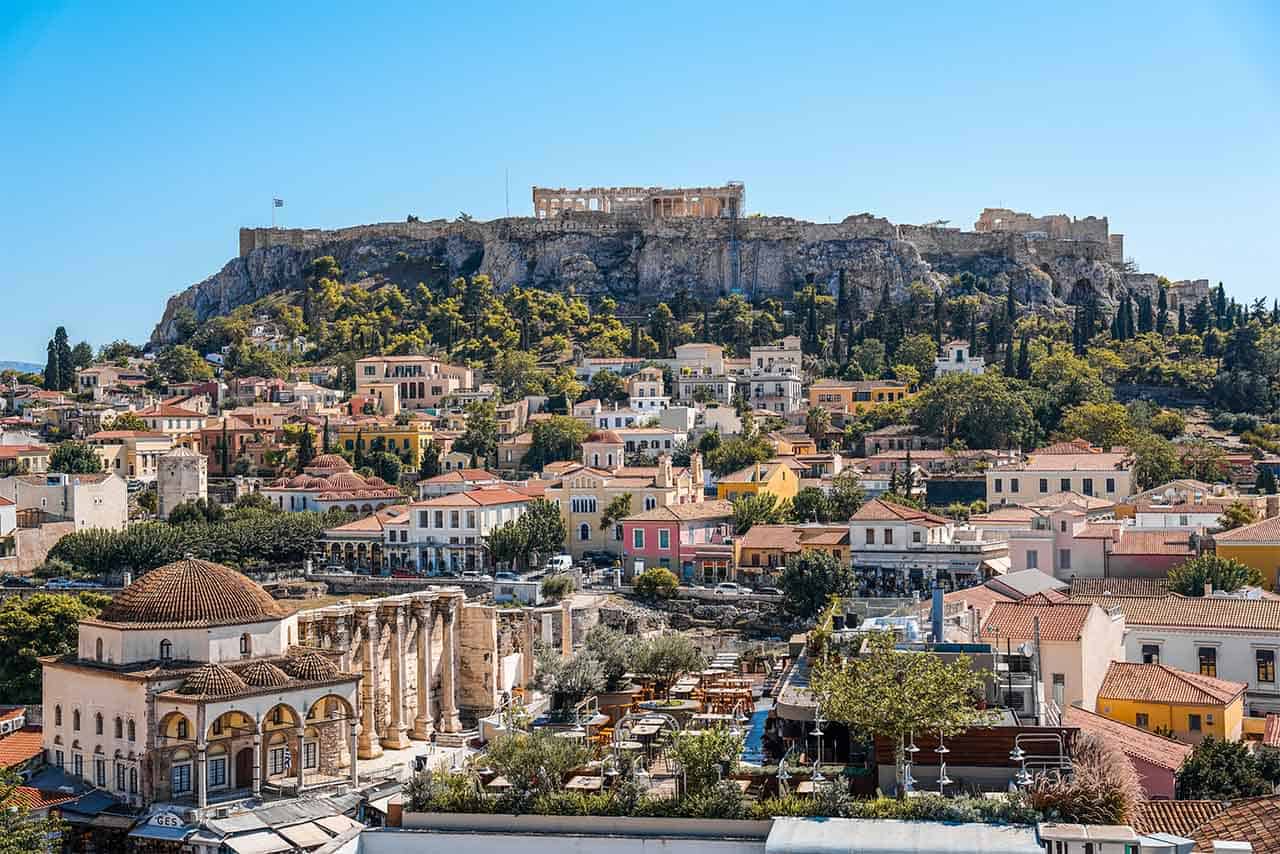
If you’re planning to see Athens in 2 days, you’ll quickly realize that 2 days doesn’t feel like much once you start looking at everything the city has to offer. Between ancient landmarks, lively neighborhoods, rooftop views, and long lists of places everyone says you shouldn’t miss, it can be surprisingly difficult to decide how to spend your time, especially if it’s your first visit.
When I visited Athens for the first time, I wanted an itinerary that included the major highlights without turning the trip into a race from one landmark to the next. That’s exactly what this 2-day Athens itinerary is built around. It focuses on the places that are truly worth your time, while still leaving enough room to enjoy the city along the way.
Athens is a place where history is part of everyday life. One moment you’re walking past ancient ruins, and the next you’re sitting at a café in a neighborhood full of street art and local energy. I absolutely loved that contrast because it gave Athens so much personality and made every part of the city feel a little different.
In this guide, I’m sharing exactly how I’d recommend spending 48 hours in Athens, including the best things to do, must-visit places and the stops that stood out most during my two days in Athens.
Disclosure: This blog post contains affiliate links. I may receive a small commission for purchases or bookings made through these links, at no extra cost to you. I only recommend products and services that I’ve personally used and genuinely like. By using my links, you help support my blog and allow me to continue creating helpful free travel guides like this one, while probably funding my next cappuccino or gelato along the way. For more info, please read the privacy policy.
Athens in 2 Days – Quick Tips
Dive right into my top picks for hotels, tours, places to visit, insider tips, and more, and make the most of your 2 days in Athens. Your journey starts here!
🛏️ Best Places to Stay
- Electra Metropolis – stylish hotel with a rooftop pool and Acropolis view
- Gatsby Athens – design-focused boutique hotel in the city center
- Niche Hotel Athens – modern hotel with Acropolis view
- MiraMe Athens Boutique Hotel – boutique hotel with Acropolis view
🗺️ Travel Planning Tips
- Best Time to Visit | April, May, September, October
- How to Get Around | Airport Transfer, Metro, Bus, Tram, Walking, Rental Car, Taxi
- Top Places to Visit | Acropolis, Ancient Agora, Plaka, National Archaeological Museum
- Insider Tips | Anafiotika, Mount Lycabettus
- Stay Connected | Get your Europe eSIM 📱
🌟 Best Tours & Experiences
- 🏛️ Acropolis Tour Ticket (with optional Acropolis Museum)
- 🌮 Greek Street Food Tour (best Athens food tour!)
- 🥘 Greek Cooking Class (including rooftop dinner with acropolis view)
- ⛵ Athens Riviera Catamaran Cruise (an unforgettable experience!)
- 🍷 Wine Tasting with Acropolis View (perfect for wine lovers)
- 🏛️ Mythology of Delphi Day Trip (experience the center of Ancient Greece)
Keep reading for my complete Athens travel guide!
How to Get to Athens
Getting from Athens International Airport into the city is very easy, thanks to the different transportation options available. Here are the best ways to reach central Athens from the airport:
- Metro: Athens has an efficient metro system, and the airport is well connected to it. Metro Line 3, the blue line, takes you directly into the city center and is one of the most practical options if you’re staying near a metro stop. Trains run frequently, and the journey takes around 40 minutes. We used the metro ourselves and found it very easy. The best stations to get off at are Syntagma or Monastiraki, depending on where your accommodation is located.
- Airport Bus: The Airport Express Bus is another good option, especially if you want a direct connection without changing lines. It stops at several central locations and major hotels, and it can be a practical choice if you’re carrying a lot of luggage. The journey usually takes around 60 minutes, depending on traffic.
- Taxi: Taxis are available right outside the airport and can save time, especially if you’re arriving late or only have one weekend in Athens. They are more expensive than public transportation, so it’s worth checking the official fare in advance and making sure the meter is used. When we took a taxi back to the airport, the metered fare ended up being about 15 euros cheaper than one of the flat prices we were offered.
- Private Transfers: If you prefer an easy arrival, booking a private transfer in advance is the most convenient option. Your driver will meet you at the airport and take you directly to your accommodation, which is especially helpful if you’re carrying luggage, want to save valuable time, or travel with a larger group. I recommend this private airport transfer to/from Athens.
Insider Tip: A pre-booked private transfer often costs only a few euros more than a regular taxi. I only realized that after our trip, but next time I’d definitely choose this option to avoid the crowds on the metro and the fare discussions with taxi drivers.
How to Get Around Athens
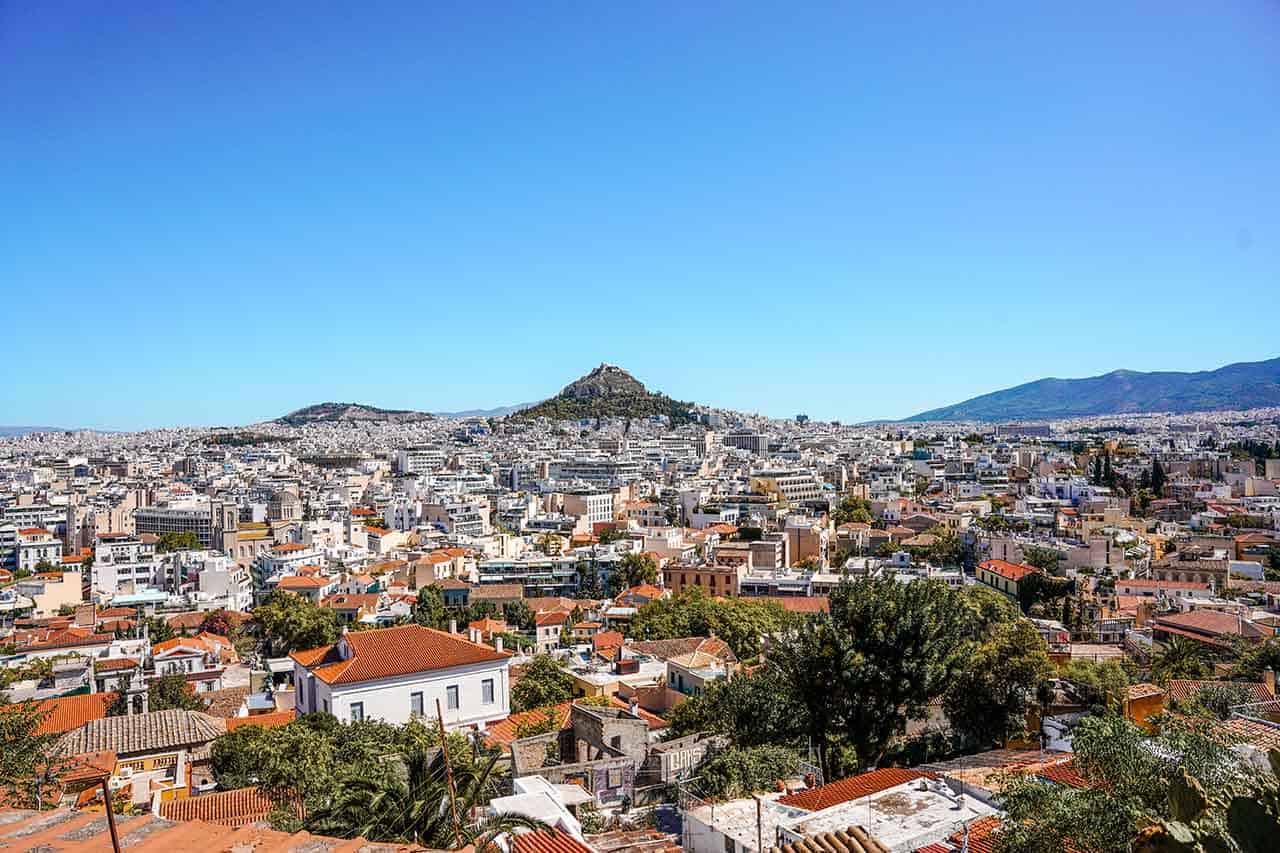
Getting around Athens is fairly easy, and the best option really depends on what you plan to see and how much time you have. If you’re staying in the historic center, I’d recommend walking as much as possible. Areas like Plaka and Monastiraki are best explored on foot, and many of the main sights are close enough to reach without needing transport. Walking also gives you the chance to stumble upon small cafés, local shops, and quieter corners you’d probably miss otherwise.
For longer distances, Athens’ metro system is one of the most practical ways to get around. It’s reliable, easy to use, and connects many of the city’s main attractions, including the Acropolis and Syntagma Square. Stations are clearly marked, which makes it easy to navigate even if it’s your first time in the city.
If you’re heading somewhere that isn’t directly connected by metro, buses and trolleybuses are another option. Athens has an extensive network, with blue city buses and green trolleybuses covering many neighborhoods across the city. Tickets can usually be bought at kiosks or stations.
If you’re planning to visit the coast, the tram is especially useful. It runs along the Athenian Riviera and connects the city with seaside areas such as Glyfada and Voula, which makes it a convenient option if you want to spend some time by the sea.
Taxis are easy to find throughout Athens and can be convenient if you want to save time or avoid changing transport. Just make sure the meter is running before the journey starts.
You’ll also see electric scooters across the city, available through different sharing apps. They can be useful for short distances, although I’d mainly consider them in quieter areas rather than the busiest parts of the center.
If you’re planning day trips or want to explore beyond Athens itself, renting a car can be worth considering. For the city center itself, though, I personally wouldn’t find it necessary.
🚘 MY GO-TO CAR RENTAL COMPANY: DISCOVER CARS
When booking a rental car online, I personally recommend and always use Discover Cars. The platform compares both major international car rental companies and smaller local agencies, which often helps find better deals. Plus, there are no hidden costs and they offer free cancellation if your plans change. I typically opt for full coverage since the rates are very reasonable and it gives extra peace of mind while traveling.
Best Time to Visit Athens
Spring (April to May) is one of the best times to visit Athens. The weather is mild, flowers start appearing across the city, and temperatures usually range between 15°C and 25°C (59°F to 77°F). It’s a very pleasant time for sightseeing, especially if you want to explore Athens’ historical sites and neighborhoods without the intense summer heat. You’ll also usually find fewer crowds and better accommodation prices compared to the high season.
Summer (June to August) is the busiest time of year in Athens. Temperatures often range from 30°C to 38°C (86°F to 100°F), and the city can feel very hot, especially in the middle of the day. It’s a lively time to visit, but popular attractions are much busier, and hotel prices tend to be higher. If you don’t mind the heat and plan your sightseeing early in the morning or later in the evening, summer can still work well.
Autumn (September to November) is another great period for visiting Athens. The weather usually stays warm, with temperatures between 18°C and 30°C (64°F to 86°F), while the summer crowds gradually start to thin out. We visited Athens in September and found it a really good time for sightseeing, with warm temperatures that were still comfortable for walking around the city. October and even early November can also be very pleasant if you prefer slightly quieter conditions.
Where to Stay in Athens
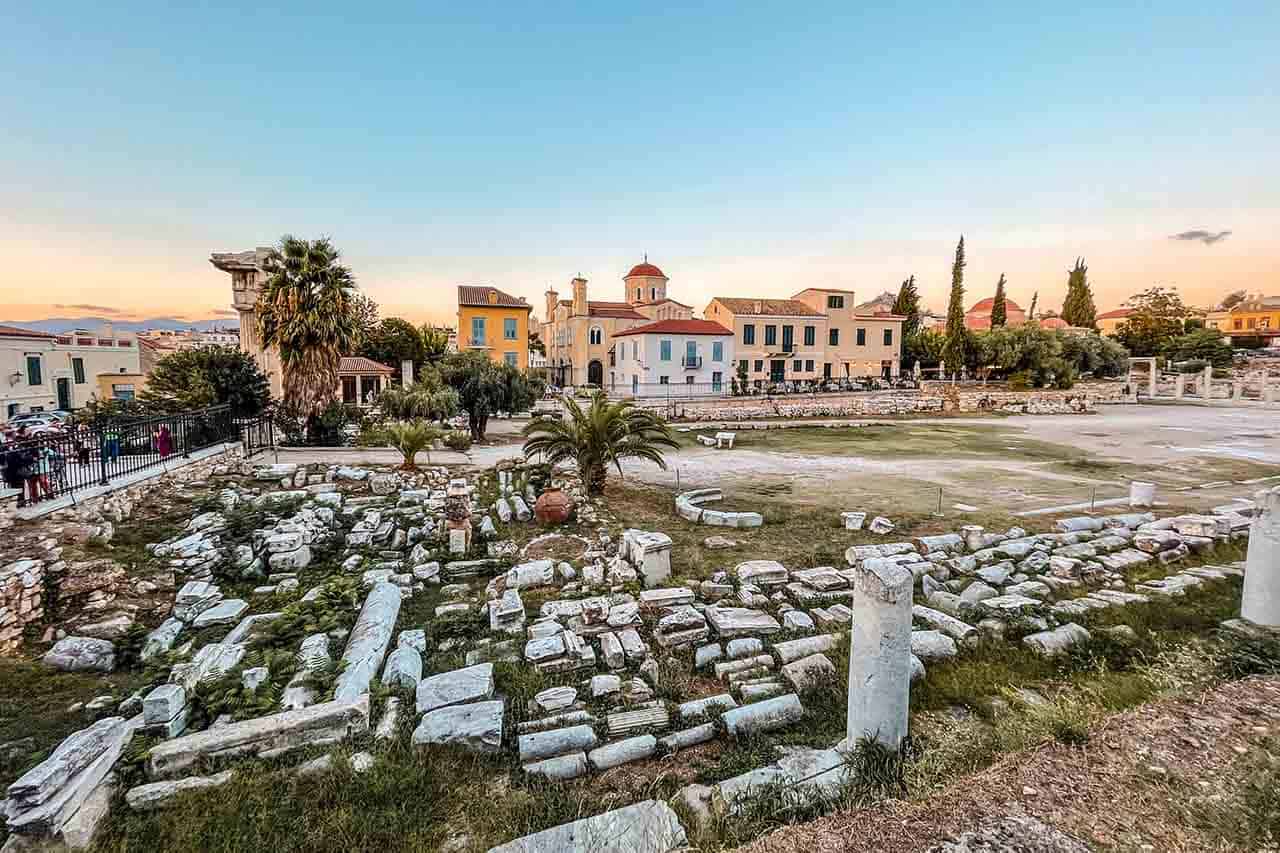
Choosing where to stay in Athens can make a big difference, especially if you only have two days and want to make the most of your time. Some neighborhoods are better for sightseeing, while others are more appealing if you want nightlife, local restaurants, or a quieter atmosphere. The areas I’d recommend looking at first are Plaka, Monastiraki, Syntagma, Koukaki, Psiri, and Kolonaki.
You might also be interested in: Best Hotels in Athens with Acropolis View
Plaka is one of the most charming areas to stay in Athens, located right below the Acropolis. Its narrow streets, neoclassical houses, small shops, and traditional tavernas make it one of the most atmospheric parts of the city. Staying here puts you within walking distance of major sights like the Acropolis, Ancient Agora, and Monastiraki, which makes it especially convenient for a first visit.
Monastiraki is one of the liveliest parts of Athens, known for its flea market, rooftop bars, and constant energy throughout the day. It’s a very practical base if you want to stay central, with plenty of restaurants and easy metro access, including a direct connection to the airport. It also works well if you want everything within walking distance.
Syntagma Square is Athens’ commercial center and a good choice if convenience matters most. This central area is well connected by metro, and close to key sights such as the Greek Parliament, the National Garden, and Plaka. You’ll also find many larger hotels as well as luxury hotels here, which can be useful if you prefer full-service accommodation.
Koukaki has gained popularity as one of Athens’ trendiest neighborhoods. It’s close to the Acropolis but generally feels a little calmer than the busier central areas and has a slightly more local atmosphere. You’ll find plenty of cafés, traditional tavernas, hipster bars, and smaller boutique-style accommodation here. The Acropolis Museum and the Herodion Theater are also nearby.
Psiri is Athens’ bohemian quarter, known for its street art, nightlife, and more alternative feel. The area has plenty of bars, restaurants, and music venues, which makes it lively well into the evening. If you enjoy that atmosphere, it can be a fun place to stay, although personally it wasn’t my favorite area to walk through late at night.
Kolonaki is one of the more upscale neighborhoods in Athens. It is located below the slopes of Lycabettus Hill and often referred to as the “Beverly Hills of Athens.” The area is known for chic designer boutiques, upscale cafes, fine dining establishments, and a more polished atmosphere. If you’re looking for a quieter stay with a slightly more luxurious feel, this neighborhood is for you.
To make planning easier, I’ve rounded up 8 of the best hotels for exploring Athens in 2 days, including a few that are already on my list for our next stay:
- Hotel Grande Bretagne ($$$) – iconic luxury hotel with a rooftop pool and Acropolis view
- Athens Capital Center Hotel ($$$) – modern luxury hotel with a rooftop pool and Acropolis view
- The Dolli at Acropolis ($$$) – luxury stay with a rooftop pool and stunning Acropolis views
- Electra Metropolis ($$) – stylish hotel with a rooftop pool and Acropolis views
- A77 Suites by Andronis ($$) – elegant boutique stay with Acropolis view
- Gatsby Athens ($$) – design-focused boutique hotel in the city center
- Niche Hotel Athens ($$) – modern hotel with Acropolis view
- MiraMe Athens Boutique Hotel ($$) – boutique hotel with Acropolis view

Athens in 2 Days Itinerary Overview
Below you can find a breakdown of what to do in Athens in 48 hours.
Day 1 in Athens:
- Explore the charming neighborhood of Plaka
- Get lost in Anafiotika
- Stroll through the National Garden
- Admire the Zappeio
- Check out Hadrian’s Arch and the Temple of Olympian Zeus
- Stop by the Panathenaic Stadium
- Watch the change of the guards at the Hellenic Parliament
- Visit the National Archaeological Museum
- Alternative: Acropolis Museum
Day 2 in Athens:
- Discover the marvels of the Acropolis and its Slopes
- Step inside the Ancient Agora
- Walk around Kerameikos
- Wander through Psiri
- Visit Monastiraki Square
- Have lunch at a rooftop bar with Acropolis view
- Stop by Hadrian’s Library and the Roman Agora
- Optional: Check out the Monastiraki Flea Market or the Central Market
- Go shopping at Ermou Street
- Visit Syntagma Square
- Watch the sunset over Athens from Mount Lycabettus
- Alternatives: Areopagus Hill or Filopappou Park
If you have only one day in Athens:
If you have only one day in Athens, focus on the city’s absolute highlights. You can start your day by visiting the Acropolis, its slopes and temples, and the Ancient Agora. After that, wander around the picturesque neighborhoods of Plaka and Anafiotika and explore the highlights between Syntagma Square and Monastiraki Square. To finish your day, watch the sunset from one of the various rooftop bars.
If you have 3 days in Athens:
If you have three days in Athens, you can either explore Athens in a more relaxed way or add a day trip or a fun tour to your Athens itinerary on Day 3.
Make sure to check out these top-rated day trips and experiences in and around Athens:
- ⛵ Athens Riviera Catamaran Cruise
- 🌮 Authentic Greek Street Food Tour
- 🥘 Greek Cooking Class including rooftop dinner with acropolis view
- 🥗 Food Market Visit and Cooking Class with Wine
- 🍷 Wine Tasting with Acropolis View
- 🚲 Athens Old Town E-Bike Tour
- 🏛️ Delphi Guided Day Trip
- ✨ Mycenae and Epidaurus Full-Day Tour
Insider tip: If you have more time, I’d highly recommend combining Athens with an island-hopping trip through the Cyclades. Several islands are easy to reach by ferry from Athens. Among our personal favorites are Syros, Naxos, Paros, and Santorini. If you want to combine all four, a route that works especially well is 2 days in Syros, followed by 4 days in Naxos, 4 days in Paros, and 4 days in Santorini. Trust me, it’s a journey you will never forget!
In the following, you can find our complete 2-day Athens itinerary, including the top places to visit and what to do in Athens in 2 days.

Complete 2 Days in Athens Itinerary

Day 1 in Athens:
Your first day of your 2 days in Athens starts in two of the city’s most beautiful neighborhoods, followed by a walk past the National Garden and several historic landmarks. It’s a relaxed way to begin exploring the city while already seeing some of its most iconic places.
Explore the charming neighborhood of Plaka
Plaka, often called the “Neighborhood of the Gods”, is one of the most picturesque parts of Athens and easily one of my favorite areas in the city. Located right below the Acropolis, it’s full of narrow streets, neoclassical houses, small churches, and balconies covered in bougainvillea.
I’d recommend starting your morning here and simply walking without too much of a plan. Some of the nicest corners in Plaka are the ones you come across by accident, especially in the quieter side streets away from the busiest areas.
Along the way, you’ll find small boutiques, local shops, and plenty of places selling artisan crafts, jewelry, and other souvenirs. Even if you’re not planning to buy anything, it’s a very enjoyable area to browse.
Plaka is also a great place to stop for breakfast or coffee. A bowl of Greek yogurt with honey and nuts is always a good choice, and if you crave some more snacks later in the morning, it’s worth trying a piece of baklava or freshly baked spanakopita from one of the local bakeries. Many traditional tavernas and cafés are concentrated around Adrianou Street, which is one of the liveliest streets in the area.
If you enjoy art, you’ll also come across small galleries and boutiques throughout the neighborhood. We especially loved wandering through Plaka without a fixed route and catching glimpses of the Acropolis appearing between the buildings every now and then.

Get lost in Anafiotika
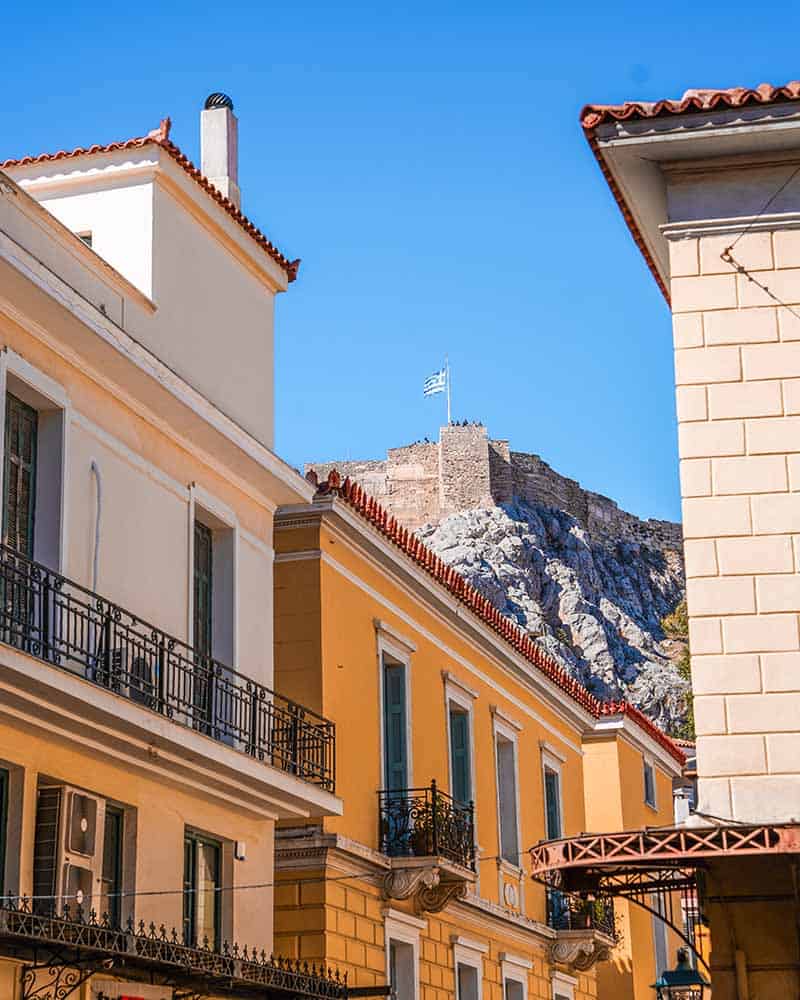
Just above Plaka, you’ll find the hidden gem of Anafiotika, a neighborhood within a neighborhood. This small hillside enclave feels completely different from the rest of the city and almost looks like a little piece of the Greek islands tucked beneath the Acropolis. For me, it was easily one of the most photogenic places in Athens.
After exploring Plaka, it only takes a few minutes to reach Anafiotika, but the atmosphere changes immediately. Narrow, winding pathways, whitewashed houses, and colorful flowers spilling over small balconies make this area feel surprisingly quiet and almost village-like. I truly fell in love with the unique charm of this place!
The architecture is very different from the rest of Athens and has a distinctly Cycladic feel, which is why many people compare it to islands like Santorini or Mykonos. It’s the kind of place where I’d recommend slowing down and simply wandering without any particular route, because that’s when you notice the small details that make it so special.
Anafiotika is still a residential area, so you’ll also see everyday local life here. Residents often gather outside their homes to chat, adding to the authentic atmosphere. However, please respect their privacy and lower your voice, especially in the quieter passages close to people’s homes.
If you continue uphill, you’ll reach a few spots with stunning panoramic views across Athens. From here, you can look out over the city toward the Acropolis and Mount Lycabettus, which makes this one of the nicest short detours in the area.



You might also be interested in: 4 Days in Santorini, Greece
— My Travel Photography Gear —
Camera: Sony A7R III
Allrounder Zoom Lens: Sigma 24-70mm F/2.8
Favorite Lens: Sony FE 35mm F/1.8
Telephoto Zoom Lens: Sigma 100-400mm F/5-6.3
Drone: DJI Mini 3 Pro
GoPro: GoPro Hero11 Black
Phone: iPhone 16 Pro Max
Camera Tripod: Rollei Compact Traveler No. 1 Carbon
Phone Tripod: Lammcou Tripod
As an Amazon Associate I earn from qualifying purchases.
Check out my Presets (photo filters) to edit like me!
To read more about my photography gear, click HERE.
Stroll through the National Garden
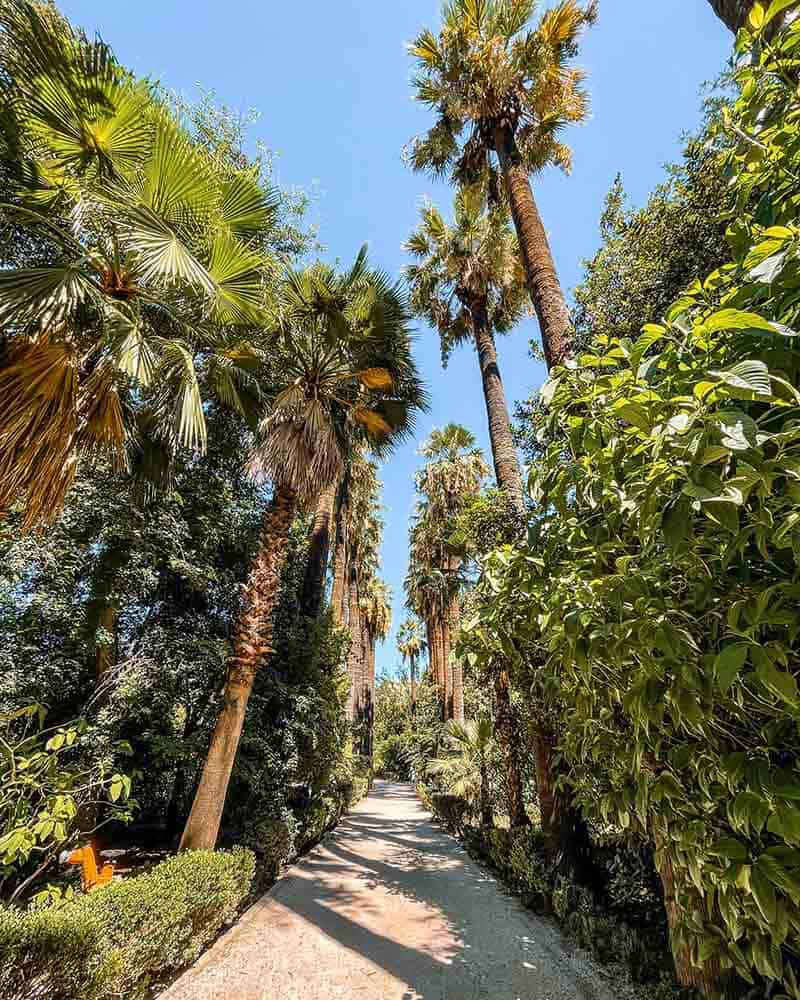
After exploring the lovely neighborhoods of Plaka and Anafiotika, the National Garden is a very pleasant place to slow down for a while before continuing your day. Also known as the former Royal Garden, it once belonged to the Royal Palace but is now a public park right in the center of Athens. It’s one of the best free things to do in Athens, especially if you want a short break from the busy streets nearby.
Inside, you’ll find shaded paths, tall palm trees, pine trees, a diverse range of plant species, and small ponds that make the whole area feel noticeably calmer than the surrounding city. I also didn’t expect to see turtles in the pond and peacocks wandering through the garden, which made this stop feel a little different from an ordinary city park.
There are also a few small historical sights within the garden, including remains of an ancient temple dedicated to the goddess Diana. Even if you only spend 30 to 60 minutes here, it’s a very nice pause during your 2 days in Athens, especially before continuing to the next landmarks nearby.

Admire the Zappeio
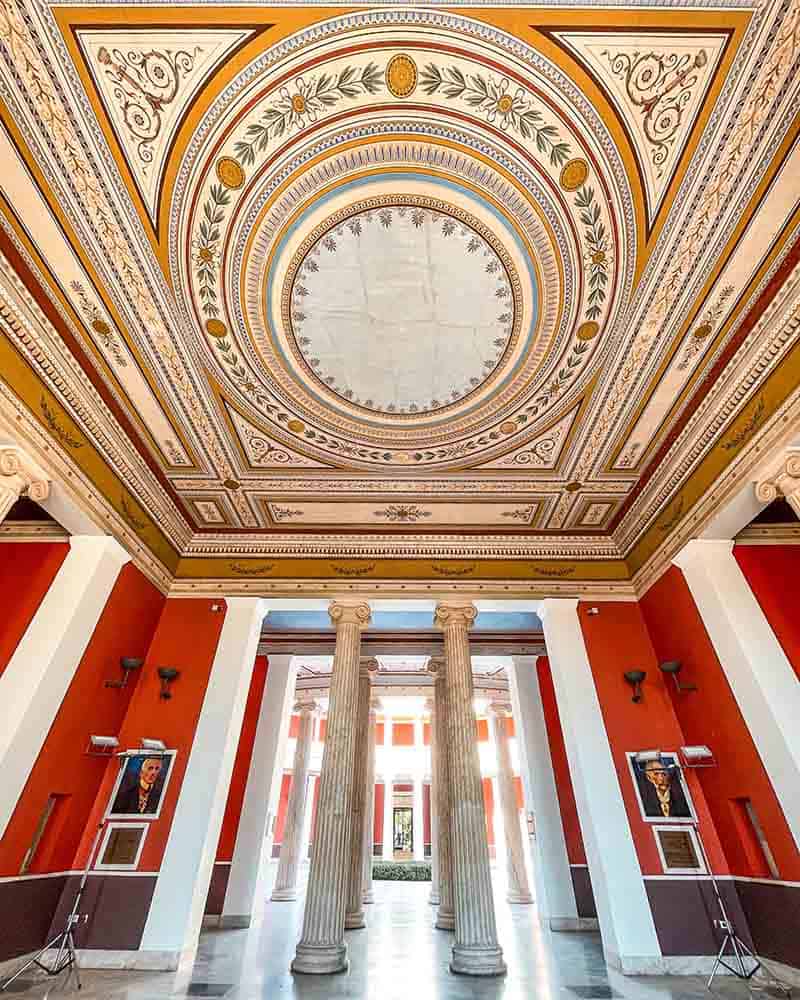
Inside the National Garden, you’ll also come across the elegant Zappeion Hall, one of Athens’ well-known neoclassical buildings. It has hosted many important events over the years, and its architecture immediately stands out when you walk past it. Since it’s located right next to the garden, it’s an easy stop to include in your Athens itinerary.

Check out Hadrian’s Arch and the Temple of Olympian Zeus
Near the National Garden, you’ll find Hadrian’s Arch, built in honor of the Roman emperor Hadrian. This marble gateway once marked the entrance between ancient Athens and the Roman part of the city. Just a short walk from there stands the Temple of Olympian Zeus, which was once the largest temple in ancient Greece. Even though only part of it remains today, the towering columns still make a strong impression and give you an idea of how monumental it must have looked in the past. If you enjoy history, both are well worth stopping for while exploring this part of Athens.

Stop by the Panathenaic Stadium
The Panathenaic Stadium, also known as Kallimarmaro, is one of the most remarkable historic sites in Athens and well worth a short stop on your route. It’s the only stadium in the world built entirely from white marble and was the venue for the first modern Olympic Games in 1896.
Even if you don’t go inside, the stadium is impressive to see from the outside because of its scale and distinctive horseshoe shape. If you do enter, you can walk along the track and get a much better sense of how significant this place must have felt during its long history.

Watch the change of the guards at the Hellenic Parliament
After visiting the National Garden and the nearby landmarks, make your way to the Hellenic Parliament building at Syntagma Square to watch the changing of the guards, which is a quintessential Athenian experience.
In front of the parliament building, the Evzones stand guard at the Tomb of the Unknown Soldier. Every hour, the guards change in a carefully choreographed ceremony, wearing their traditional uniforms with pom-pom shoes and pleated skirts.
If you happen to be in Athens on a Sunday, the ceremony at 11 AM is the main one and noticeably more elaborate, with additional guards and a marching band. It attracts more crowds, but it’s also the most impressive version to see. Even if you only stop for a few minutes, it’s one of those memorable moments that fits easily into every Athens itinerary.

Visit the National Archaeological Museum
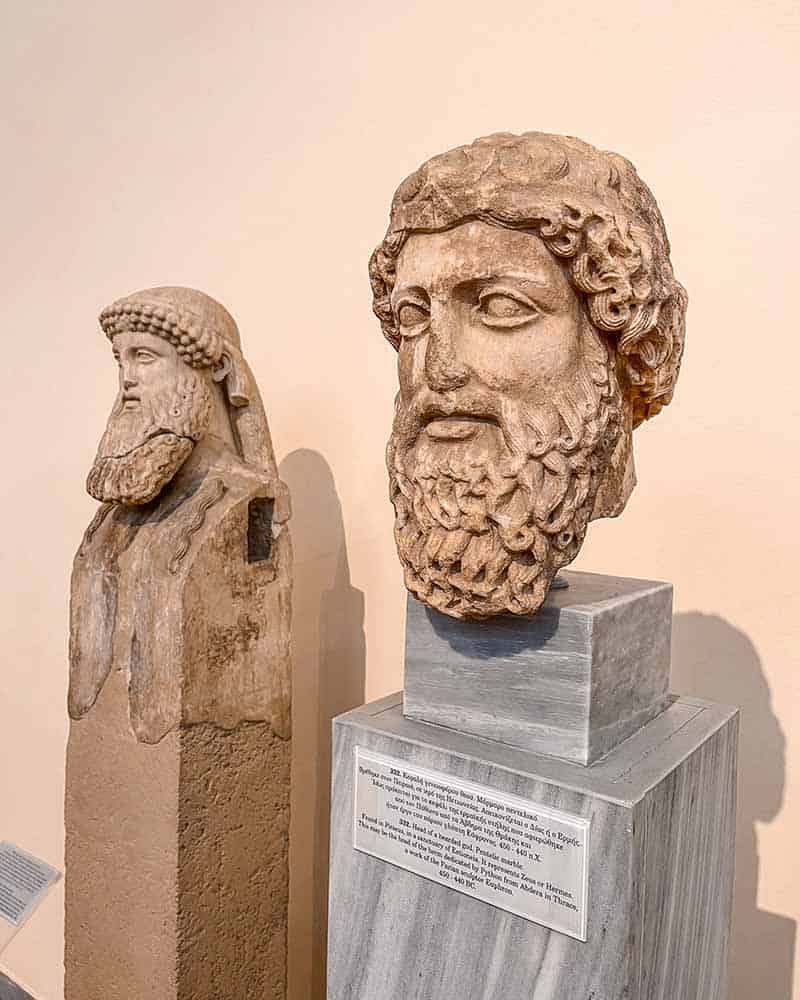
A journey through Athens would be incomplete without a visit to the National Archaeological Museum. The museum houses one of the most important collections in Greece, with artifacts covering different periods of the country’s history.
Inside, you’ll find everything from sculptures and pottery to gold objects and archaeological finds from places such as Mycenae, the Cyclades, and the Minoan civilization. Even if you’re not someone who usually spends hours in museums, there’s enough variety here to keep it interesting.

We spent around two hours here, which felt like a good amount of time, but if you enjoy history, you could easily stay much longer. I’d definitely recommend including it in your 2-day Athens itinerary, especially if you want to add a deeper historical perspective beyond the outdoor landmarks.
The museum is open daily, although opening hours vary depending on the season.

Alternative: Acropolis Museum
If you prefer, you can visit the Acropolis Museum instead. It focuses entirely on the history of the Acropolis and displays many of the most important finds discovered there, including the famous Parthenon sculptures.
One of the things that makes this museum stand out is the modern design. Parts of the floor are made of glass, so you can look down onto the archaeological excavations beneath the building.
If you’re planning to visit, I’d avoid wearing a skirt or dress, since some of the glass sections are transparent enough that people on lower levels can see through them. Otherwise, you might unexpectedly become one of the museum exhibits yourself.
The Acropolis museum is open daily, but the opening times vary depending on the day and the season.
Tip: If you’d like, you can also add the Acropolis Museum on Day 2 after your Acropolis visit and book a combo ticket here that includes both the museum and the Acropolis.
Day 2 in Athens:
Day 2 of your Athens itinerary starts with the Acropolis and the Ancient Agora, two places that are hard to skip on a first visit, before continuing through neighborhoods like Psiri, Monastiraki, and Syntagma. It’s a full day, but it still leaves room for a relaxed lunch, some shopping, and sunset views over Athens.
Visit the Acropolis and explore its slopes
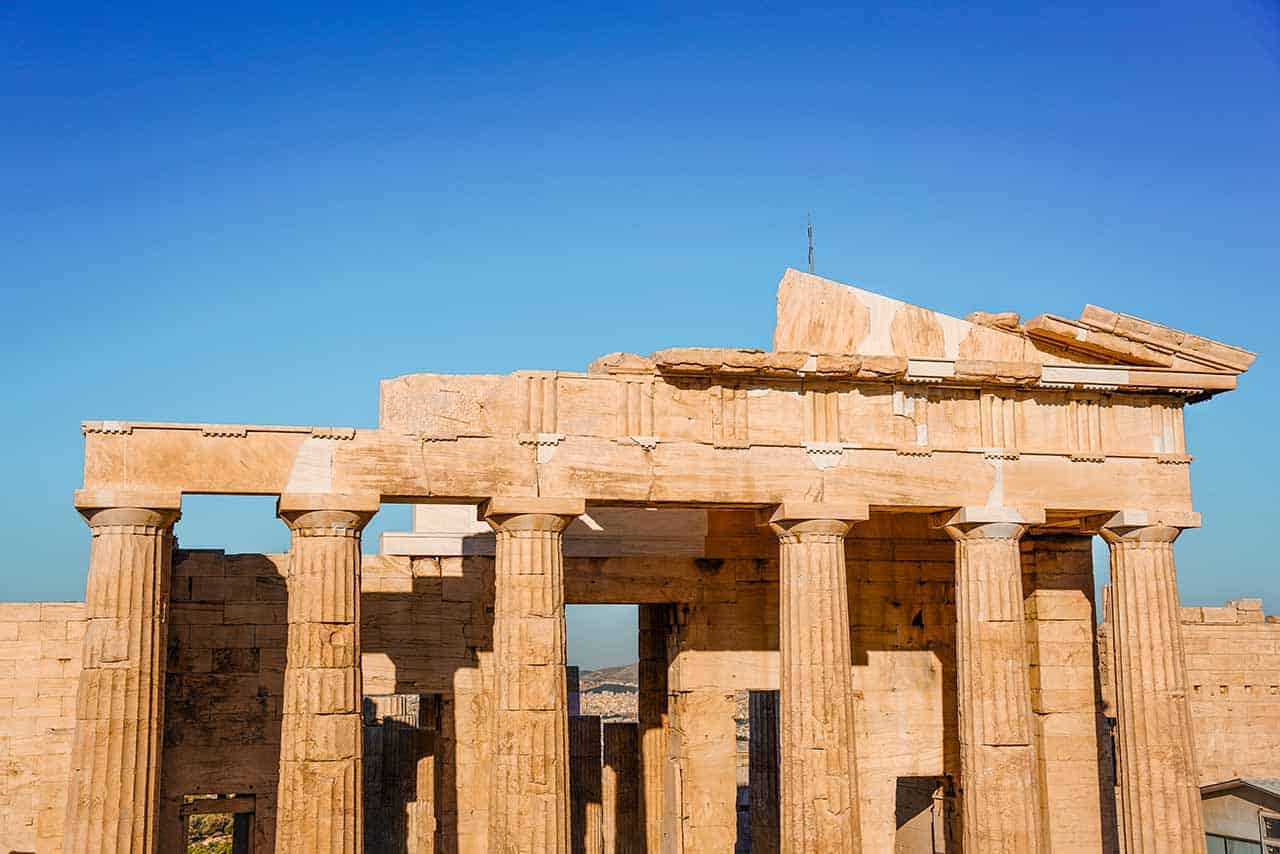
No trip to Athens would be complete without ascending the Acropolis. I highly recommend starting your day early and visiting Athens’ main tourist sight first thing in the morning, before the larger crowds arrive and temperatures begin to rise.
Standing above the city, this UNESCO World Heritage site gives you a much better sense of Athens’ long history, but also some of the best views across the city.
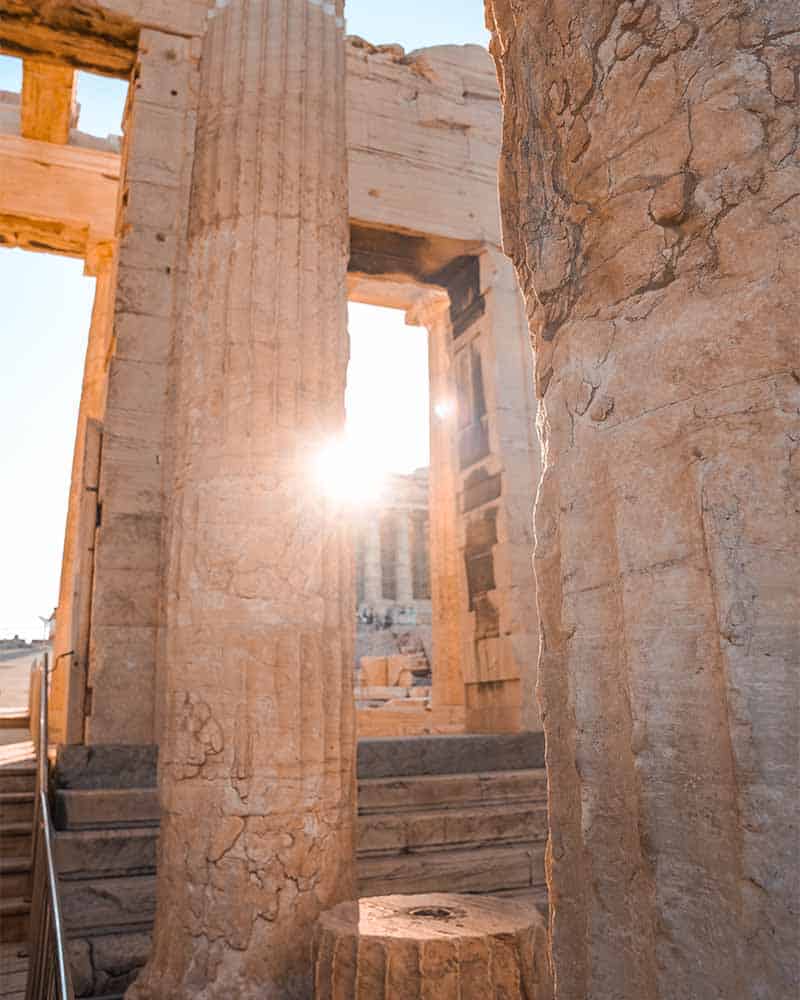
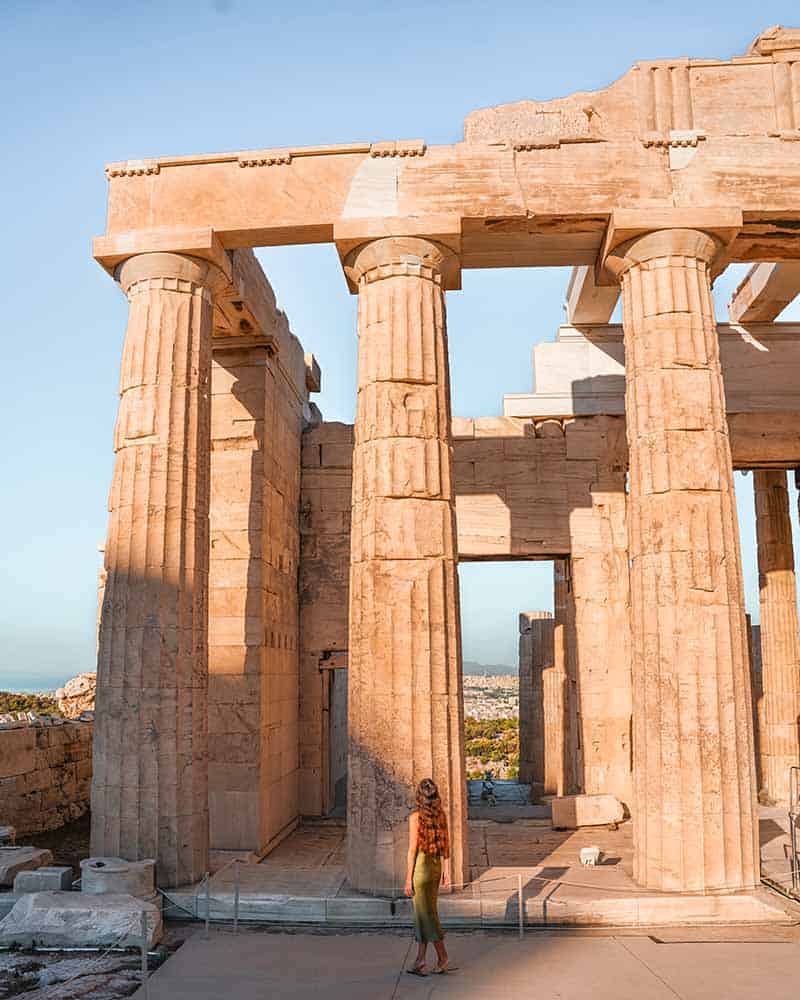
At the top of the Acropolis, you’ll come across four main structures that are still standing today: the Propylaea, the Parthenon, the Temple of Athena Nike, and the Erechtheion.
The Propylaea is the monumental entrance to the Acropolis and the first structure you pass as you walk up. Its scale immediately sets the tone for what follows.
The Parthenon is the main landmark here and the part most people picture when thinking of Athens. Even with the ongoing restoration work, it’s still incredibly impressive to see in person. If you enjoy ancient history like I do, this is easily one of the highlights of Athens.
The Temple of Athena Nike, dedicated to the goddess of victory, is smaller but worth stopping by, especially because of its elegant proportions and position near the edge of the Acropolis.
The Erechtheion is best known for its famous Caryatids, the sculpted female figures that replace traditional columns. It’s one of the most distinctive buildings on the Acropolis and looks quite different from the others.
💡 Fun fact: Right outside the Erechtheion, you’ll see an olive tree that refers to one of Athens’ most famous myths. According to legend, both Athena and Poseidon wanted to become the city’s protector, so Zeus asked them to offer a gift to the people of Athens. Poseidon struck the ground with his trident and created a saltwater spring. Athena responded by planting an olive tree. The Athenians considered Athena’s gift far more useful because the olive tree provided food, oil, and wood. She was declared the winner, and the city was named after her.
While walking up to the Acropolis, it’s worth paying attention to the surrounding slopes as well, because several important ancient sites are located here too.
Odeon of Herodes Atticus: This remarkably well-preserved ancient theater is still used today for concerts and performances, which makes it one of the most striking places around the Acropolis. Seeing a venue that is still active after so many centuries is quite special.
Theatre of Dionysus: Further down, you’ll reach the Theater of Dionysus, often considered the birthplace of Greek drama. This is where plays by Aeschylus, Sophocles, and Euripides were once performed.
For us, the Acropolis was easily one of the highlights of Athens. We loved taking our time here because it’s one of those places where history, architecture, and mythology all come together in a way that feels hard to fully grasp until you see it in person. It really felt like we were traveling back in time.

My top tips for visiting the Acropolis
- Buy your tickets online and as early as possible, ideally at least two months in advance, especially if you want to secure an early morning entry slot.
- If you’re like me and enjoy understanding the history behind what you’re seeing, I’d recommend going for a guided Acropolis tour.
- The best times to visit the Acropolis is right after opening or shortly before closing time to avoid the massive crowds that flock there during the day. We booked the 8 AM slot, which I’d definitely recommend.
- If you’re visiting at opening time, arrive 30 to 60 minutes early. Even at 8 AM, there was already a long queue when we got there.
- If you’re exploring without a guided tour, start with the Acropolis itself and visit the slopes afterward. Most people focus only on the main site, so this helps you use your time more efficiently.
- Wear shoes with good grip, because some of the marble surfaces can be surprisingly slippery. The same actually applies to parts of central Athens too. I honestly don’t remember another city where the sidewalks felt this slippery.
Step inside the Ancient Agora

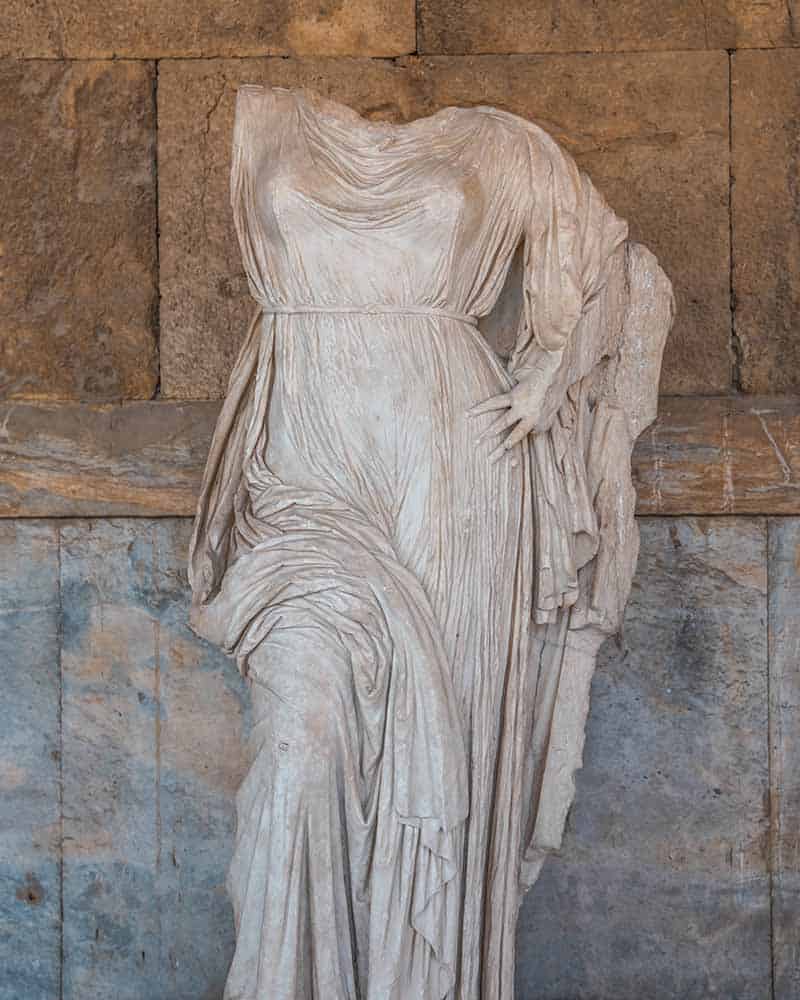
After visiting the Acropolis of Athens, continue to the Ancient Agora of Athens, one of the places that helps you understand what daily life in ancient Athens once looked like. This area was the center of political, social, and commercial life in the city.
As you walk through the site, you’ll pass several important remains, including the remarkably well-preserved Temple of Hephaestus, the Stoa of Attalos, and the Horologion of Andronikos. What I liked most here was how much there is still to see compared with many other archaeological sites.
We especially loved the long columned hall inside the Stoa of Attalos, the views back toward the Acropolis, and how well preserved the Temple of Hephaestus still is. For me, the Ancient Agora is one of those places that adds a lot of context after visiting the Acropolis, because it gives you a clearer sense of how the city once functioned beyond its temples.
💡 Tip: If you’d like to visit both the Ancient Agora and the Acropolis with a guide, this Acropolis, Parthenon, and Ancient Agora combo tour is a very good option.

This article may also pique your interest: 4 Days in Paros, Greece
Walk around Kerameikos
A short walk from the Ancient Agora brings you to the archaeological site of Kerameikos. This ancient cemetery offers a unique insight into the funerary customs and beliefs of ancient Athens. It’s much quieter than some of the better-known sites and gives you a different perspective on ancient Athens.
Kerameikos was once the city’s main cemetery, and you can still see well-preserved tombstones, intricate sculptures, and parts of the old city walls, including the Dipylon Gate, which marked one of the main entrances to ancient Athens.
What I liked here was how different the atmosphere felt compared with the Acropolis and Agora. It’s less crowded, more open, and worth including if you want to see another side of the city’s history.

Wander through Psiri
Next, continue to Psiri, one of the liveliest neighborhoods in Athens. This area is known for its street art, music venues, small bars, and casual restaurants, and it feels noticeably different from the more historic parts of the city.
As you walk through the neighborhood, you’ll notice how old churches, graffiti-covered walls, and traditional tavernas all sit side by side. That mix gives Psiri a very distinct character.
We found it especially interesting during the day, when you can explore the streets at a slower pace before the area gets busier later in the evening, with music filling the air and locals and tourists mingling in the bustling squares.
Visit Monastiraki Square
From Psiri, it’s only a short walk to Monastiraki Square, one of the busiest and most recognizable parts of Athens. This area always feels full of movement, with street performers, shops, cafés, and constant views toward the Acropolis.
Right on the square, you’ll also notice the Tzistarakis Mosque, an Ottoman-era building that stands out immediately. Around the square, small streets lead into one of the best areas in Athens for browsing shops, whether you’re looking for souvenirs, handmade items, vintage pieces, or something quick to eat.

Have lunch at a rooftop bar with Acropolis view
By this point, it’s a good moment to slow down a little and take a break for lunch. Around Monastiraki Square, you’ll find several rooftop bars with direct views of the Acropolis, which makes lunch here feel like more than just a quick stop.
We chose Attic Urban Rooftop for drinks and a few snacks, mainly because of the view, and it ended up being one of my favorite breaks of the day. Sitting there with the Acropolis right in front of us made it one of those moments that really stayed with me from our time in Athens.
I’d definitely recommend including at least one rooftop stop during your 2 days in Athens. If you want to go around sunset, it’s best to reserve in advance because the most popular places fill up quickly.
If you are a wine lover like me, another lovely experience worth considering is a wine tasting with Acropolis view.
Here are some of the best rooftop bars in Athens with Acropolis views:


Stop by Hadrian’s Library and the Roman Agora
From Monastiraki, it only takes a few minutes to reach Hadrian’s Library and the Roman Agora. Hadrian’s Library was once an important center of learning and originally held reading rooms, lecture halls, and large collections of scrolls. Today, parts of the columns and walls are still standing, which gives you a good sense of its original scale.
Just next to it, the Roman Agora was once one of Athens’ main public spaces during the Roman period, used for trade and daily activity. These two stops don’t take long to visit, but they add another layer to the city’s history, especially after seeing so many sites connected to ancient Greece earlier in the day.


Check out the Monastiraki flea market or the Central Market
If you have time, Monastiraki Flea Market is worth a quick look, especially if you enjoy browsing small shops and market streets. The area is full of stalls selling antiques, souvenirs, vintage pieces, and all kinds of unexpected finds. Even if you’re not planning to buy anything, it’s an enjoyable area to walk through because there’s always something happening around you. The market is open daily from 10 AM to 10 PM.
If you prefer food markets, the Central Market offers a completely different atmosphere. It’s one of the most local-feeling places in central Athens, with stalls selling fresh produce, aromatic spices, meat, fish, and regional products. It’s busy, a little chaotic, and a very interesting stop if you want to see another side of the city. The market is open daily from 7 AM to 6 PM.
Optional: Go shopping on Ermou Street
Ermou Street is the main shopping street connecting Monastiraki Square and Syntagma Square, so it fits very naturally into your route. You’ll find a mix of international brands, local shops, and plenty of places selling accessories, cosmetics, and souvenirs.
Even if shopping isn’t a priority, you’ll likely walk along Ermou Street anyway since it’s the direct route to Syntagma Square. Coming from Monastiraki, simply follow the street straight ahead until you reach Syntagma Square.
Visit Syntagma Square
Syntagma Square, Athens’ civic and political epicenter, is one of the most central points in the city and an easy place to pass through during your second day in the Athens. It’s best known for the Hellenic Parliament, where you may already have watched the Changing of the Guards on your first day.
Around the square, you’ll find historic hotels, several larger shops, and open-air cafes that offer prime people-watching spots. The square is a meeting point for locals and visitors alike, so it’s usually busy throughout the day. Even if you don’t stay long here, it’s a useful stop because many parts of central Athens connect through Syntagma, including one of the city’s main metro stations.

Watch the sunset over Athens from Mount Lycabettus
To end your second day in Athens, head up to Mount Lycabettus, the highest point in the city and one of the best places for sunset views. From the top, you get a wide, panoramic view over Athens, with the Acropolis clearly visible and the city slowly lighting up as the sun goes down.
You can either walk up or take the Lycabettus Funicular, which is the easier option if you want to save some energy. The funicular costs 10 euros one way or 13 euros return. Whichever you choose, the reward is the same – a breathtaking sunset that casts a warm, golden glow over the Acropolis, the entire city, and the Aegean Sea beyond.
Insider Tip: We walked up ourselves but chose to watch the sunset from one of the lower viewpoints instead of the very top to avoid the crowds. This way we could enjoy this magical view without anyone else around.
Watching the sunset from Mount Lycabettus turned out to be one of my favorite moments in Athens and was the perfect way to end our two days in Athens.

Alternatives: Areopagus Hill or Filopappou Park
If you’d prefer a different sunset viewpoint in Athens, Areopagus Hill and Filopappou Park are both very good alternatives.
Areopagus Hill, also known as Mars Hill, is located right next to the Acropolis and gives you one of the closest views of it. It’s a simple stop if you don’t want to go far, especially since you’ll likely pass nearby during the day anyway.
Filopappou Park (also Philopappos Park), just southwest of the Acropolis, feels quieter and more spacious. The walking paths here are pleasant, and from several points you get beautiful views over both the Acropolis and the city.
Both are excellent if you want a sunset view without going all the way up to Mount Lycabettus.
I hope this 2-day Athens itinerary helps you plan the perfect Athens trip. Even in just two days, Athens offers so much, from ancient landmarks and lively neighborhoods to rooftop views and places that feel completely different from one street to the next.
If you have more time in Greece, I’d really recommend combining Athens with a trip to the Cyclades. During our travels, we’ve visited many different Greek islands like Santorini, Paros, Syros, Tinos, Ios, Milos, Folegandros, and Mykonos, and adding at least one island after Athens makes the trip feel even more special.

FAQ – Athens in 2 Days
For us, two days in Athens were a wonderful introduction to the city’s highlights, including the Acropolis, various ancient sites, and many different neighborhoods. While you won’t explore every nook and cranny, it’s a great starting point for capturing Athens’ essence.
A half-day is quite limited, but it can be worthwhile if you’re on a layover. You could visit a specific site like the Acropolis or enjoy a quick city walk to soak in the atmosphere. Still, Athens truly comes to life with more time.
Ideally, 3 to 4 days are perfect for a more comprehensive exploration of Athens. This allows you to delve deeper into the city’s culture, history, and hidden gems. Moreover, you will be able to do some day trips to explore the surroundings of Athens.
Absolutely! Athens is a city with an incredible historical legacy, vibrant culture, and a blend of old and new. Whether you’re a history enthusiast, an art lover, or a traveler seeking memorable experiences, Athens has something unique to offer. It’s definitely worth a visit!
Planning more time in Greece? Make sure to check out my other Greece travel guides below!
- 15 Best Hotels in Athens with Acropolis View
- Where to Stay in Athens: Best Neighborhoods
- Best Cyclades Island Hopping Itinerary
- 5 Days in Rhodes Travel Guide
- 4 Days in Santorini Travel Guide
- 4 Days in Paros Travel Guide
- 4 Days in Naxos Travel Guide
- 4 Days in Milos Travel Guide
- 3 Days in Mykonos Travel Guide
- 3 Days in Ios Travel Guide
- 3 Days in Folegandros Travel Guide
- 3 Days in Tinos Travel Guide
- 2 Days in Syros Travel Guide
- Best Photo Spots in Mykonos
- Myconian Avaton Hotel Review
Like this post? Pin it for later!

