3 Weeks in Bali Itinerary: Perfect Bali Route & Travel Guide
Planning 3 weeks in Bali sounds easy at first until you realize how much there actually is to fit in. Between lush jungle waterfalls, fun beach clubs, dreamy temple sunsets, iconic rice terraces, and figuring out which areas are actually worth your time, putting together a Bali itinerary can be trickier than you’d expect. That’s exactly why I created this Bali travel guide around the route that worked best for us.
We’ve been to Bali multiple times and also lived there for six months, so this 3-week Bali itinerary is based on what I genuinely think makes the most sense, especially if it’s your first time in Bali. Three weeks gives you enough time to experience Bali beyond the usual highlights, stay in some really unique accommodation, and discover a few hidden gems that many first-timers miss.
This Bali itinerary includes the places I’d recommend most if you want to experience the different sides of Bali in one route. You’ll get a mix of cultural stops, scenic viewpoints, beach time, great food, and a few spots that are simply too good to leave out. I’ve also included 4 days on the Nusa Islands, because honestly, skipping them would feel like ordering nasi goreng without the fried egg on top.
If you’re currently figuring out what to include in your Bali trip, where to stay, and how long to spend in each area, this guide walks you through our full Bali route step by step. I’ve also linked my more detailed Bali guides throughout the article in case you want extra tips for each stop.
Disclosure: This blog post contains affiliate links. I may receive a small commission for purchases or bookings made through these links, at no extra cost to you. I only recommend products and services that I’ve personally used and genuinely like. By using my links, you help support my blog and allow me to continue creating helpful free travel guides like this one, while probably funding my next cappuccino or gelato along the way. For more info, please read the privacy policy.
Bali, often called the Island of the Gods, is easily the most popular island in Indonesia and probably one of the most talked-about destinations in all of Southeast Asia. After visiting Bali multiple times and living there for six months, I completely understand why it has such a pull. There’s something about Bali that’s hard to explain until you’ve experienced it yourself. It’s not just about the temples, beaches, or rice terraces. The whole island has a certain energy that keeps drawing you back.
At the same time, Bali has changed a lot over the years. It’s become incredibly popular, and because of that, plenty of people now argue that it’s overrated, too busy, or not worth the hype anymore. I also understand where that opinion comes from, especially if your impression of Bali is limited to traffic in Canggu, crowded cafés in Ubud, and long queues for the same Instagram-famous spots. But honestly, I still think Bali is absolutely worth visiting, as long as you know what to expect and travel a little more thoughtfully.
If you mix the well-known places with a few quieter areas, get up early for the popular sights, and travel during shoulder season if possible, Bali still has so much to offer beyond the obvious hotspots. That’s exactly what makes the island so special to me. From lush jungle, endless green rice terraces, and impressive waterfalls to white and black sand beaches, volcanic landscapes, amazing underwater life, fascinating culture, and some seriously good food, Bali truly has it ALL!
This 3-week Bali itinerary is designed to show you both the iconic side of Bali and a few places that still feel a little less obvious.
💡 Looking for somewhere special to stay during your time in Bali? I’ve also put together a guide to Bali’s coolest hotels, unusual stays, and beautiful bamboo villas.
Best Time to Visit Bali
The best time to visit Bali is generally during the dry season, which runs from May to September. These months usually bring the most reliable weather, with sunny days, lower humidity, and far better conditions for everything Bali is known for, from waterfall trips and beach days to sunrise hikes and boat rides.
That said, July and August are also the busiest months, especially around places like Canggu, Ubud, and Uluwatu. Bali can feel noticeably more crowded during peak summer, accommodation prices often go up, and popular spots get busy early in the day. If you want a better balance of good weather and fewer crowds, May, June, and September are usually the sweet spot.
The shoulder season months of April and October can also work really well if you want slightly lower prices and a bit more flexibility, although weather becomes less predictable. Bali’s wet season usually runs from November to April, and while rain often comes in short bursts, it can also mean heavy downpours, flooded streets, and limited visibility for certain activities, especially during the peak rainy months.
We did this 3-week Bali itinerary across August and September and had excellent weather the entire time. Over the years, we’ve also visited Bali in different months between June and December, and overall had good luck with the weather, except for one trip from mid-November into December when it rained almost every day.
💡 Personally, if I were planning a first trip to Bali again, I’d aim for May, June, or September. You still get very good weather, but the island feels a little easier to enjoy before peak season crowds fully take over.
How to Get Around Bali
The best way to explore Bali is definitely by scooter, especially if you want flexibility and don’t want to spend half your day stuck in traffic. We rented one scooter for the two of us for three weeks, including helmets and raincoats, and paid around $70 in total, which is hard to beat for that kind of freedom.
That said, driving in Bali can feel slightly chaotic at first, especially around busier areas like Canggu, Ubud, Seminyak, and Kuta, where traffic often moves slowly and roads can get very congested. Once you get used to it, though, a scooter makes getting around much easier because you can pass long lines of cars and reach places much faster.
We only had one scooter for both of us, including our backpacks, but I’d only recommend doing that if you already feel confident on a scooter or motorbike. Carsten has a motorcycle license, which definitely helped, because Bali traffic is not the place for your first driving lesson.
If you don’t feel comfortable driving yourself, booking a car with a local private driver is the easiest alternative and very common in Bali. For longer day trips, prices usually range from $40 to $50 per day, depending on distance and how many stops you include. It’s also a very relaxed option if you want to visit several places in one day without dealing with navigation or parking.
To reach the Nusa Islands, the easiest option is a fast boat or ferry. The boats leave from Sanur Beach to either Nusa Penida or Nusa Lembongan, with the crossing usually taking around 30 to 45 minutes.
⛴️ BOOK YOUR FERRY TICKETS WITH FERRYHOPPER
Effortlessly plan your ferry trips and island hopping in Indonesia with Ferryhopper. Get all ferry schedules, including direct and indirect connections between islands, and book your tickets at the lowest prices with no hidden fees. You can also compare schedules, ferry companies, and prices to choose the best route.
Perfect 3-Week Bali Itinerary – Overview

Below you can see a breakdown of our three weeks in Bali:
- Day 1: Arrival in Denpasar
- Day 2 – 4: Canggu & Seminyak
- Day 5 – 9: Ubud & Central Bali
- Day 10: Sidemen
- Day 11 – 12: Amed
- Day 13 – 15: Munduk & North Bali
- Day 16 – 17: Nusa Penida
- Day 18 – 19: Nusa Ceningan & Nusa Lembongan
- Day 20 – 21: Uluwatu

Our 3 Weeks in Bali Itinerary in Detail


Day 1: Arrival in Denpasar
Day 1 of this 3-week Bali itinerary starts with arriving at Denpasar Airport, where we took a taxi to our hotel for the first night. Since we landed late at night, staying close to the airport made the most sense before starting the actual route the next morning. We stayed at b Hotel Bali & Spa, which worked really well for one night. It’s modern, affordable, and only around 15 minutes from the airport, so it’s a practical option if you arrive late or have an early flight at the end of your trip.
Because we arrived in the middle of the night, we kept things simple and went straight to bed so we could start the trip properly the next morning. After breakfast, which was included and surprisingly decent for a short stay, our scooter was delivered directly to the hotel by the rental company, which made the start of the trip very easy. From there, we checked out and drove straight to Canggu, where the Bali adventure really began.
Tip: If your flight arrives during the day, I’d skip staying near the airport and head straight to Canggu or Seminyak instead, especially since traffic can still make short distances take longer than expected in Bali.
Day 2 – Day 4: Canggu & Seminyak
For the first few days of our Bali itinerary, I recommend staying in either Canggu or Seminyak. Both are great bases if you want to ease into Bali with good food, beach time, shopping, surf culture, and some of the island’s best cafés and restaurants. They’re also two of Bali’s main hubs for expats, remote workers, and digital nomads, so there’s always plenty going on.
When we first did this route, we stayed in Canggu because it still felt noticeably more relaxed than Seminyak at the time. That has definitely changed over the years, and Canggu is now one of the busiest parts of Bali. On more recent trips, we’ve also stayed in Seminyak, and honestly, both work well depending on what kind of atmosphere you prefer. Since they’re so close to each other, you can easily stay in one and still spend time in both. We chose Canggu as the first stop on this itinerary, mainly because it’s a very fun place to settle into Bali for a few days.
And yes, food deserves its own paragraph here because Canggu is basically built around excellent cafés, creative brunch spots, smoothie bowls, and restaurants where you somehow end up ordering far more than planned. We genuinely planned entire days around where to eat next. A few cafés in Canggu that are consistently worth it are Crate Cafe for a casual breakfast, The Avocado Factory if you want one of the most popular brunch spots, and Milu By Nook for a slightly more relaxed setting surrounded by rice fields.



Besides the food scene, Canggu is also one of Bali’s most popular surf spots, especially for beginners. We took a surf lesson here, which felt like the obvious thing to do, even though the waves were bigger than expected that day. It was definitely more challenging than it looked from the beach, but standing up a few times still felt like a major achievement.
A typical day in Canggu or Seminyak is very easy to enjoy without overplanning. Slow breakfast at a cute café, a bit of browsing in local boutiques, beach time or surfing in the afternoon, sunset drinks at one of the stylish beach clubs, and dinner at yet another place you added to your list five minutes earlier.
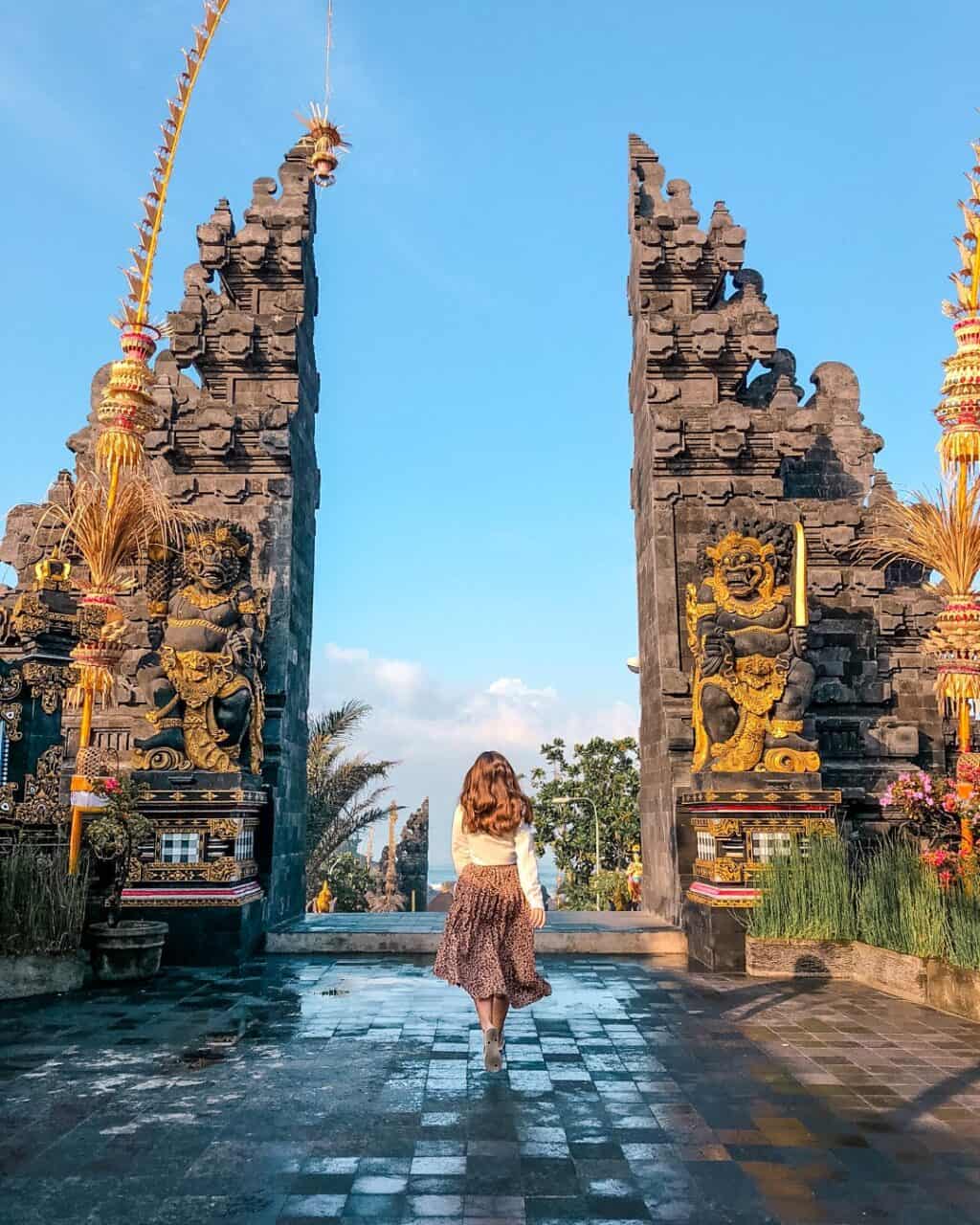
If you want to add a cultural stop while staying here, Pura Tanah Lot (Tanah Lot Temple) is an easy half-day trip from both Canggu and Seminyak. It’s one of Bali’s most famous temples and especially known for its dramatic coastal setting. Sunset is the most popular time to visit, but if you want to avoid the crowds, going early in the morning is a much better experience.

Where to stay in Canggu and Seminyak
Canggu is one of those places in Bali where renting a private villa really feels worth it. There are endless options here, from simple modern villas to beautiful stays tucked between rice fields, and many of them are still surprisingly affordable compared to what you get. We stayed at Tamu Seseh, which felt like a little hidden retreat just outside the busier part of Canggu.
The villa was surrounded by rice fields and had its own private pool, two outdoor lounge areas, an open-air bathroom with both a bathtub and shower, plus an outdoor living space where breakfast was served each morning. It was one of those places where you immediately want to stay longer than planned.
For other accommodation options in Canggu, click here.
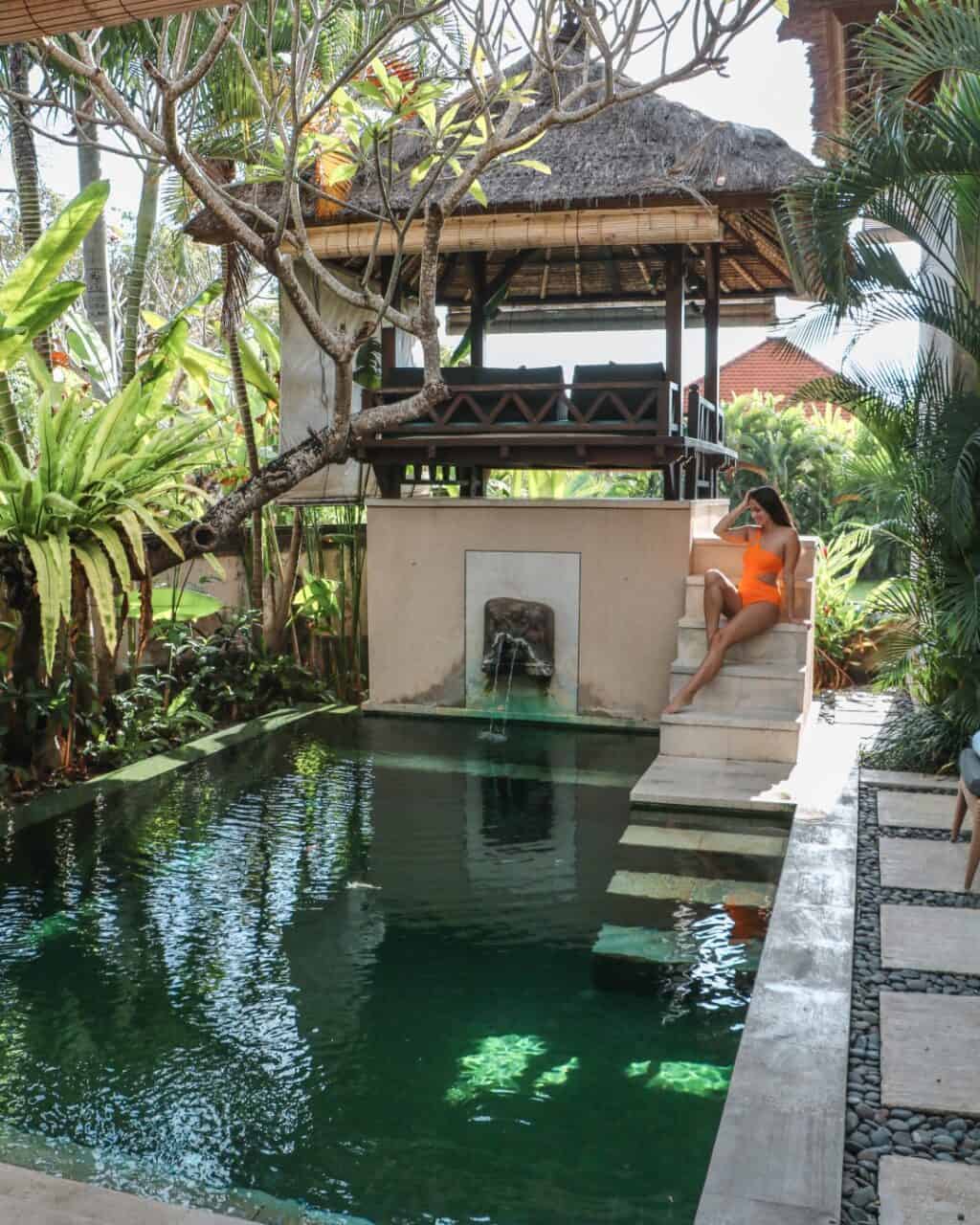
In Seminyak, we stayed at Blue Karma Dijiwa Seminyak and Beyond Bayou during our recent Bali visits. Both places are small boutique hotels offering different room and villa types. We really loved our stays at both hotels. Beyond Bayou definitely belongs to the most unique and aesthetic places we’ve ever stayed in Bali.
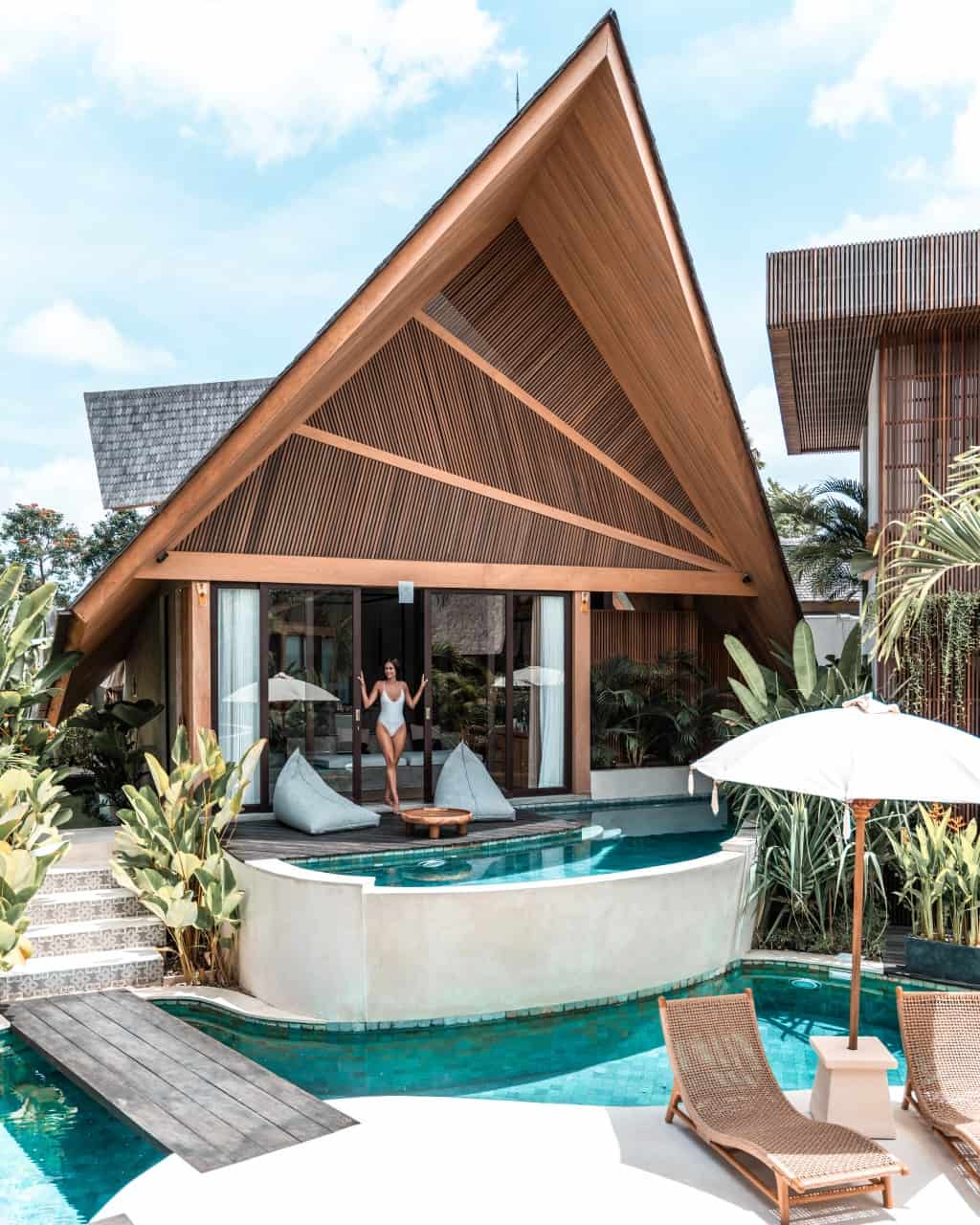
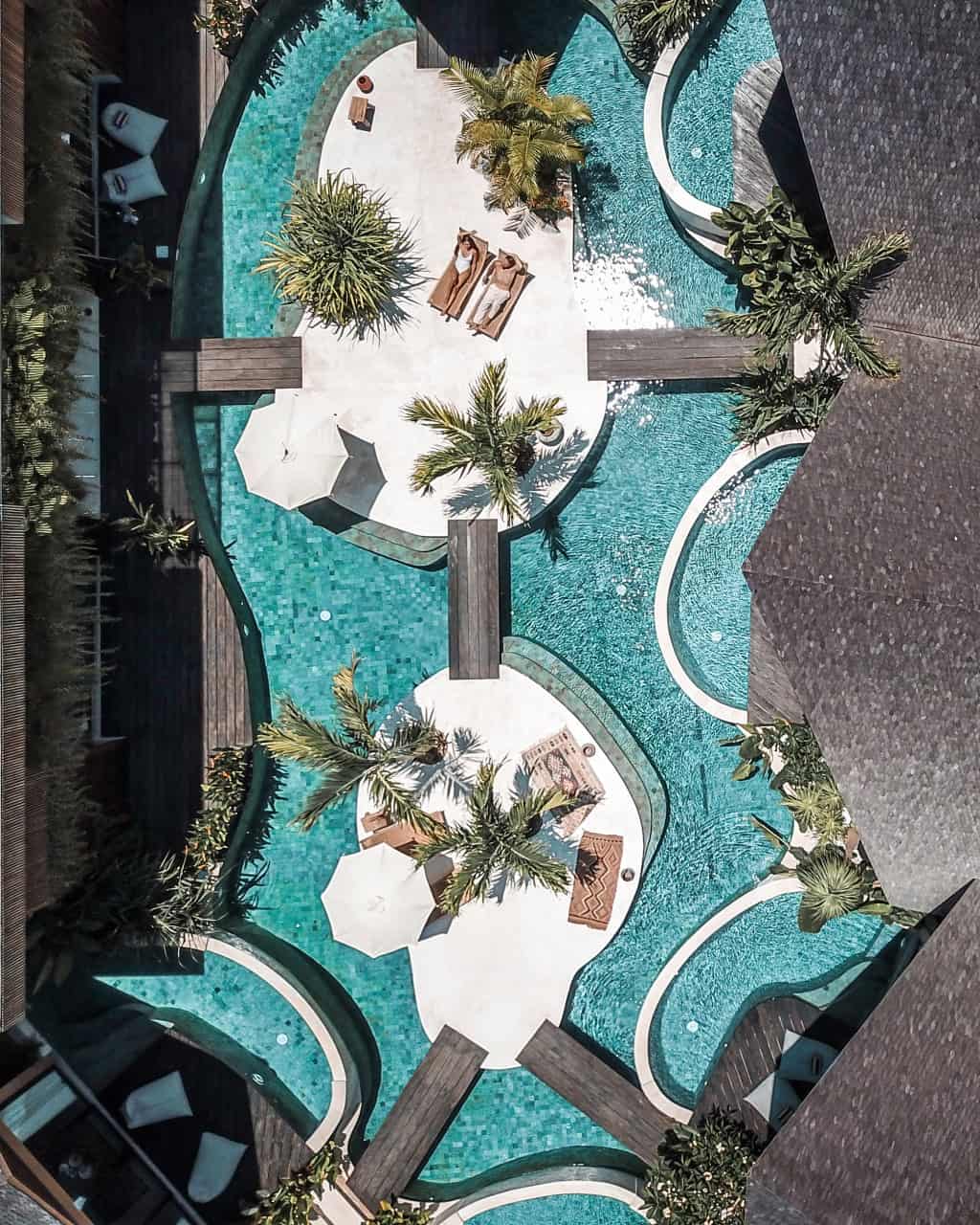
For other accommodation options in Seminyak, click here.
You may also enjoy reading: The Best Hotel Pools in Bali You Can’t Miss
Day 5 – Day 9: Ubud & Central Bali
Ubud is often described as the cultural heart of Bali, and after spending time there, that description really does make sense. Surrounded by jungle, rice fields, temples, and small villages, it feels very different from the coastal parts of the island.
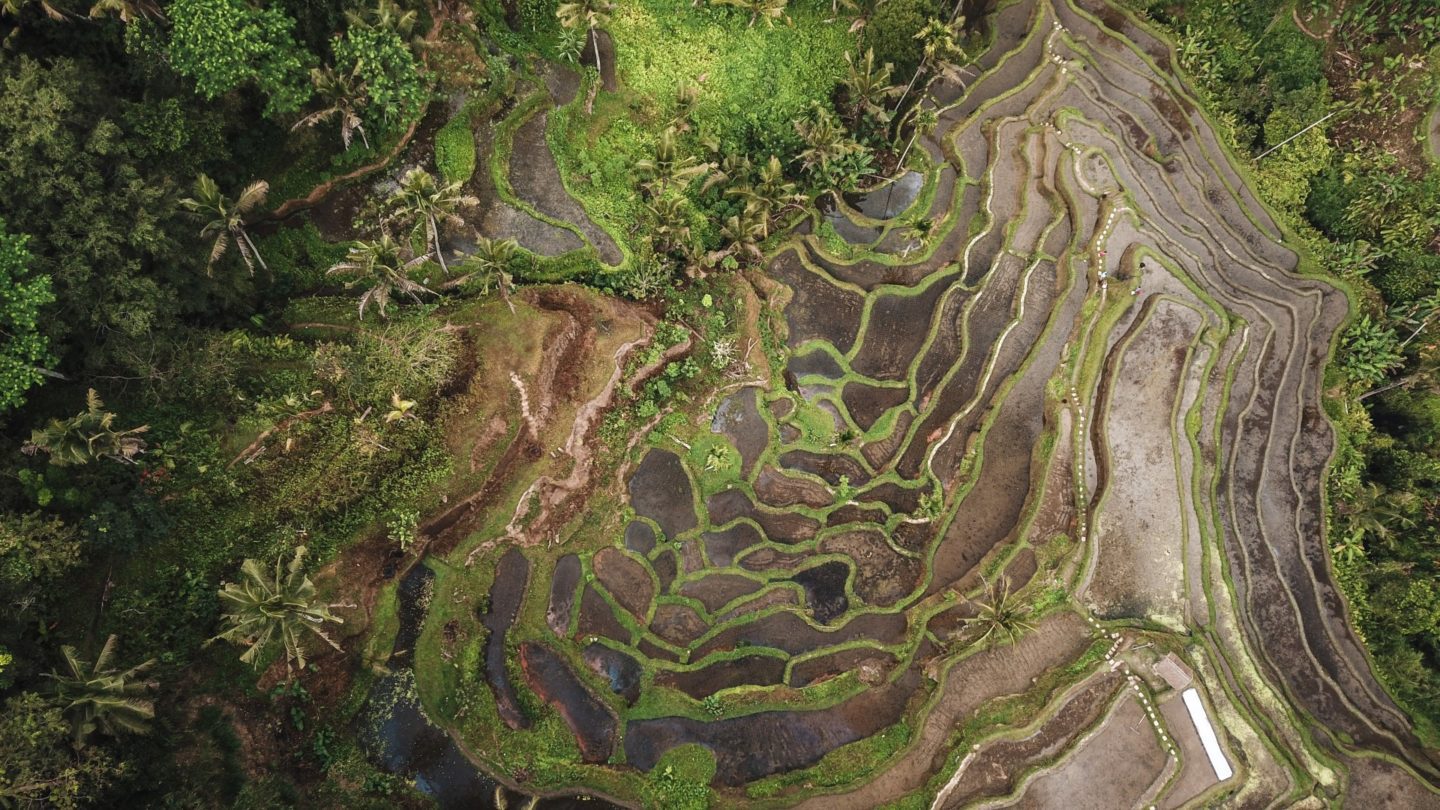
It’s also one of the best areas in Bali if you want to combine sightseeing with a slightly slower pace. Ubud is a great base for visiting temples, waterfalls, traditional markets, and some of Bali’s most famous landscapes, including the Tegallalang Rice Terrace. At the same time, it’s a place where it’s easy to spend a few quiet hours at a beautiful café, book a spa treatment, or simply enjoy the jungle setting around your hotel.
We decided to spend five days in Ubud, mainly because there is genuinely a lot to do in this part of Bali and because it gives you enough time to explore Central Bali without rushing from one stop to the next. If it’s your first trip, I’d recommend staying at least four days here.
This section gives you an overview of what to do in Ubud, but if you want a much more detailed breakdown, I’ve also put together a complete Ubud travel guide with all my favorite spots and practical tips.
💡 Tip: You can also visit many of Ubud’s top attractions on this awesome Ubud highlights tour, which makes things easier if you don’t want to organize everything yourself.
Make sure to also check out my guide to Bali’s most unique places to stay, which includes 6 stunning hotels and villas in Ubud, next to some other amazing accommodation options around the island.

What to do in Ubud and Central Bali
Ubud: Nature & Highlights
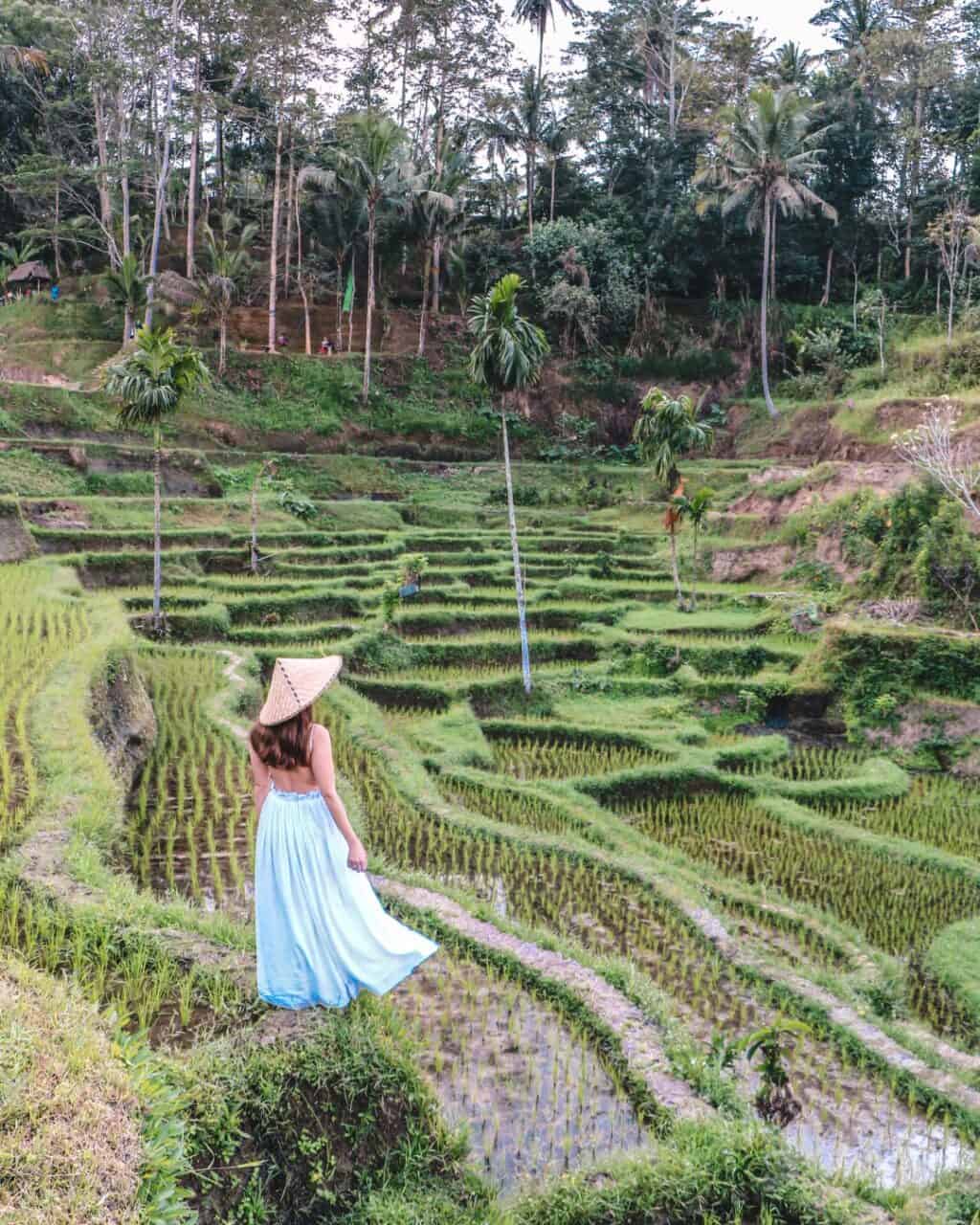
- Visit the Tegalalang Rice Terraces
- Hike the Campuhan Ridge Walk
- Walk through the Kajeng Rice Fields
- Chase waterfalls like Tegenungan Waterfall, Kanto Lampo Waterfall, Tibumana Waterfall, and Suwat Warterfall

Ubud: Temples & Culture
- Visit the Sacred Monkey Forest
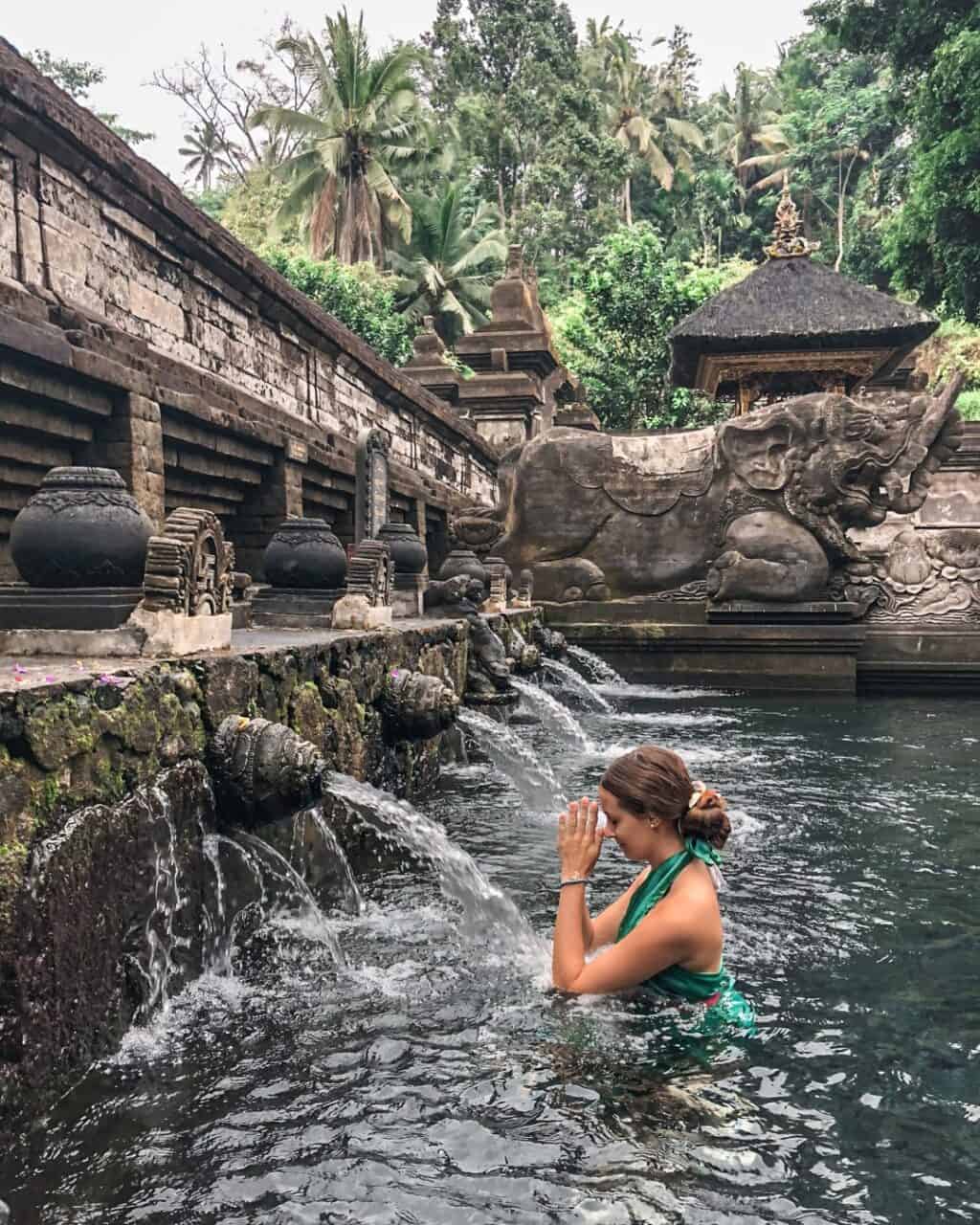
- Explore temples like Tirta Empul Holy Water Temple and Goa Gajah
- Visit the Ubud Art Market
- Visit the Saraswati Temple
- Watch a traditional Balinese dance performance
- Take a traditional Balinese cooking class
- Eat at local warungs


Ubud: Wellness & Spiritual activities
- Enjoy a Balinese spa treatment with a flower bath
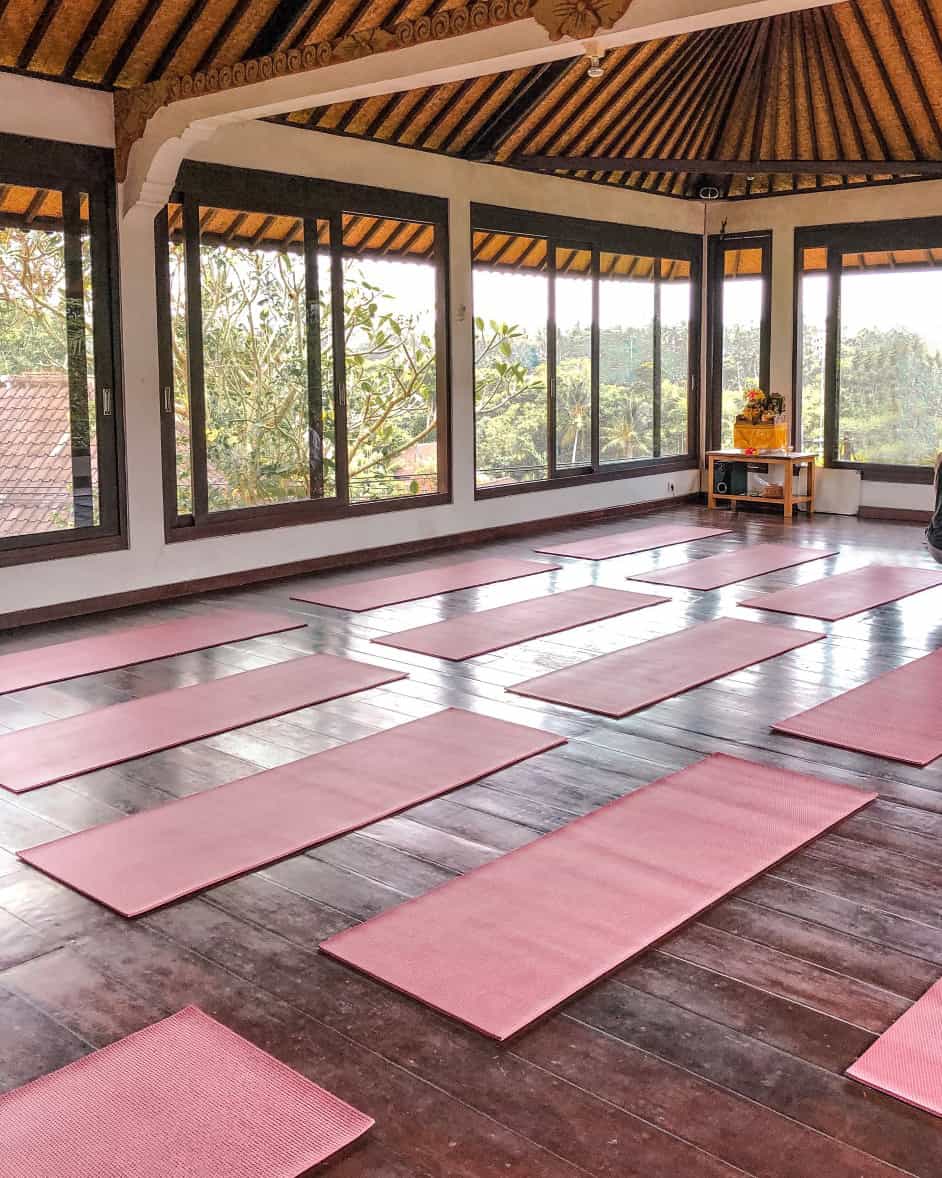
- Take a yoga class
- Join this Eat, Pray, Love Tour

Ubud: Unique Experiences
- Stay in a unique jungle resort or bamboo house
- Have a floating breakfast
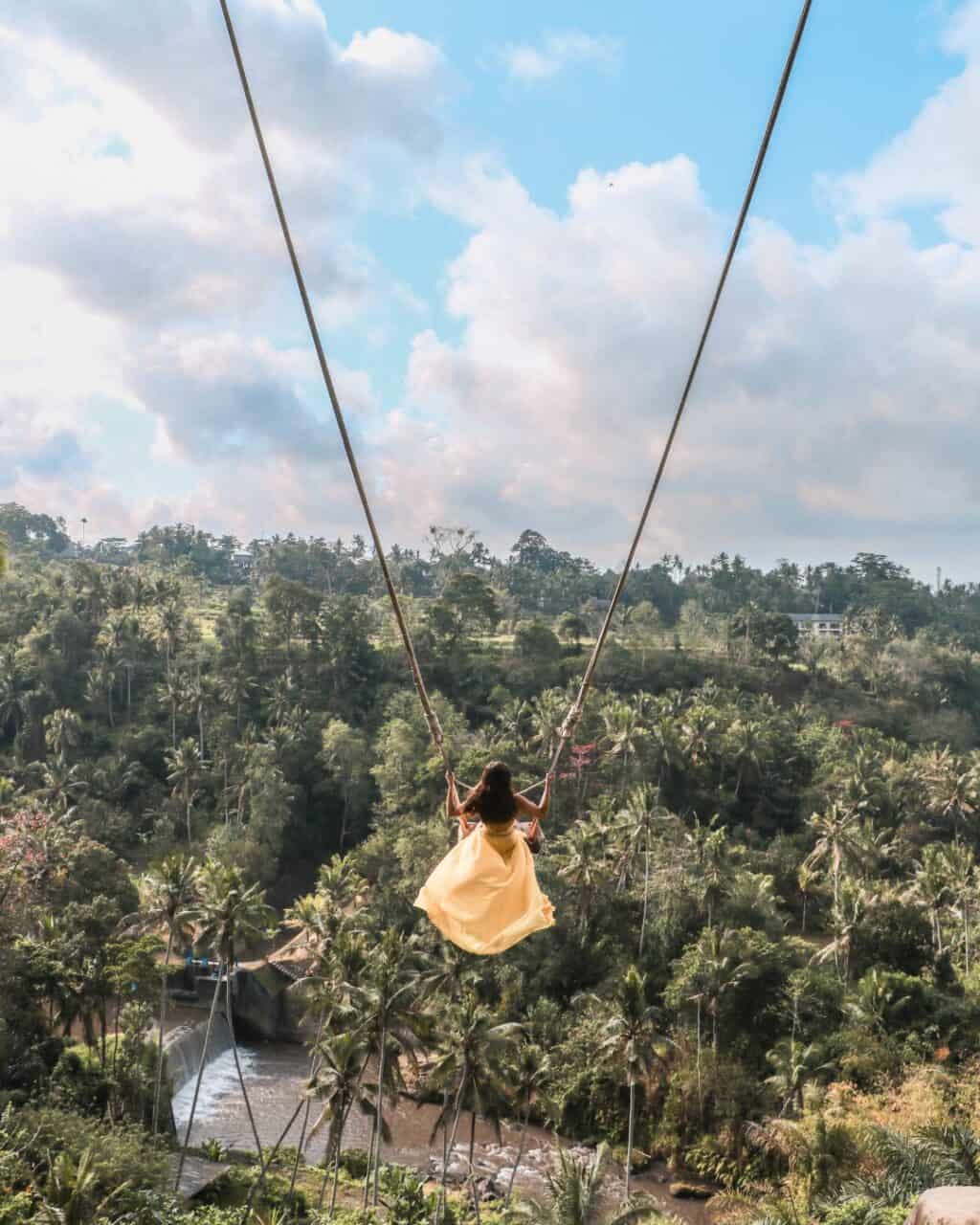
- Try the famous Bali swings
Day 10: Sidemen

After the busier energy of Ubud, Sidemen feels like a completely different side of Bali. Located in the east of the island, it took us around 1 hour and 15 minutes by scooter from Ubud, and the change in atmosphere was immediate. The area is surrounded by rice terraces, small villages, and incredible views of Mount Agung, Bali’s highest volcano.
Many hotels here are designed to make the most of that view, which is exactly why Sidemen has become one of my favorite places to stay in Bali. We stayed at Patal Kikian Villas, mainly for the view, and it absolutely delivered. Watching Mount Agung from the infinity pool and waking up to that landscape from our room was one of those Bali moments that really stayed with us.
For us, Sidemen is like a hidden gem. What I love most about Sidemen is that it still feels noticeably quieter and more authentic than places like Ubud or Canggu. Roads are calm, daily life moves slower, and you’ll often pass farmers in the fields, children in school uniforms, or locals bringing offerings to temples rather than crowds of tourists.
The food scene here is also very different. Instead of trendy cafés, Sidemen is mostly about small local warungs, which honestly felt refreshing after the more instagrammable restaurant scene in other parts of Bali. We even had one of our cheapest meals of the entire trip here and paid around $3 for both of us.
💡 Tip: Bring enough cash if you’re staying in Sidemen and plan to eat outside your hotel or explore the area. Card payments are still limited in many places, and some ATMs either don’t accept foreign cards or regularly run out of cash.


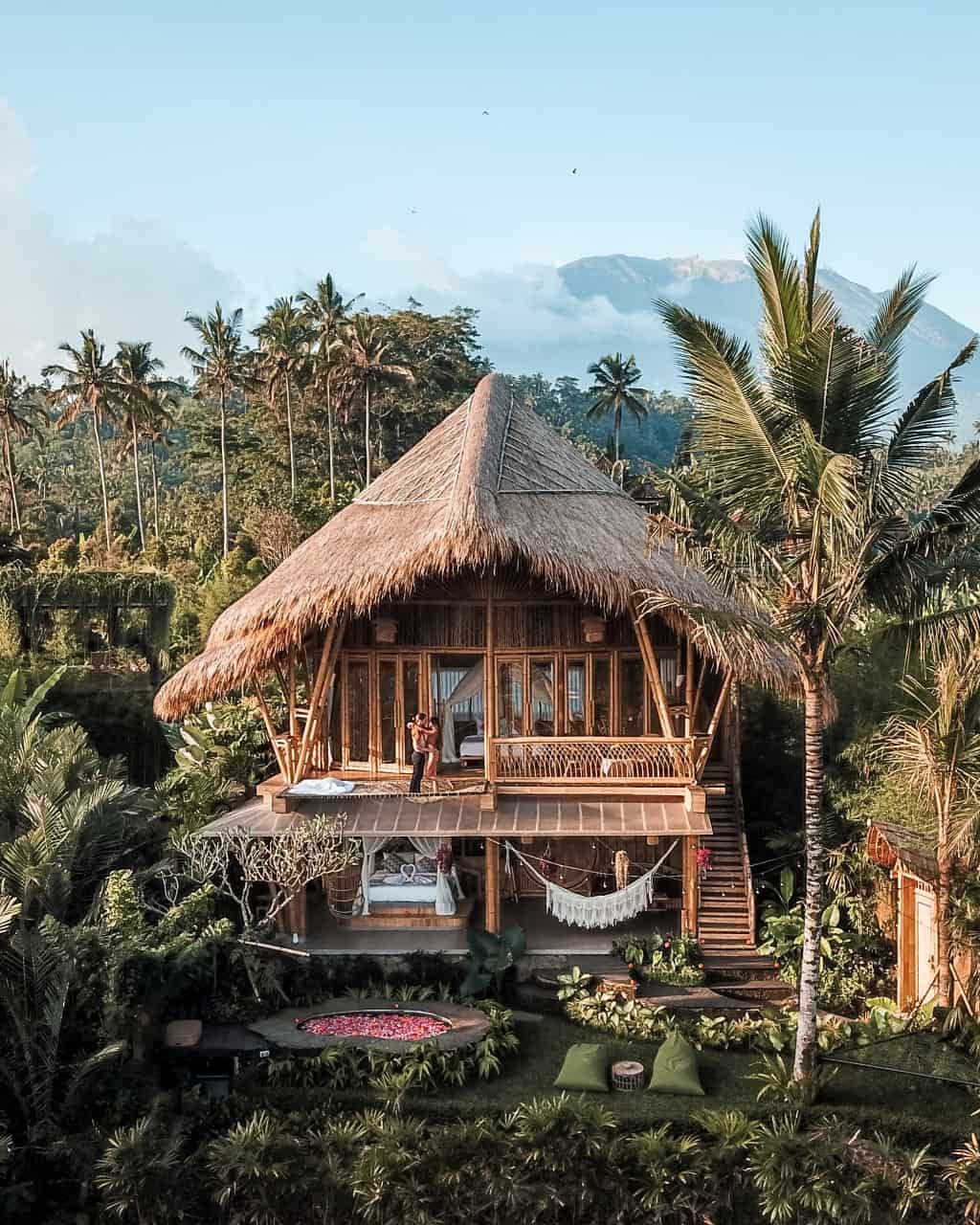
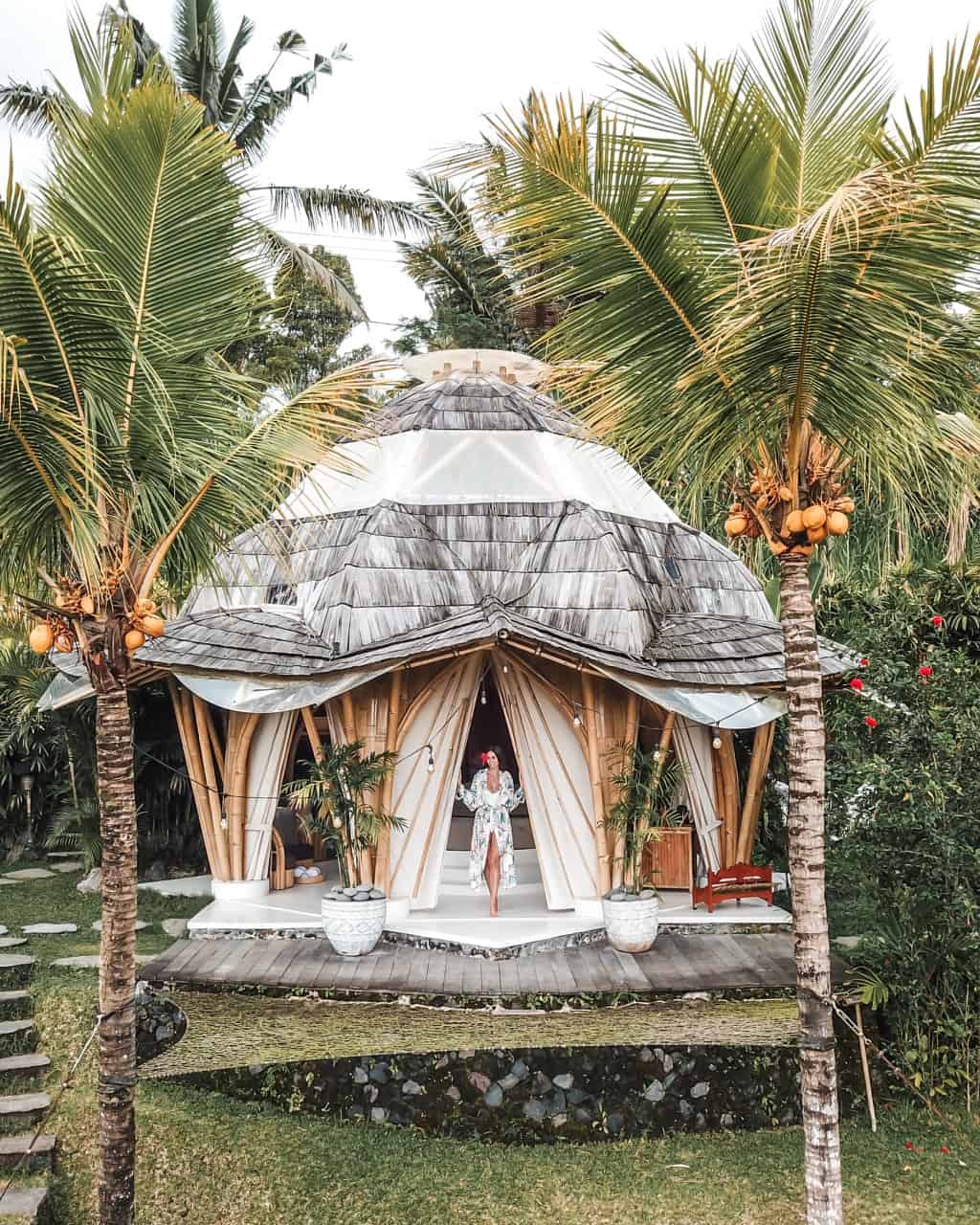
Sidemen is also one of the best areas in Bali if you want to stay somewhere a little more unusual. The region has become known for its striking bamboo houses set in the middle of nature, many of them with views that feel almost unreal.
We recently stayed at Camaya Bali and Magic Hills Bali, two of the most memorable stays we’ve had in Bali. Both have beautifully designed bamboo villas with very distinctive interiors and are often booked out far in advance, so it’s worth planning early if one of them is on your list.
➡️ Check prices & availability for Magic Hills Bali
➡️ Check prices & availability for Camaya Bali
From Sidemen, we did a half-day scooter trip to Tukad Cepung Waterfall and Besakih Temple, which worked really well as a combination.
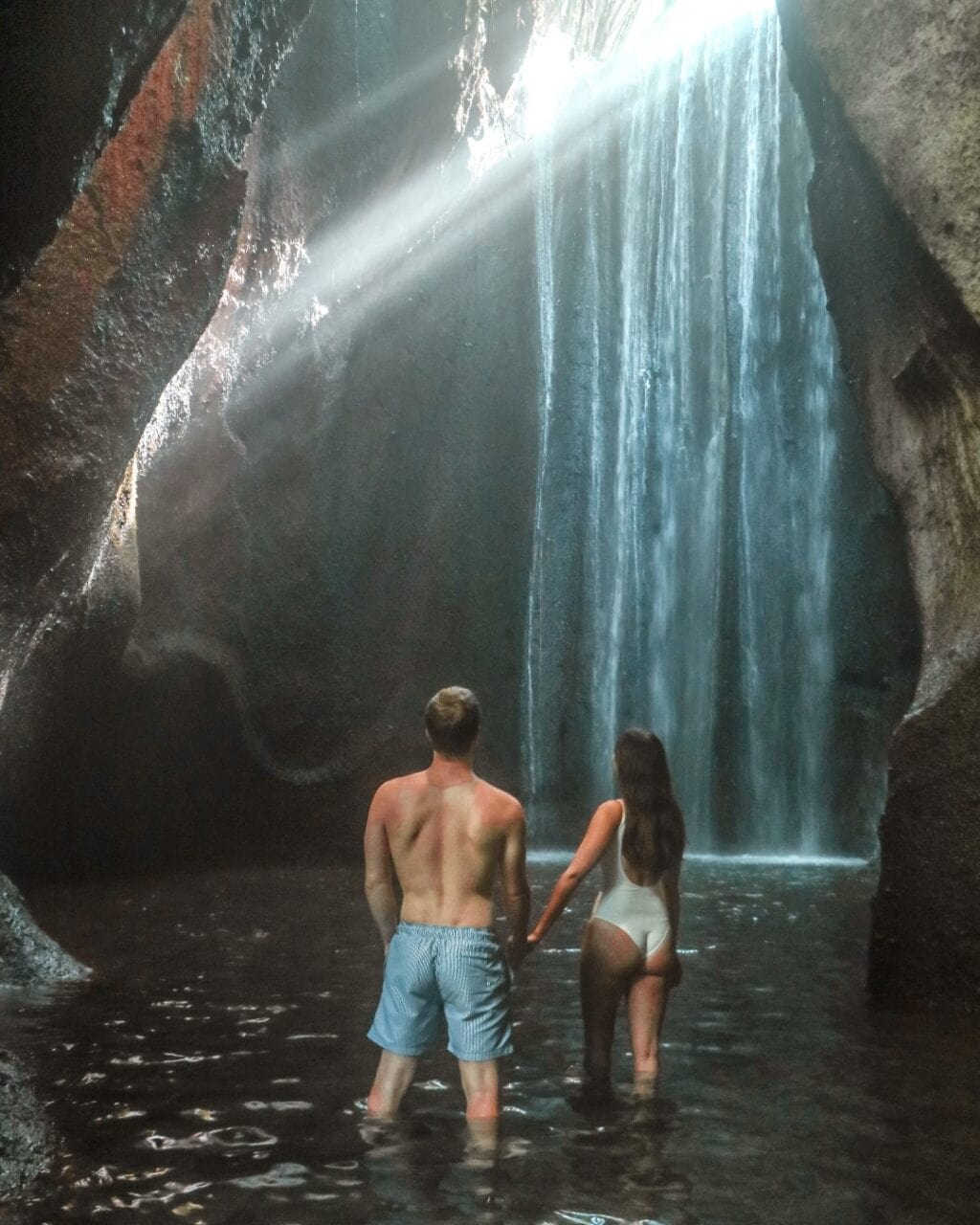
Tukad Cepung Waterfall is one of Bali’s most famous waterfalls and definitely one of the most photographed. What makes it so special are the light rays that shine through the narrow opening above the waterfall in the morning, which gives the whole place a very dramatic atmosphere.
The best time to arrive is shortly before 9 AM, when the sunlight usually starts to hit the waterfall properly. We got to the parking area around 8:40 AM, which gave us just enough time for the short walk down. The path takes around 15 minutes, is easy overall, but you do have to walk through shallow water at the end, so wet feet are almost guaranteed.
When we reached the waterfall, only a few other people were there, which made a huge difference because this place gets busy very quickly. By the time we left, there was already a long line forming for photos, so I definitely wouldn’t come much later. Even though Tukad Cepung is one of Bali’s more touristy waterfalls, I still think it’s worth seeing because the setting feels genuinely different from most other waterfalls on the island.

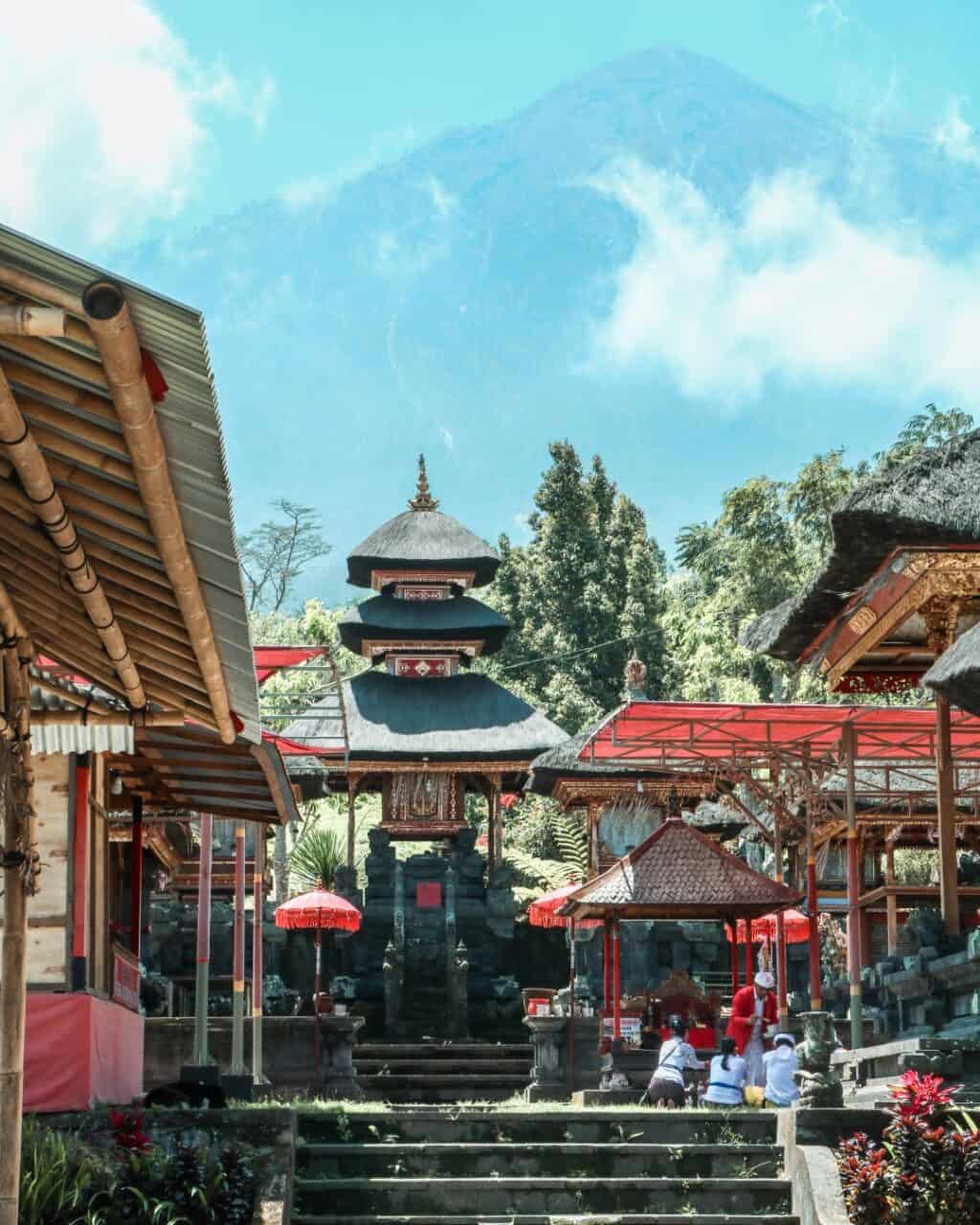
After that, we continued to Besakih Temple, the largest and most important temple complex in Bali, often referred to as Bali’s Mother Temple. Visiting with a local guide made the experience much more interesting because there’s a lot more to the site than what you first see when arriving. Our guide explained the different temple areas, shared details about Balinese Hindu traditions, and gave a lot more cultural context than we would have understood on our own. Out of all the temples we visited in Bali, this was probably my favorite.


Day 11 – Day 12: Amed
Amed is best known for diving, snorkeling, and its laid-back vibe compared to southern Bali. It feels noticeably more local, less polished, and much quieter than places like Canggu or Ubud, which is exactly why many people love staying here for a couple of days.
In Amed itself, we only went snorkeling and to be honest, I expected a little more from the underwater life based on how often it’s recommended.
What I enjoyed much more was the atmosphere along the coast itself. Amed has some very relaxed beachfront restaurants where you can sit right by the water, eat fresh seafood, and watch the sun go down with good music in the background.
If you’re planning to stay in Amed, I’d mainly choose Amed for the laid-back beach vibes and as a base for exploring. From Amed, we did a full scooter day trip to Bukit Cinta (Mount Agung viewpoint), Tirta Gangga Water Palace, and Taman Ujung Water Palace, which works very well in one day if you start early.
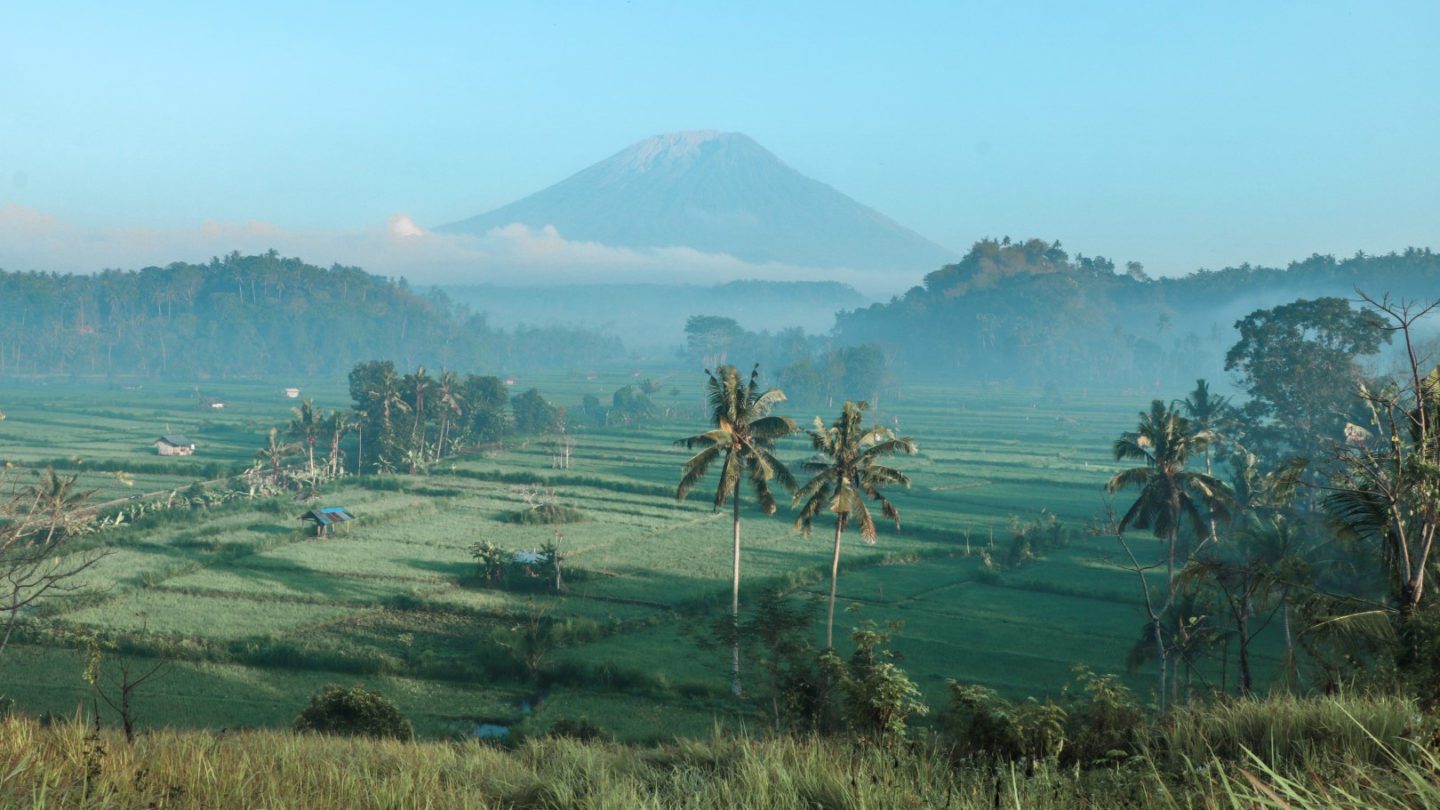
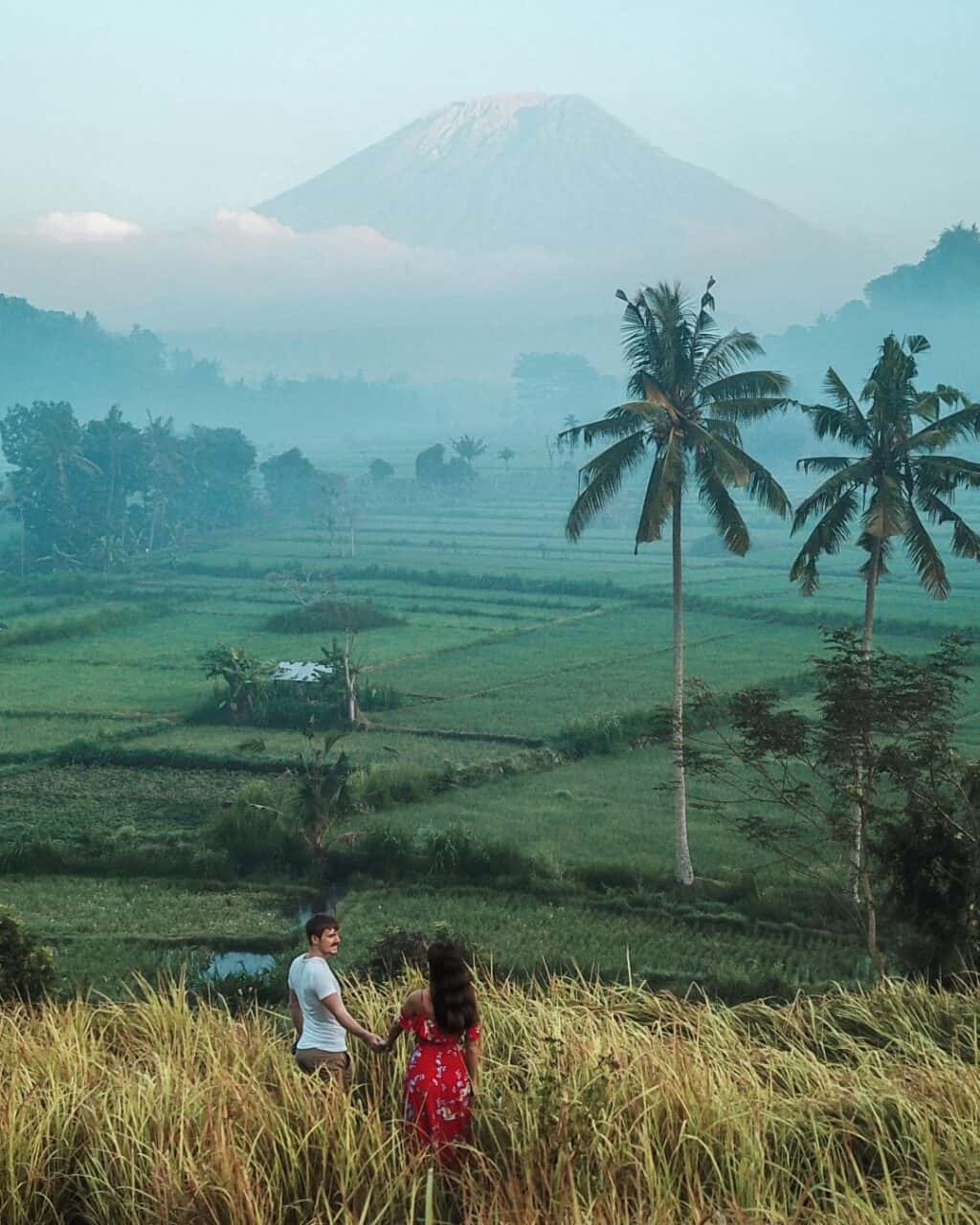
We left before sunrise to reach Bukit Cinta, one of the best viewpoints for Mount Agung. Mount Agung is an active volcano and the highest point on the island with over 3000 meters (almost 10,000 feet). Early morning is definitely the right time to come here because visibility is usually best before clouds move in later in the day. We arrived just before sunrise and were lucky to have completely clear views over the rice fields with Mount Agung rising in the background.

— My Travel Photography Gear —
Camera: Sony A7R III
Allrounder Zoom Lens: Sigma 24-70mm F/2.8
Favorite Lens: Sony FE 35mm F/1.8
Telephoto Zoom Lens: Sigma 100-400mm F/5-6.3
Drone: DJI Mini 3 Pro
GoPro: GoPro Hero11 Black
Phone: iPhone 16 Pro Max
Camera Tripod: Rollei Compact Traveler No. 1 Carbon
Phone Tripod: Lammcou Tripod
As an Amazon Associate I earn from qualifying purchases.
Check out my Presets (photo filters) to edit like me!
To read more about my photography gear, click HERE.
After visiting Bukit Cinta, we continued to Tirta Gangga Water Palace and arrived there right at opening time. Tirta Gangga Water Palace is one of the most popular tourist spots on the island. Even that early, it was already quite busy, which honestly made it harder to fully enjoy the place.
The water palace itself is beautiful, especially the fountains, ponds, and stepping stones, but because it’s one of Bali’s most photographed spots, it can feel crowded very quickly. We only stayed for a short walk around the grounds before continuing to Taman Ujung, which turned out to be the much more relaxed stop of the day.
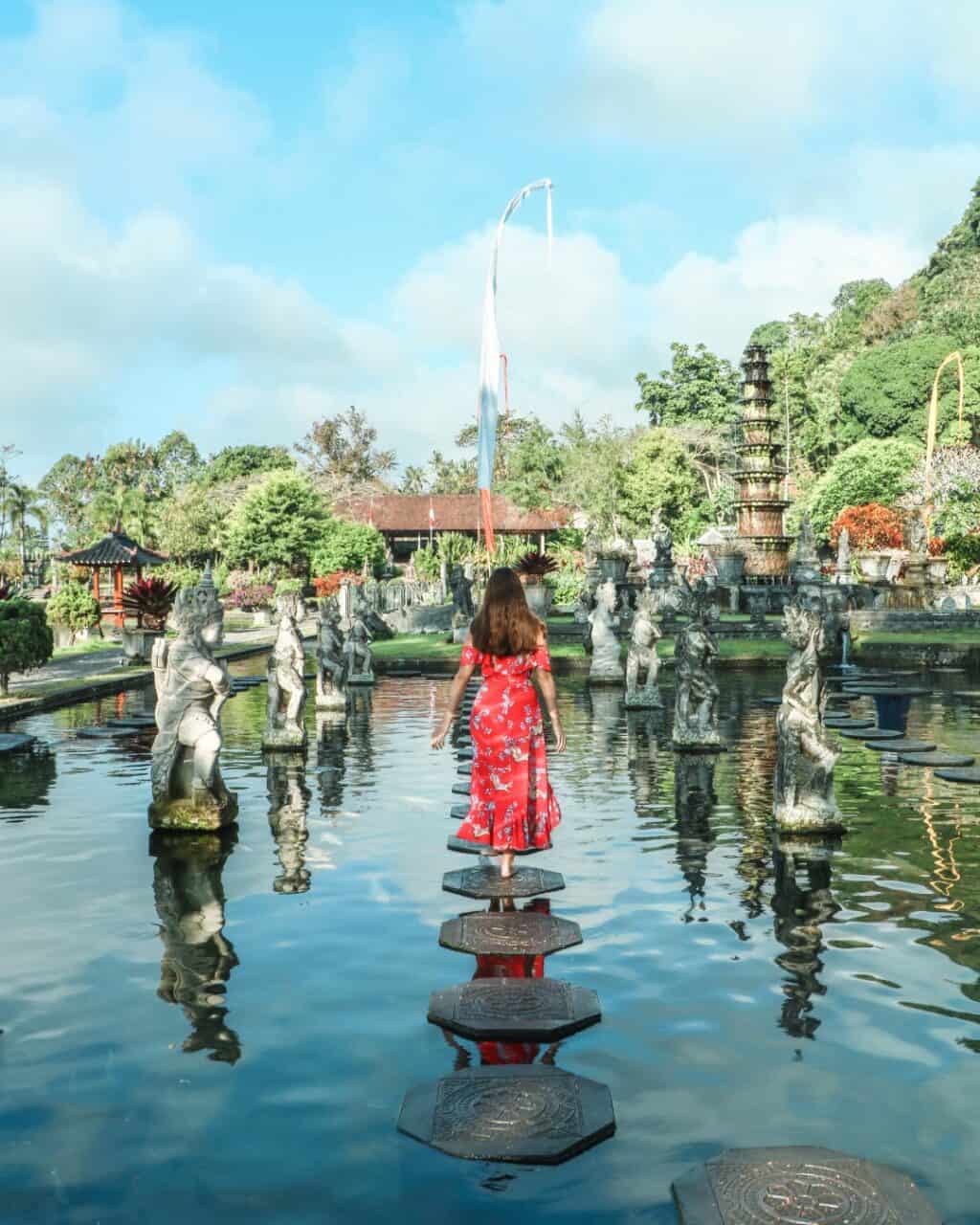

Compared to Tirta Gangga, Taman Ujung Water Palace felt far less crowded and much easier to enjoy. The palace grounds are spacious, with large water gardens, elegant old architecture, and beautiful views that stretch toward both the mountains and the sea. Out of the two, this was definitely the place I enjoyed more.


Day 13 – Day 15: Munduk & North Bali
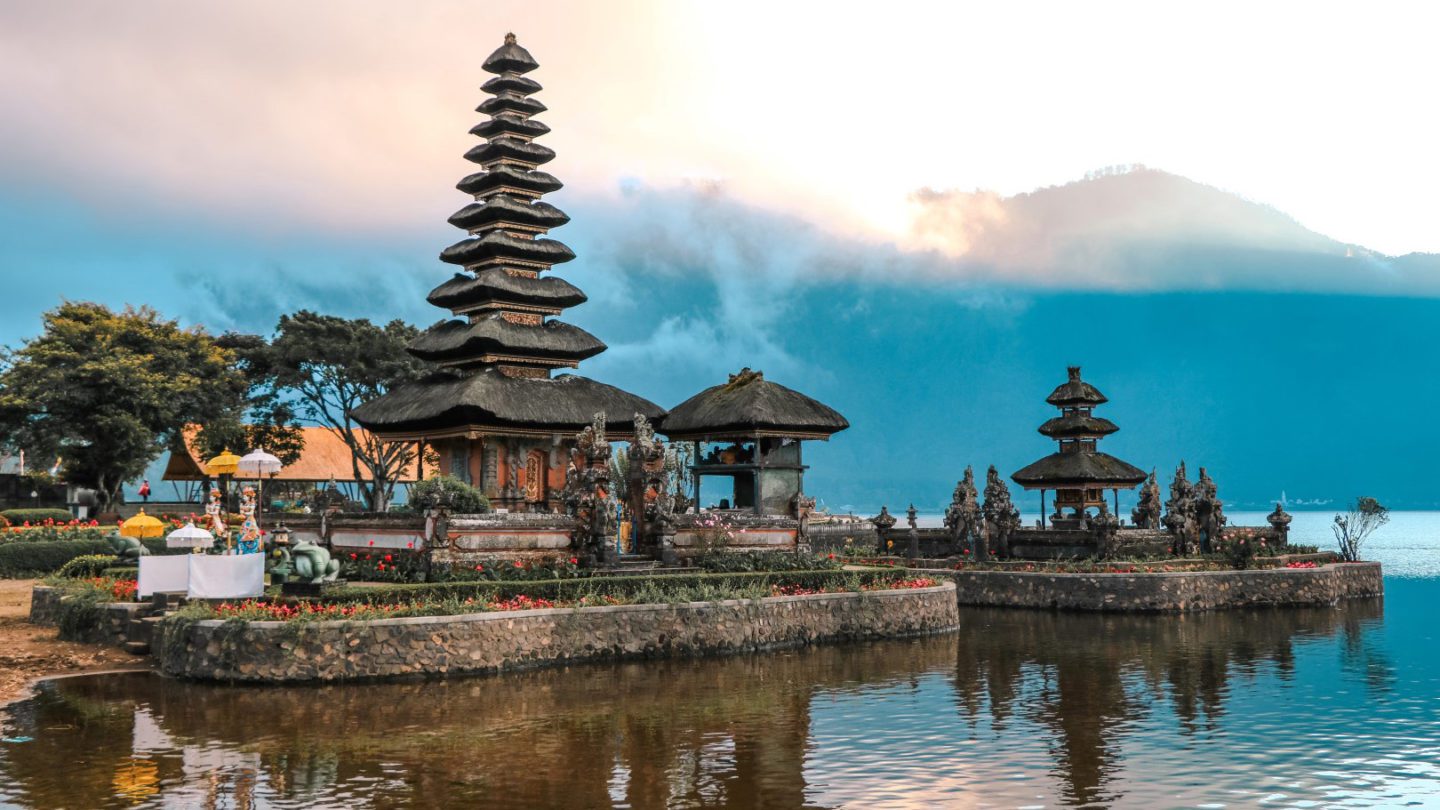
Munduk was one of the biggest surprises of our Bali trip and easily one of my favorite areas on the island. Located in the mountains of North Bali, it feels completely different again from the coast, with cooler temperatures, lush green hills, and some of the most impressive waterfalls in Bali. Because of the elevation, mornings and evenings can actually feel quite chilly here compared to the rest of Bali, so it’s definitely worth packing something warmer for this part of the trip.
We only stayed two nights in Munduk, but honestly, we could have stayed longer without getting bored. The area feels much quieter, greener, and less developed than southern Bali, which makes it a very nice contrast after the busier parts of the start of our itinerary.
We stayed at Munduk Moding Plantation Nature Resort, which is easily one of the most memorable hotels we’ve stayed at in Bali. The setting up in the mountains is beautiful, and the views from the infinity pool alone are reason enough to spend at least one night here.
Because there is quite a lot to see in this part of Bali, I also put together a separate Munduk travel guide if you want a more detailed breakdown of what to do here and how to plan your time.
What to do in Munduk and North Bali
- Sekumpul Waterfall
- Banyumala Twin Waterfalls
- Banyu Wana Amertha Waterfall
- Munduk Highlights Tour
- Ulun Danu Beratan Temple
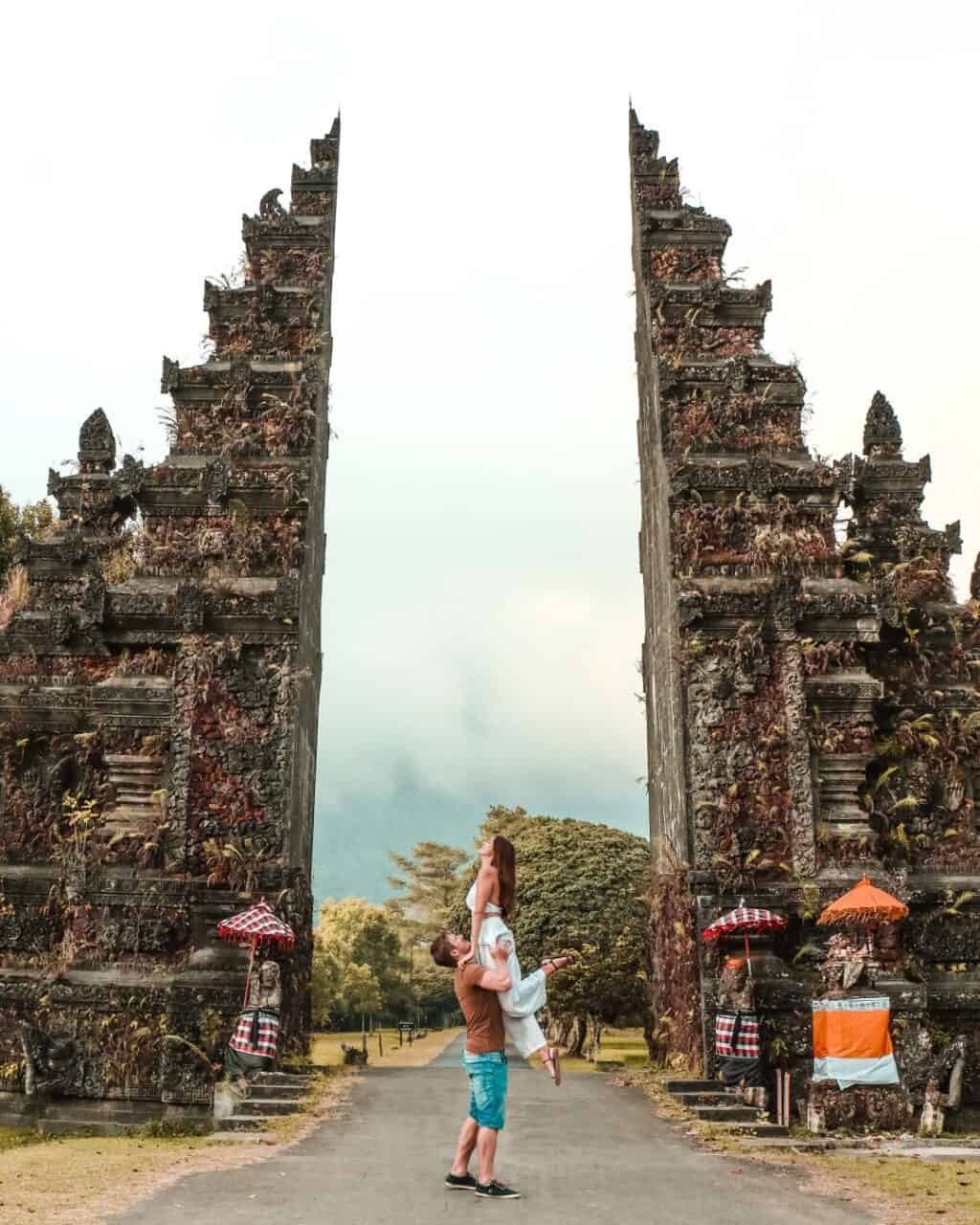
- Handara Gate
- Wanagiri Hidden Hills
- Traditional Balinese Coffee-Making Class
- Twin Lake Trekking and Canoeing
We also made time to simply enjoy the hotel, which is something I’d definitely recommend here because Munduk Moding Plantation offers a range of activities as well.
Check out my detailed hotel review: Munduk Moding Plantation – Hotel Review
On the drive south afterward, Leke Leke Waterfall also works very well as an extra stop before continuing toward Sanur for the boat to the Nusa Islands.


Day 16 – Day 17: Nusa Penida

The Nusa Islands were easily one of the absolute highlights of our time in Bali and still belong to the places I’d always include in a first itinerary. The island group consists of Nusa Penida, Nusa Lembongan, and Nusa Ceningan, all located just off Bali’s southeast coast and easy to reach by fast boat from Sanur. If you have the time, I definitely recommend visiting all three because each island feels slightly different.
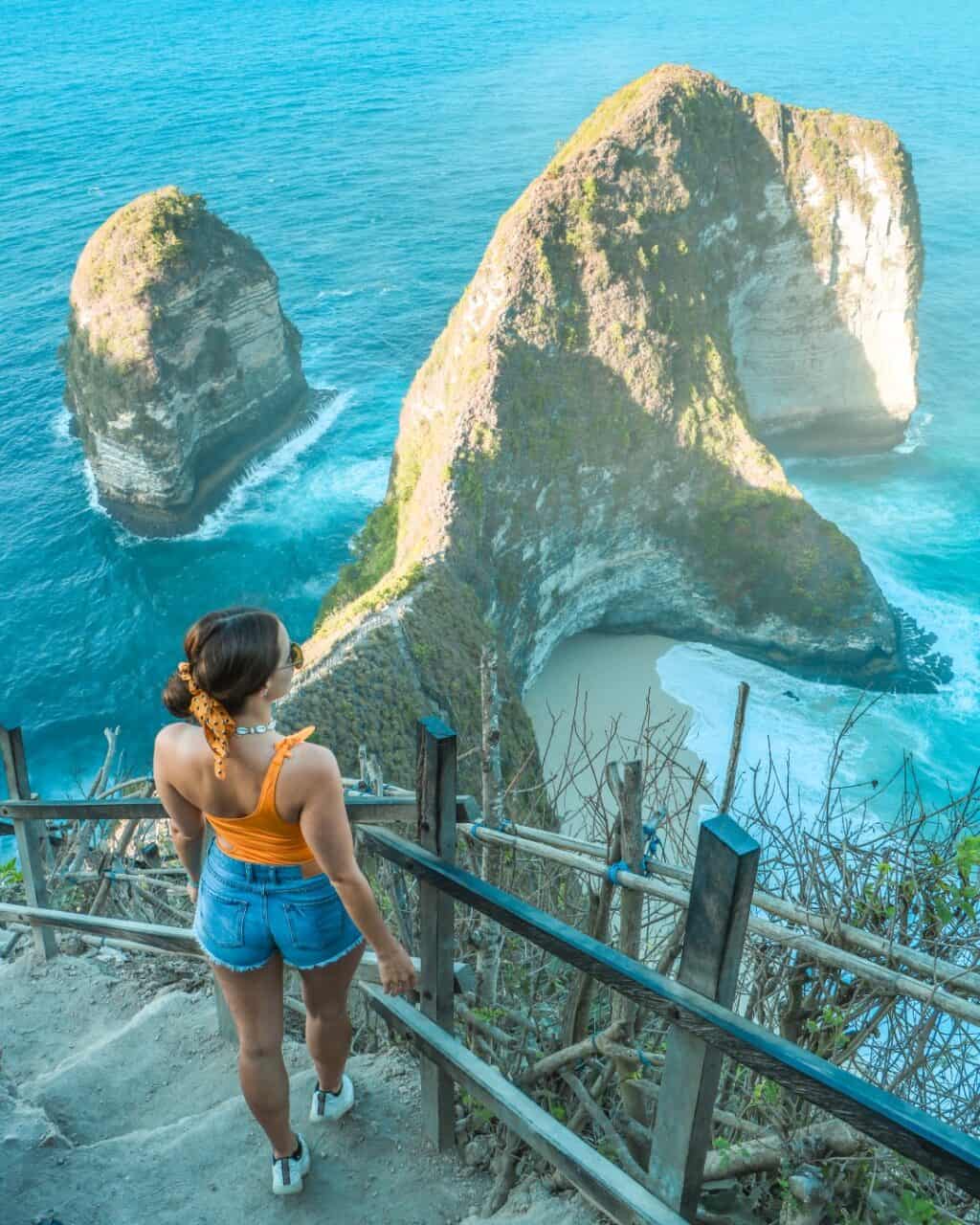
We started with Nusa Penida, the largest and most dramatic of the three islands. It’s the island known for steep cliffs, striking viewpoints, and some of the most photographed coastal scenery in Indonesia. We stayed for two nights at Kompyang Cottage, a small boutique-style stay that worked really well as a base and also offered floating breakfast, which felt very fitting for this part of the trip.
To explore the island, we rented a scooter, although this is one of the few places in Bali where I’d only recommend that if you already feel very confident driving. Roads on Nusa Penida can still be rough in parts, distances often take longer than expected, and even short drives can feel surprisingly slow because of road conditions and traffic around popular spots. If you don’t want to deal with that, hiring a local driver is honestly the easier option here.
What to do on Nusa Penida
Most of the island’s best-known sights are spread across different parts of Nusa Penida, so early starts really help. The places I’d prioritize are:
- Diamond Beach
- Atuh Beach
- Rumah Pohon Tree House
- Thousand Islands Viewpoint
- Kelingking Beach
- Angel’s Billabong
- Broken Beach
- Crystal Bay
- Goa Giri Putri Cave Temple
- Peguyangan Waterfall
- Tembeling Beach, Forest and Natural Pool
- Banah Cliff Point
- Teletubbies Hill
Because the island has become much more popular, timing really matters here. Visiting the main viewpoints early in the morning makes a huge difference before day-trip crowds arrive from Bali. If you want a more detailed breakdown of how to structure your time here, I’ve also put together a detailed Nusa Islands travel guide.


Day 18 – Day 19: Nusa Lembongan & Nusa Ceningan
From Nusa Penida, we shared a small private boat with another couple to reach the Yellow Bridge, which connects Nusa Lembongan and Nusa Ceningan. We decided to stay on Nusa Ceningan, the smallest of the three Nusa Islands, and instantly loved how relaxed it felt
Compared to Nusa Penida, everything here is much slower, distances are short, and the whole island has a more intimate atmosphere. Nusa Ceningan is especially nice if you want a quieter base with good cafés, small restaurants, and some of the best sunset spots in the island group.
Because Nusa Ceningan and Nusa Lembongan are connected by the Yellow Bridge, you can easily explore both islands by scooter within a short time.
What to do on Nusa Lembongan and Nusa Ceningan
- Blue Lagoon
- Yellow Bridge
- Devil’s Tear
- Mangrove Forest
- Secret Beach
- Manta snorkeling trip
- Mahana Point Cliff Jump
- Sunset at one of the beach bars on Nusa Ceningan
One of my favorite things here was simply driving around without much of a plan. The roads are easy, the views constantly change between cliffs and turquoise water, and everything feels very relaxed compared to mainland Bali.
If you have time for only one activity, I’d definitely choose the manta snorkeling trip, which was one of the most memorable experiences of our time around the Nusa Islands.


Day 20 – Day 21: Uluwatu
Uluwatu was the final stop of our 3-week Bali itinerary, and in hindsight, it’s a very good place to end the trip. After moving around quite a bit over the previous weeks, the slower pace here felt exactly right.
Located in the south of Bali, Uluwatu is known for dramatic cliffs, clear turquoise water, surf spots, the famous Pura Luhur Uluwatu Temple, and some of the island’s most beautiful beaches.
It also has a very different atmosphere from places like Canggu or Ubud, with a slightly more relaxed but still stylish feel. During our first stay, we stayed at Toraja Bambu Boutique Hotel and mostly used the last days to slow down a little. We spent a lot of time by the pool, had a long massage, and enjoyed some very good food because Uluwatu has no shortage of great restaurants.
At that point, we actually didn’t explore many beaches yet, which is exactly why we returned on a later Bali trip and ended up appreciating Uluwatu even more.
Click here for accommodation options in Uluwatu
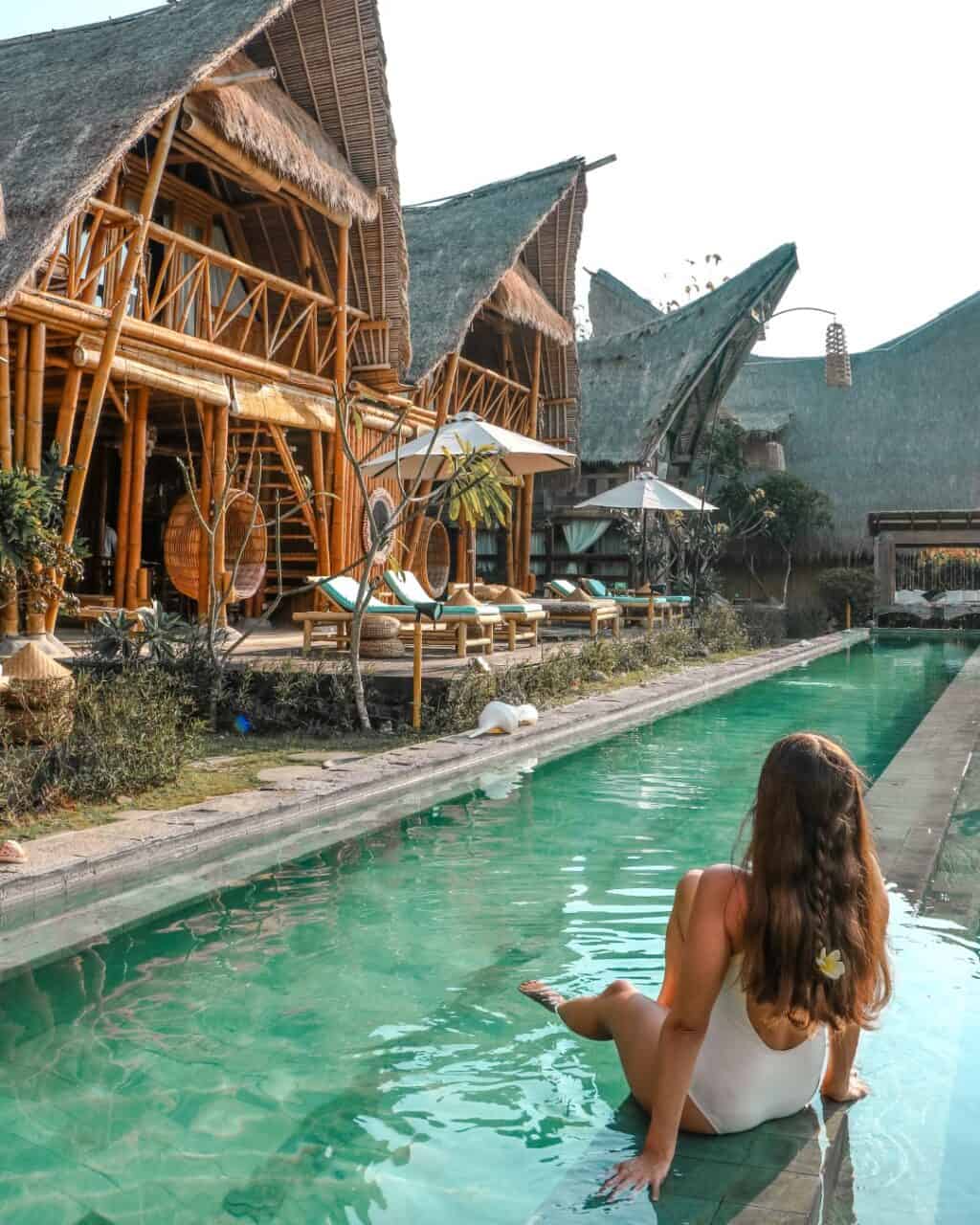

On our more recent visit, we stayed at Sal Secret Spot, a lovely boutique hotel with a very relaxed boho feel, and finally spent proper time exploring the coastline. Some of the best beaches we visited were:
- Dreamland Beach
- Suluban Beach
- Padang Padang Beach
- Bingin Beach
- Nyang Nyang Beach
- Melasti Beach
They all feel quite different, but together they’re one of the main reasons Uluwatu has become one of my favorite parts of Bali.
We also visited two beach clubs that are worth knowing if you want to include one or two more relaxed afternoons: Oneeighty, famous for its iconic glass-bottom infinity pool, and Palmilla Bali Beach Club, which has a much more laid-back boho atmosphere.
After returning to Uluwatu, it easily became one of the areas I’d now prioritize most in Bali.
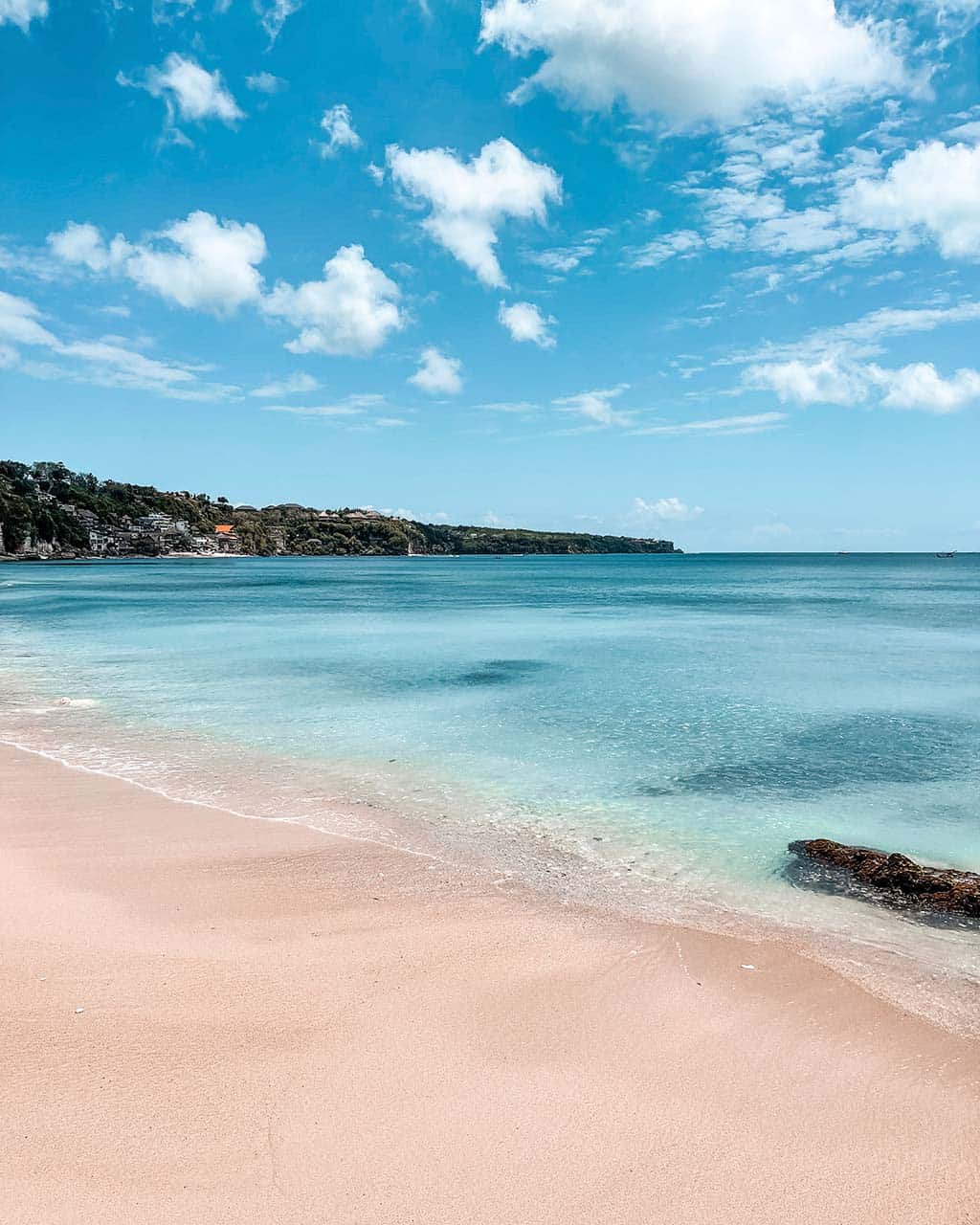

If you prefer ending your trip with a more resort-style stay, Nusa Dua is also a very good alternative. That part of Bali is home to some of the island’s most luxurious beachfront resorts and works especially well if you want a few very easy final days before flying home.
I hope this 3-week Bali itinerary helps make planning your trip a little easier and gives you a realistic idea of how much you can actually see in three weeks. For us, this route still feels like a great mix of Bali’s well-known highlights, a few quieter areas, and places that made the trip feel much more varied than we expected.
If you have more time in Indonesia, I’d definitely recommend continuing beyond Bali because some of the country’s most memorable places are just a short trip away. We also loved visiting the Gili Islands (Gili Trawangan, Gili Air, and Gili Meno), Lombok, and the Komodo National Park, all of which offer a completely different experience again. I’ll also be sharing more detailed guides for those destinations, because they’re absolutely worth adding to your Indonesia bucket list.

FAQ – Bali Itinerary
Three weeks in Bali is not too much. We found it perfect for first-time visitors. It allows enough time to explore different regions, enjoy the culture, and truly experience the island’s beauty without rushing.
The daily budget for Bali varies, but for mid-range travelers, expect to spend around $50–$100 per day, including accommodation, food, activities, and transport. Budget travelers can get by on less, while luxury stays will cost more.
For tourists, we found Bali and Thailand to be quite similar in cost. Both destinations offer budget-friendly options as well as high-end luxury experiences, so it really depends on your travel style.
The cheapest time to visit Bali is during the low season, which falls between October to April. Flights and accommodation are usually more affordable, and there are fewer crowds.
To avoid Bali belly, drink only bottled or filtered water, avoid ice in drinks from unknown sources, eat at reputable restaurants, and practice good hand hygiene.
Yes, visiting the Gili Islands from Bali is absolutely worth it! We went to the Gili Islands and Lombok during our most recent Bali trip and highly recommend it if you have enough time. The beaches, snorkeling, and relaxed vibe are amazing.
Planning more adventures in Bali? Check out these helpful travel guides next:
- Best Things to Do in Ubud
- Best Things to Do in Munduk and North Bali
- Ultimate Guide for 4 Days on the Nusa Islands
- Cool and Unusual Hotels and Bamboo Villas in Bali
- Best Hotel Pools in Bali
Like this post? Pin it for later!