
Ubud Itinerary: Best Things to Do in Ubud in 5 Days
Ubud is one of those places that feels completely different from the rest of Bali. Instead of beach clubs and coastal sunsets, you’ll find lush rice terraces, jungle-covered valleys, ancient temples, and a culture that feels deeply rooted in daily life.
It’s also one of the most activity-packed areas on the island. Within a short drive from town, you can visit waterfalls, explore traditional villages, walk through rice fields, and experience some of Bali’s most fascinating temples. The challenge isn’t finding things to do. It’s deciding what’s actually worth your time.
When we visited Ubud, we quickly realized that having a plan makes a huge difference. Many of the best sights are spread out across the region, and without a clear itinerary it’s easy to waste time backtracking or missing some of the highlights.
In this guide, I’m sharing the best things to do in Ubud in 5 days, including natural attractions, cultural experiences, and a few unforgettable spots that make this part of Bali so special. If you’re planning a trip to Bali, this itinerary will help you make the most of your time in Ubud.

Disclosure: This blog post contains affiliate links. I may receive a small commission for purchases or bookings made through these links, at no extra cost to you. I only recommend products and services that I’ve personally used and genuinely like. By using my links, you help support my blog and allow me to continue creating helpful free travel guides like this one, while probably funding my next cappuccino or gelato along the way. For more info, please read the privacy policy.
How Many Days in Ubud, Bali
I recommend spending at least 3 to 5 days in Ubud to experience the area properly. Many of the most interesting places to visit are located outside the town center, so having a few extra days gives you enough time to explore without constantly rushing from one attraction to another. We personally spent 5 days in Ubud, which felt like the perfect amount of time to see the main highlights while still leaving room for a slower morning or a relaxing afternoon.
How to Get Around Ubud
Many of the best things to do in Ubud are spread across the surrounding countryside rather than located directly in town. Waterfalls, temples, and rice terraces are often 20 to 45 minutes from the center of Ubud, so transportation plays an important role when planning your itinerary.
One of the most popular ways to get around is by renting a scooter. This gives you the flexibility to explore at your own pace and easily reach attractions outside the town center. Scooter rentals are widely available in Ubud and typically cost around IDR 60,000–100,000 per day ($4–$7).
That said, traffic in Bali can feel chaotic if you’re not used to driving a scooter. If you prefer a more relaxed option, hiring a private car with a driver for the day is very common and surprisingly affordable. Many drivers offer full-day tours (8–10 hours) where you can customize the itinerary and visit several attractions in one trip.
Another convenient option is booking customized day tours with a local guide who can share more about Balinese culture and traditions. Especially if you’re planning to visit several places each day, having reliable transportation will make your time in Ubud much easier and more enjoyable.

Best Time to Visit Ubud
Ubud can be visited year-round, but the best time to visit is during Bali’s dry season from April to October. During these months, you’ll generally experience sunny weather, lower humidity, and better conditions for outdoor activities like visiting rice terraces, waterfalls, and temples.
The peak travel months are July and August, when Bali receives the highest number of international visitors. Ubud tends to stay busy during this time, especially around popular attractions like the Tegalalang Rice Terraces and the Sacred Monkey Forest.
If you prefer fewer crowds, consider visiting in May, June, or September, which often offer a great balance of good weather and slightly quieter conditions. Bali’s rainy season runs from November to March. While you can still visit Ubud during these months, you should expect frequent tropical showers, usually in the afternoon. The upside is that the landscapes become incredibly lush and vibrant, and you’ll often encounter fewer tourists.
Overall, if you want the best combination of pleasant weather, beautiful scenery, and good sightseeing conditions, the months between May and September are usually ideal for visiting Ubud.
Where to Stay in Ubud
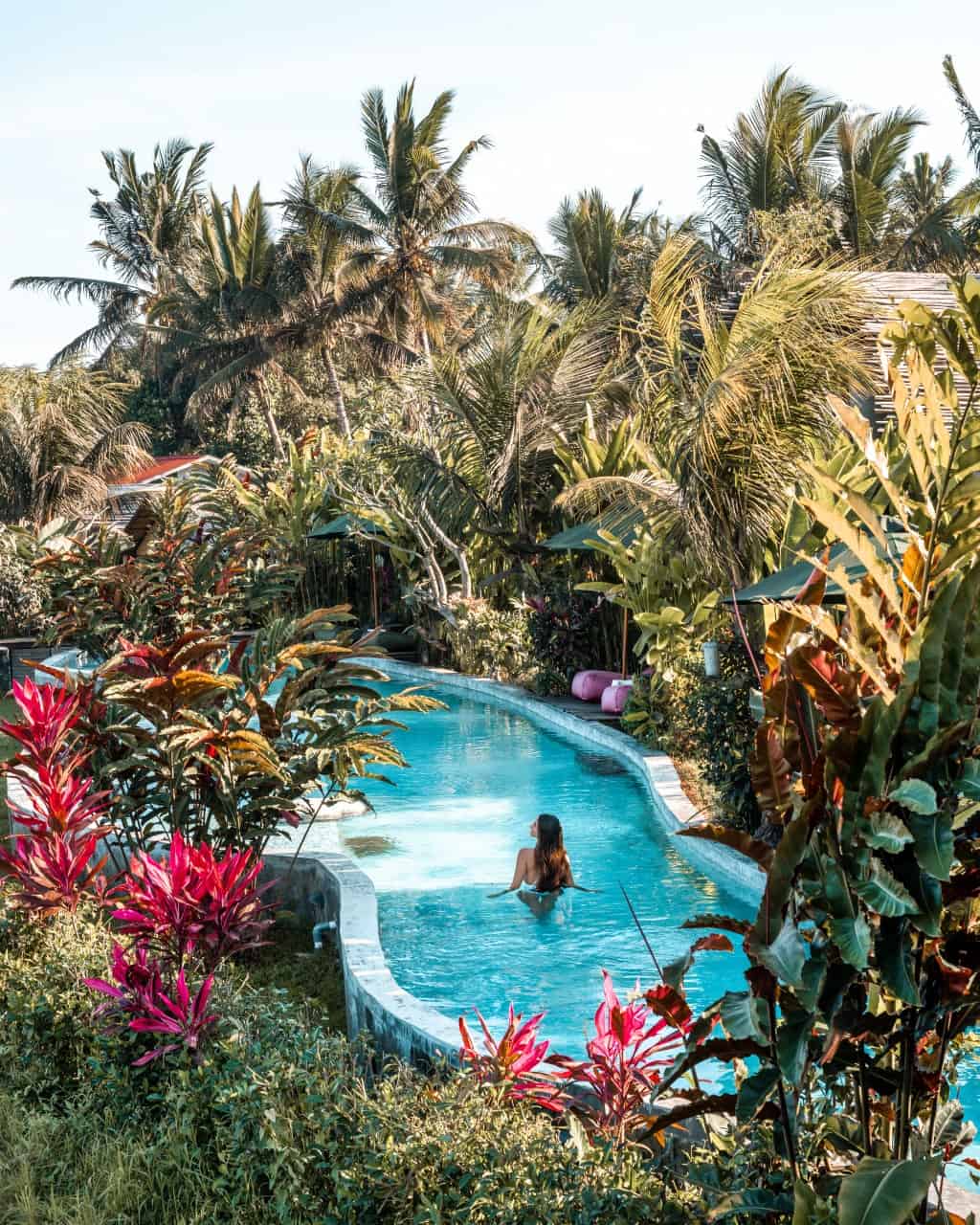
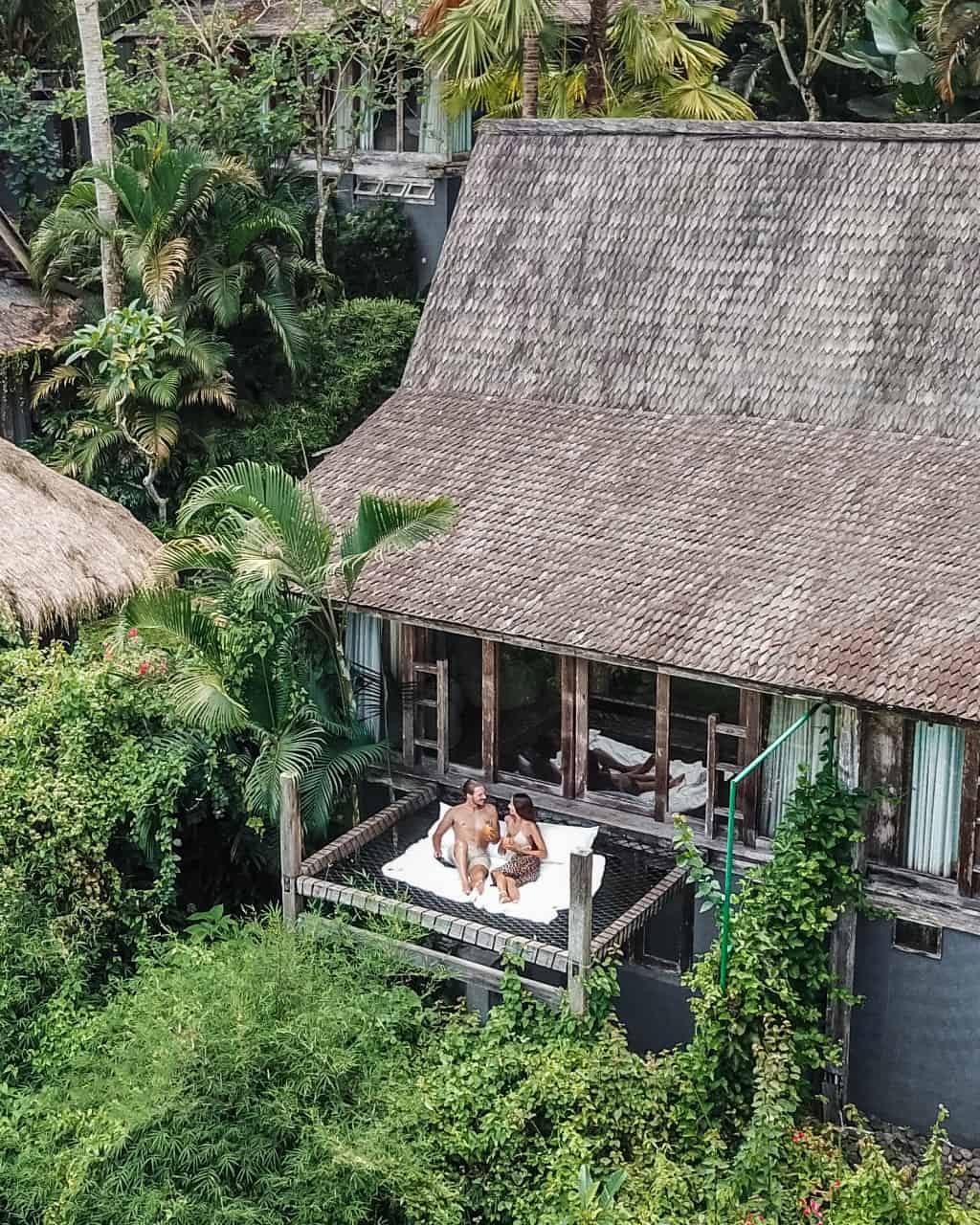
Ubud has a wide range of accommodation options, from boutique jungle resorts and luxury villas to smaller guesthouses located close to the town center. Many hotels are surrounded by rice fields or tropical forest, which gives the area its peaceful and relaxing atmosphere.
If you’re looking for something a little more unique, I’ve also written a guide to the most unique places to stay in Bali, which includes several beautiful and unusual accommodations in Ubud. And if a stunning infinity pool is high on your Bali wish list, make sure to check out my guide to the best hotel pools in Bali you can’t miss. Many of the most impressive jungle pools on the island are located in and around Ubud.
If you’re currently planning your trip, I recommend booking your accommodation in Ubud in advance, especially during the busy months between May and September. Many of the most beautiful jungle resorts and boutique hotels tend to fill up quickly, so securing your stay early will give you the best selection of rooms and views.

Why Visit Ubud
Ubud offers a completely different side of Bali compared to the island’s coastal areas. Instead of beach clubs and surf spots, this region is known for its lush landscapes, centuries-old temples, and deep cultural traditions that are still part of daily life.
The town sits in Bali’s central highlands and is surrounded by rice terraces, jungle valleys, waterfalls, and traditional villages. Because of this location, Ubud is one of the best bases for exploring some of Bali’s most famous natural and cultural attractions.
The pace here feels calmer and more focused on culture, nature, and wellness. You’ll find yoga studios, local art galleries, traditional markets, and restaurants that focus on fresh, locally sourced ingredients. If you want to experience Bali beyond the beaches, spending a few days in Ubud is one of the best ways to do it.
What to Do in Ubud at a Glance
Below, you can find a breakdown of the best things to do in Ubud that you can include in your Ubud itinerary:
Nature & Highlights
- Visit the Tegalalang Rice Terraces
- Hike the Campuhan Ridge Walk
- Chase waterfalls like Tegenungan, Kanto Lampo, Tibumana, and Suwat
- Walk through the Kajeng Rice Fields
Temples & Culture
- Visit the Sacred Monkey Forest
- Explore temples like Tirta Empul Holy Water Temple and Goa Gajah
- Visit the Saraswati Temple
- Watch a traditional Balinese dance performance
Unique Experiences
- Stay in a unique jungle resort or bamboo house
- Enjoy a Balinese spa treatment with a flower bath
- Have a floating breakfast
- Try the famous Bali swings
- Take a yoga class
Food & Local Life
- Visit the Ubud Art Market
- Take a traditional Balinese cooking class
- Eat at local warungs
Looking for a complete tour package? Check out these top-rated experiences:
- 🌟 Most Popular Ubud Tour (Monkey Forest, Jungle Swing, Rice Terrace, Water Temple)
- 🌟 Ubud Highlights (Tegenungan Waterfall, Monkey Forest, Tirta Empul Temple, Rice Terraces)
- 🌟 Ubud Highlights Private Tour (Tegenungan Waterfall, Mas Village, Monkey Forest, Ubud Market, King Palace, Rice Terraces, Coffee Plantation)
- 🌾 Best of Central Bali (Tegenungan Waterfall, Temples & Rice Terraces)
- 🛕 Ubud Hidden Canyon & Temple Tour (Tegenungan Waterfall, Hidden Canyon, Temples)
- 💦 Ubud Waterfall Tour (Tegenungan, Tibumana and Tukad Cepung Waterfalls)

Best Things to Do in Ubud in Detail
Visit the Tegalalang Rice Terraces
The Tegalalang Rice Terraces are one of the most famous landscapes in Bali and easily one of the most beautiful places to visit near Ubud. Located about 20 minutes north of the town center, these layered rice fields create a dramatic green valley that has become one of the island’s most photographed spots.
Walking through the terraces gives you a closer look at Bali’s traditional subak irrigation system, which has been used for centuries to manage water flow between rice fields. You’ll find narrow paths winding through the terraces, small cafés overlooking the valley, and several viewpoints where you can take photos.
Because Tegalalang has become very popular, it’s best to visit early in the morning before the tour buses arrive. The soft morning light also makes the rice fields look especially vibrant.
Tips for visiting Tegalalang Rice Terraces:
- Visit before 9 AM to avoid crowds
- Bring cash for small entrance donations and photo spots
- Wear comfortable shoes for walking through the terraces
- Combine this stop with nearby temples or waterfalls


Hike the Campuhan Ridge Walk
The Campuhan Ridge Walk is one of the easiest and most scenic walks in Ubud. This paved path runs along a ridge overlooking lush jungle valleys and offers a peaceful escape from the busy streets of town. The walk starts near the Gunung Lebah Temple and gradually climbs along the ridge for about 2 kilometers (1.2 miles).
Along the way, you’ll enjoy open views of tropical hillsides and tall grass swaying in the breeze. I recommend visiting the Campuhan Ridge Walk at sunrise or sunset, when the temperatures are cooler and the light is softer.
Tips for visiting Campuhan Ridge Walk:
- Visit early morning to avoid the heat
- Bring water and sunscreen
- Stop at one of the cafés in the village at the end of the walk

Chase Waterfalls Near Ubud
One of the best things to do while staying in Ubud is visiting some of the beautiful waterfalls located in the surrounding jungle. Within about a 20 to 40 minute drive from Ubud, you’ll find several waterfalls that are easy to combine into one half-day trip. During our stay in Ubud, we visited four waterfalls: Tegenungan, Kanto Lampo, Tibumana, and Suwat.
Tegenungan Waterfall is one of the closest waterfalls to Ubud, located about 25 minutes away by scooter. Because it’s so easy to reach, it has become one of the most popular waterfalls in the area. The waterfall is large and powerful, and there are several viewpoints along the staircase leading down to the river. Once you reach the bottom, you can walk right up to the waterfall and even enter the water for a refreshing swim. Since Tegenungan attracts many visitors, it’s best to arrive early in the morning before the crowds arrive.
Kanto Lampo was one of my favorite waterfalls in Bali. Instead of one large drop, the water flows down a series of stepped black rocks, creating a unique cascading effect. To see the waterfall from the front, you’ll need to walk into the shallow water at the base. You can also climb onto the rocks for photos directly beneath the falls. Changing rooms are available near the entrance, so bringing swimwear and water-friendly shoes is a good idea.


Located about 15 minutes from Kanto Lampo, Tibumana Waterfall is easy to combine with the same trip. The waterfall drops in a single stream into a calm pool surrounded by dense tropical vegetation. A short walking path through the jungle leads to the waterfall, passing bamboo bridges and lush greenery along the way. The pool at the base is usually calm enough for swimming right in front of the waterfall, which makes this spot feel especially relaxing.
Suwat Waterfall is still considered a hidden gem near Ubud and feels much quieter than the other waterfalls on this list. It’s located about 30 minutes from Ubud by scooter. The waterfall drops into a clear natural pool surrounded by rocks and dense tropical jungle. One of the most recognizable features here is the bamboo raft floating in the water, which has become a popular photo spot. Because fewer tour groups visit Suwat, it’s a great place to enjoy a more peaceful waterfall experience.
Tips for visiting the waterfalls near Ubud:
- Visit early in the morning to avoid crowds
- Bring swimwear and a towel if you want to swim
- Wear water shoes or sandals, as rocks can be slippery
- Bring small cash for entrance fees and parking
Tip: If you prefer not to drive a scooter, you can also join this guided Waterfall Tour that will take you to Tegenungan waterfall, Tibumana waterfall and Tukad Cepung waterfall.


💡 Do you love chasing waterfalls? Make sure to include Northern Bali and Munduk in your Bali itinerary. North Bali is home to some of the most spectacular waterfalls of the island, such as the iconic Sekumpul waterfall.
Walk Through the Kajeng Rice Fields
If you’re looking for a quiet escape from the busy streets of Ubud, the Kajeng Rice Fields Walk is one of the best hidden gems in the area. Just a few minutes from the town center, this peaceful path leads you through traditional rice paddies and offers a glimpse of local life outside the main tourist areas.
The walk begins on Jalan Kajeng, a small street north of the Ubud Palace. After passing a few cafés and guesthouses, the road gradually turns into a narrow path that winds through green rice fields and open countryside.
What makes this walk special is how quickly the atmosphere changes. Within just a short distance, the noise of central Ubud fades away and you’re surrounded by lush rice paddies, palm trees, and small local farms. Along the path you’ll also find a few cafés overlooking the rice fields, which makes this a great place to stop for a drink or coffee with a view.
💡 Compared to the famous Tegalalang Rice Terraces, the Kajeng Rice Fields Walk feels much quieter and more local, making it perfect for a slow morning stroll or a peaceful sunset walk.
Visit the Sacred Monkey Forest
A visit to Ubud wouldn’t feel complete without stopping by the Sacred Monkey Forest, one of the town’s most famous attractions. This large nature park is located right in the center of Ubud and is home to hundreds of long-tailed macaques that roam freely throughout the forest.
The park itself is beautifully maintained, with shaded walking paths, ancient temple structures, and towering tropical trees. As you walk through the forest, you’ll see the monkeys playing, climbing through the trees, and interacting with each other. During our visit, it was fascinating to simply watch the cheeky monkeys and their behavior. Some were grooming each other, while others were busy exploring the forest paths and temple walls.
Before entering the park, make sure to read the information signs carefully so you know how to behave around the monkeys. They are used to people but can be very curious and sometimes mischievous. The monkeys are known to grab food, drinks, sunglasses, and other small items, sometimes even straight out of your bags. To be on the safe side, we didn’t bring a bag with us and only carried our camera.
Tips for visiting the Sacred Monkey Forest:
- Do not bring food or loose items into the park
- Keep sunglasses and hats secured
- Follow the park staff’s instructions around the monkeys
- Visit early in the morning to avoid crowds


This article may also pique your interest: Our Bali Itinerary for 3 Perfect Weeks in Bali
Explore Tirta Empul Holy Water Temple and Goa Gajah Temple
If you want to experience Bali’s spiritual traditions, visiting some of the temples around Ubud is a must. Two of the most interesting temples in the area are Tirta Empul Holy Water Temple and Goa Gajah, both located about 30 minutes from Ubud. These temples are easy to visit on the same trip and offer a fascinating look into Bali’s centuries-old religious culture.
Tirta Empul Holy Water Temple is one of the most important temples in Bali and is known for its sacred spring water that flows directly from the ground. For centuries, Balinese worshippers have visited the temple to take part in a traditional purification ritual. Inside the temple complex, you’ll find large purification pools with 30 water fountains where visitors cleanse themselves under the flowing holy water.
During the ritual, you move from fountain to fountain while rinsing your head under each stream. If you’d like to take part in the purification process, you’ll need two different sarongs. One sarong is required to enter the temple grounds and is usually provided free of charge at the entrance. A second sarong is required for entering the purification pools and can be rented near the pools for a small fee.
Even if you don’t participate in the ritual yourself, visiting Tirta Empul is still a fascinating cultural experience. The temple complex is beautiful and it’s very interesting to observe the ceremonies and traditions taking place.
Another historic temple worth visiting is Goa Gajah, also known as the Elephant Cave. This archaeological site dates back to the 9th century and is famous for its iconic cave entrance carved into the rock. The entrance features a large stone face with an open mouth, which you walk through to enter the cave.
Inside, you’ll find a small meditation chamber with ancient statues and shrines. Outside the cave, the temple complex includes tranquil gardens, bathing pools, and jungle pathways, making it a peaceful place to explore.
Tips for visiting these temples:
- Bring or rent a sarong, which is required to enter temple grounds
- Visit early in the morning to avoid large tour groups
- Dress respectfully by covering shoulders and knees
- Combine both temples in the same trip from Ubud


Visit the Saraswati Temple
Located right in the center of Ubud, Pura Taman Saraswati is one of the most beautiful temples in town. The temple is dedicated to Saraswati, the Hindu goddess of wisdom, arts, and learning.
What makes this temple especially memorable is the large lotus pond at the entrance, which creates a stunning view as you walk along the pathway toward the temple gates. The combination of traditional Balinese architecture, carved stone structures, and blooming lotus flowers makes it a great photo spot.
Because the temple is located close to Ubud Palace and the Ubud Art Market, it’s very easy to include during a walk through the town center. Although the temple itself is relatively small compared to others in Bali, the peaceful setting and beautiful design make it well worth a short visit.
Watch a Traditional Balinese Dance Performance
One of the most memorable cultural experiences in Ubud is watching a traditional Balinese dance performance. These performances usually take place in temple courtyards or cultural palaces around town and are held in the evening. The dances combine colorful costumes, dramatic storytelling, and traditional gamelan music. Many performances tell stories from ancient Hindu epics such as the Ramayana.
One of the most popular shows is the Kecak Fire Dance, where dozens of performers sit in a circle chanting rhythmic sounds while dancers act out scenes from the story. The atmosphere of these performances, especially when held in temple courtyards at night, makes them a unique cultural experience.
💡 Several venues in Ubud host dance performances, including Ubud Palace, which is one of the most convenient locations in the town center.
Stay in a Unique Jungle Resort or Bamboo House
One of the most memorable things about visiting Ubud is staying in one of the beautiful jungle resorts or unique bamboo houses surrounded by nature. Many hotels in the area are located among rice fields or tropical forest, which creates a peaceful atmosphere that feels completely different from Bali’s beach towns.
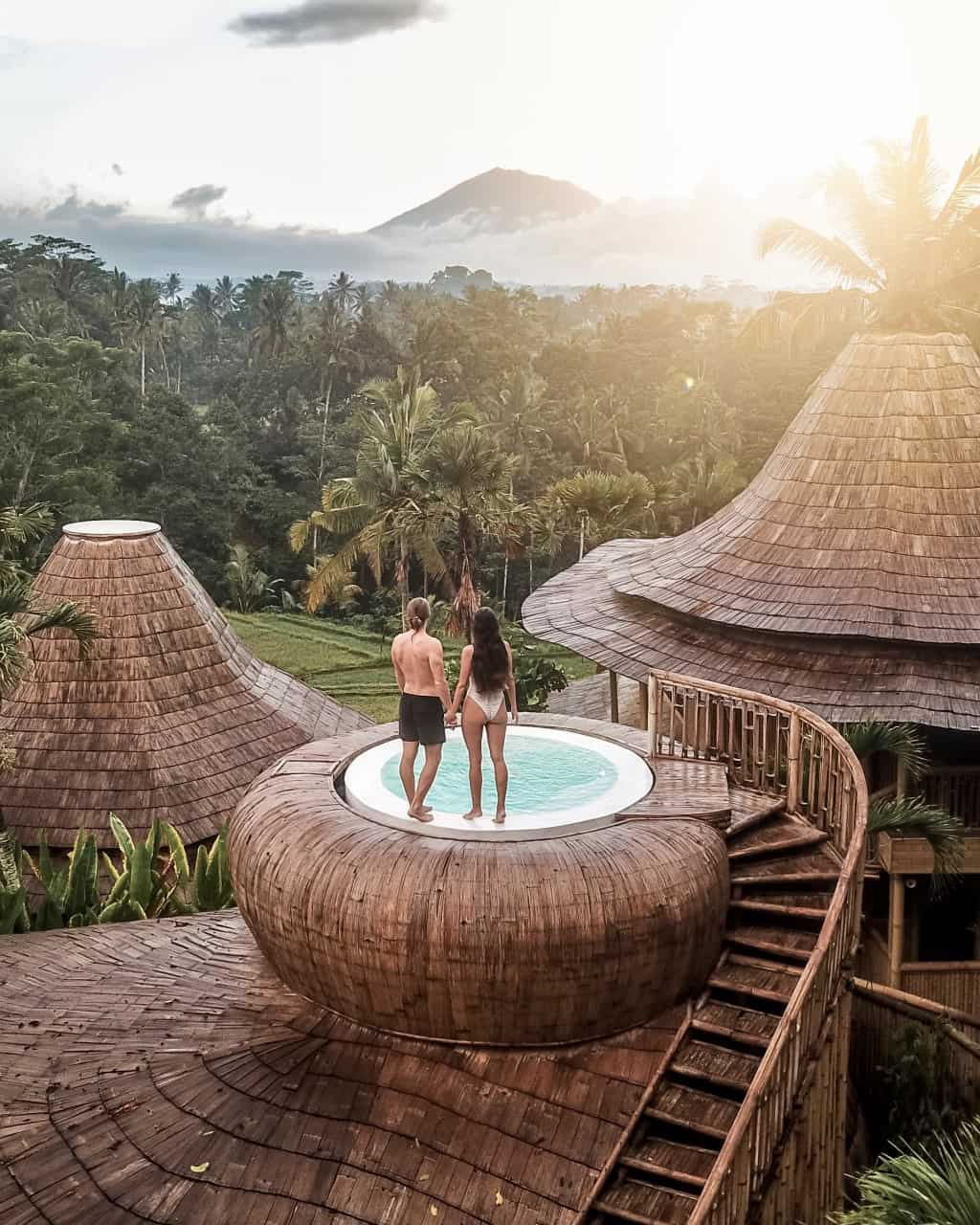
Some accommodations in Ubud are truly special, from luxury jungle resorts with infinity pools overlooking the valley to stunning bamboo houses designed to blend into the surrounding landscape.
During our trips to Ubud over the years, we stayed at different resorts and bamboo houses. Eco Six Bali was one of the most unique places we experienced in Bali. The bamboo villas are beautifully designed and set in the middle of lush jungle, making it a very special place to stay.
Another fantastic option is The Udaya Resort & Spa, which is known for its beautiful villas, unique pool, and famous flower baths. Maya Ubud Resort & Spa is another great choice, especially if you’re looking for a luxury resort with stunning infinity pools overlooking the river valley.
If you’re interested in discovering more incredible accommodations, make sure to check out my guide to the most unique places to stay in Bali, where I share several unusual hotels and villas in Ubud and other parts of the island.
Tip: Many of these unique hotels are very popular and can book out quickly, so it’s a good idea to reserve your stay way in advance, especially during the busy travel months.


Enjoy a Balinese Spa Treatment and Flower Bath
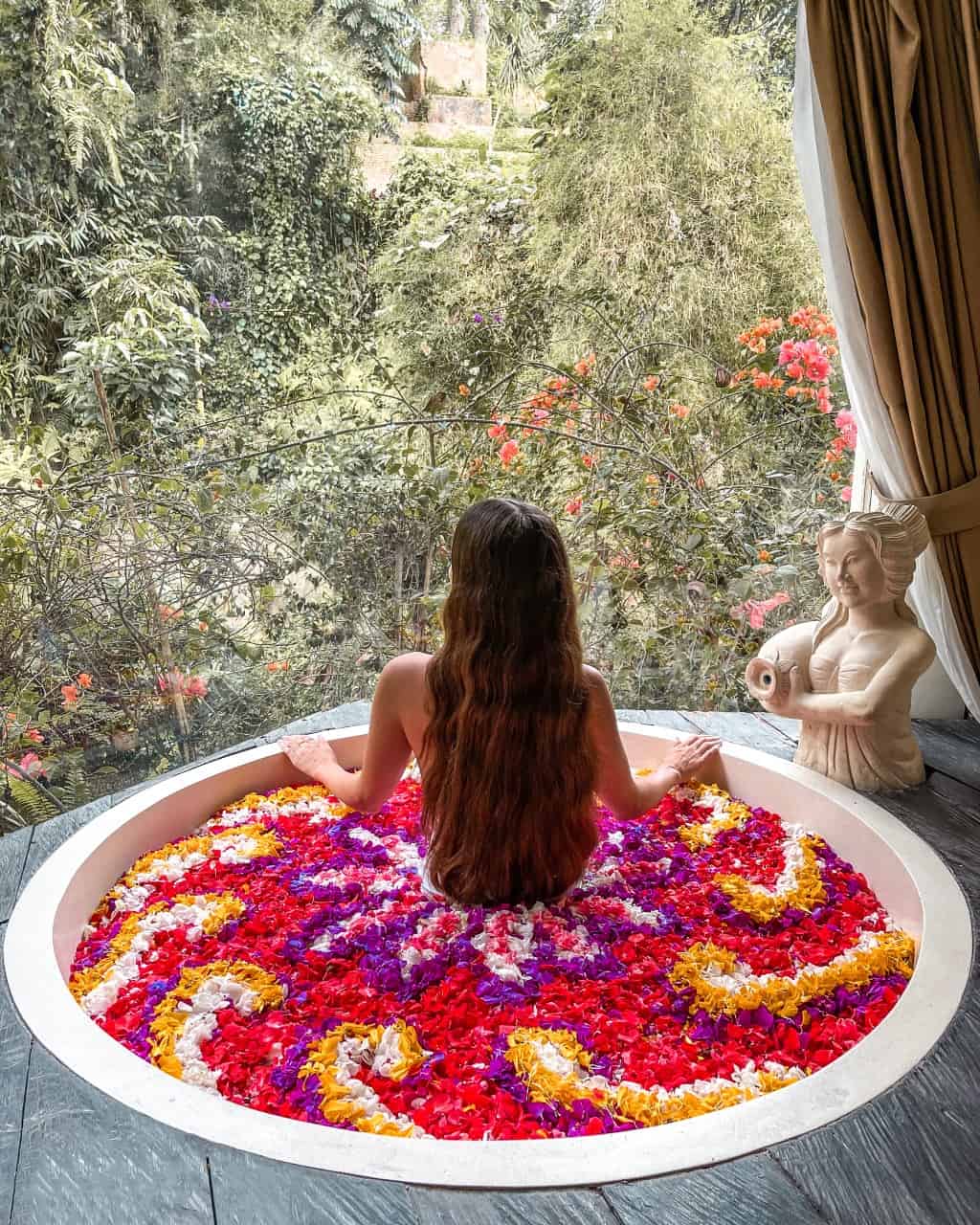
Ubud is one of the best places in Bali to treat yourself to a traditional Balinese spa experience. Surrounded by jungle and rice fields, many spas in the area focus on relaxation and wellness, making it the perfect place to slow down after a day of sightseeing.
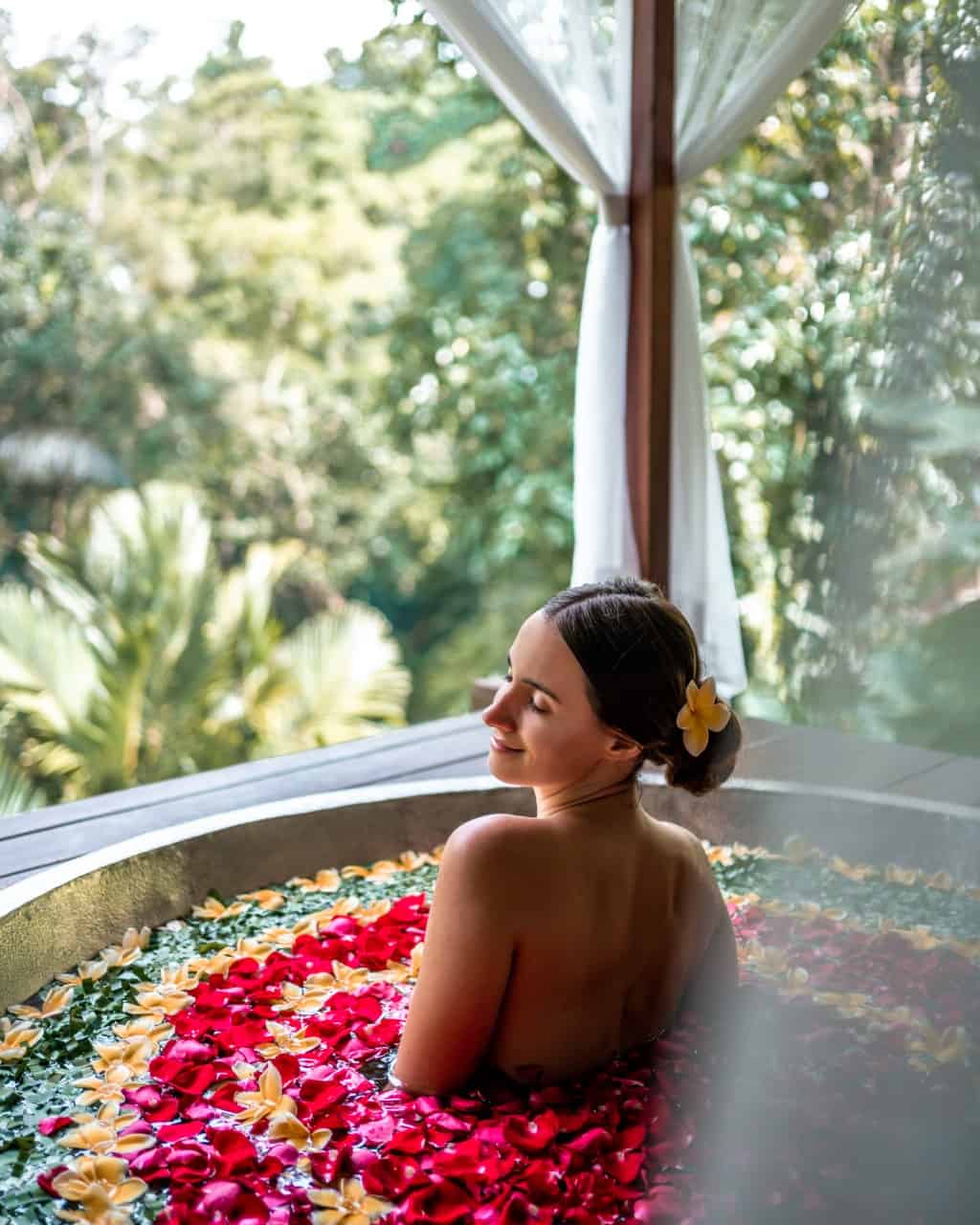
A typical spa treatment often includes a Balinese massage followed by a flower bath, which has become one of the most iconic wellness experiences in Bali. After your massage, you’ll soak in a warm bath filled with colorful flower petals and aromatic oils. It’s not only incredibly relaxing but also a beautiful experience.
Whether you choose a spa in the center of town or a jungle resort outside Ubud, taking time for a Balinese massage and flower bath is one of the most relaxing experiences you can have during your stay. Many spas around Ubud offer these treatments in peaceful garden settings or private spa villas overlooking tropical greenery. Two places we can highly recommend for their spa treatments, especially their flower baths, are The Udaya Resort & Spa and Maya Ubud.
Tips for booking a spa treatment in Ubud:
- Book your spa treatment in advance, especially during high season
- Choose a morning or late afternoon appointment for a quieter experience
- Most resorts allow non-guests to book spa treatments
Have a Floating Breakfast
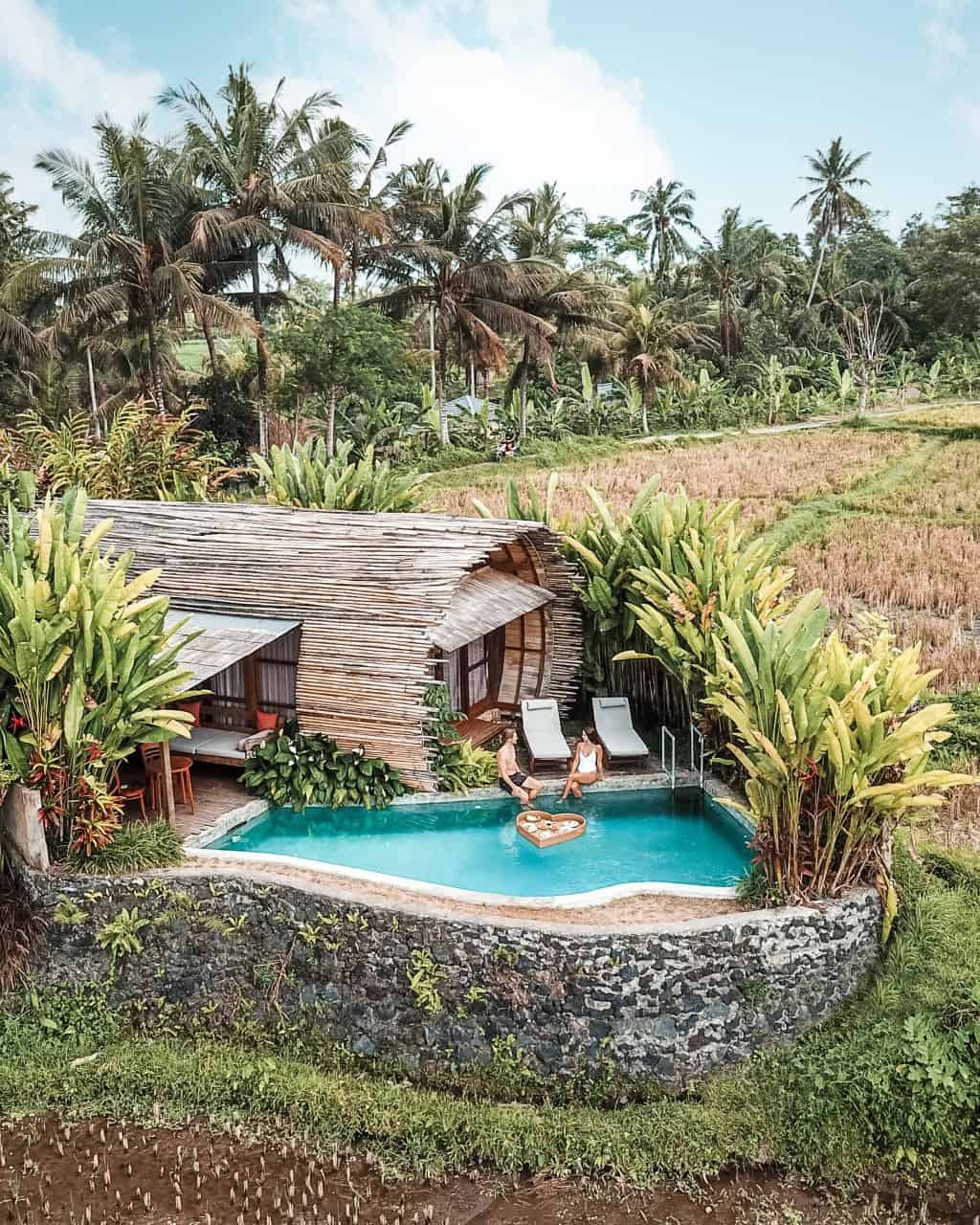
One of the most famous (and most instagrammable) experiences in Bali is having a floating breakfast, and many hotels around Ubud offer this unique treat. Instead of sitting at a restaurant table, your breakfast is served on a large floating tray directly in the hotel pool. The tray is usually filled with a variety of breakfast items such as fresh fruit, pastries, eggs, pancakes, and tropical juices, making it both a delicious and very photogenic start to the day.
Many jungle resorts and boutique hotels in Ubud offer floating breakfasts as an add-on experience, often served in your private villa pool or the resort’s pools overlooking the surrounding jungle or rice fields. During our stays in Ubud, we had floating breakfasts at several resorts, including The Udaya Resort & Spa, Maya Ubud, Blue Karma Dijiwa Ubud, and Beehouse Dijiwa Ubud, all of which have beautiful pool settings that make the experience even more memorable.

Try the Famous Bali Swings
Around Ubud, you’ll find several attractions where you can try the famous Bali jungle swings. These large swings are usually set high above the jungle or rice fields, creating incredible views of the surrounding landscape. We spent half a day visiting one of these swing parks and honestly had so much fun.
Swinging high above the tropical greenery while enjoying the views of Bali’s lush nature was a memorable experience and made for some great holiday photos. In addition to the swings, many of these parks also feature creative photo spots, such as giant bird nests, bamboo platforms, and scenic viewpoints overlooking the valley.
Some places even offer professional photographers to capture your photos and give you the option to rent long flowing dresses, which makes the pictures look even more photogenic. While the swings are definitely designed with photography in mind, they’re still a fun and unique experience to try while visiting Ubud.


— My Travel Photography Gear —
Camera: Sony A7R III
Allrounder Zoom Lens: Sigma 24-70mm F/2.8
Favorite Lens: Sony FE 35mm F/1.8
Telephoto Zoom Lens: Sigma 100-400mm F/5-6.3
Drone: DJI Mini 3 Pro
GoPro: GoPro Hero11 Black
Phone: iPhone 16 Pro Max
Camera Tripod: Rollei Compact Traveler No. 1 Carbon
Phone Tripod: Lammcou Tripod
As an Amazon Associate I earn from qualifying purchases.
Check out my Presets (photo filters) to edit like me!
To read more about my photography gear, click HERE.
Take a Yoga Class in Ubud
Ubud is often considered the spiritual center of Bali, and the town is well known for its many yoga studios and wellness retreats. Because of this, taking a yoga class is one of the most popular activities to try while staying in Ubud.
After a few busy days visiting temples, waterfalls, and rice terraces, joining a yoga class can be a great way to stretch, relax, and slow down for a moment. Even if you’ve never practiced yoga before, Ubud is a wonderful place to try it. Most studios offer drop-in classes, so you can easily join a session without committing to a full retreat. Just make sure to arrive a little early, especially for popular classes. I recommend arriving 20–30 minutes before the class starts to secure a spot.
Tips for taking a yoga class in Ubud:
- Check the studio schedule in advance
- Morning classes are often quieter and cooler
- Arrive 20–30 minutes early for popular classes
- Wear comfortable clothing and bring water
💡 Looking for more spiritual activities? Check out this Eat Pray Love Tour.

Visit the Ubud Art Market
Located right in the center of town, the Ubud Art Market is one of the most popular places to shop for souvenirs and local handicrafts. It’s a lively market where you can wander through narrow aisles filled with colorful stalls and discover a wide variety of Balinese products.
If you visit early in the morning before 8 AM, the market operates as a traditional local market where residents buy fresh fruit, vegetables, and other daily essentials. Later in the day, the market transforms into the well-known Ubud Art Market, focused mainly on handicrafts and souvenirs. You’ll find everything from handmade jewelry and decorative items to paintings, clothing, woven baskets, and the famous Bali bags that have become popular souvenirs from the island.
Because the market is located close to Ubud Palace and Saraswati Temple, it’s easy to combine a visit with exploring the center of Ubud.
Tip: Don’t be afraid to politely negotiate prices and bring cash, as most stalls don’t accept cards.
Take a Traditional Balinese Cooking Class
One of the best ways to experience Balinese culture and cuisine is by joining a traditional cooking class. Instead of simply eating Indonesian dishes at restaurants, you get the chance to learn how to prepare them yourself using fresh local ingredients.
During our stay in Ubud, we joined a half-day cooking class in a local village, where we learned how to prepare eight different Indonesian dishes. The experience started with an introduction to the ingredients and cooking techniques used in Balinese cuisine.
Throughout the class, we not only learned how to cook several traditional dishes but also gained a deeper understanding of Balinese culture and daily life. At the end of the class, we sat down together and enjoyed the dishes we had prepared.
It was such a fun and delicious experience, and one of our favorite activities in Ubud. If you’re interested in trying it yourself, this is the Authentic Cooking Class in a Local Village that we took and can highly recommend.


Eat at Local Warungs
Another great way to experience Balinese food culture in Ubud is by eating at one of the many local warungs. A warung is a small, simple family-run restaurant that serves traditional Indonesian dishes. These places are usually very casual and focus on authentic home-style cooking. You’ll often find classic dishes such as nasi goreng (fried rice), mie goreng (fried noodles), satay, and various rice plates with vegetables, meat, and sambal.
Eating at a warung is not only a delicious experience but also a great way to see how locals eat on a daily basis. You’ll find many warungs throughout Ubud, both in the town center and along the quieter side streets. Restaurants located away from the main tourist streets are often more affordable and feel even more local, making them a great option if you’re looking for an authentic dining experience.
Tips for eating at warungs:
- Try local favorites like nasi goreng or mie goreng
- Look for warungs that are busy with locals
- Bring cash, as smaller restaurants often don’t accept cards

Ubud 5-Day Itinerary
If you’re wondering how to organize all these activities, here’s our suggested 5-day Ubud itinerary that combines nature, culture, and unique experiences.
Day 1: Ubud Town & Culture
- Sacred Monkey Forest
- Saraswati Temple
- Ubud Art Market
- Evening Balinese dance performance
Day 2: Rice Fields & Scenic Walks
- Tegalalang Rice Terraces
- Optional: Bali Swing
- Campuhan Ridge Walk
- Kajeng Rice Fields
- Dinner at a local warung
Day 3: Waterfalls Around Ubud
- Kanto Lampo Waterfall
- Tibumana Waterfall
- Suwat Waterfall
- Tegenungan Waterfall
Day 4: Temples & Balinese Culture
- Tirta Empul Holy Water Temple
- Goa Gajah (Elephant Cave)
- Traditional Balinese cooking class
Day 5: Relaxation & Wellness
- Floating breakfast
- Yoga class
- Balinese spa treatment & flower bath
- Relax at your jungle resort or bamboo house
I hope you enjoyed reading my Ubud travel guide. Ubud ended up being one of our favorite places in Bali. Between the lush rice fields, beautiful temples, jungle waterfalls, and incredible food, there’s always something new to discover here.
Whether you’re exploring cultural sites, relaxing at a jungle resort, or simply enjoying a meal at a local warung, Ubud offers a unique mix of nature, culture, and relaxation. If you’re planning a trip to Bali, spending a few days in Ubud is definitely something I’d highly recommend.

FAQ – Ubud Itinerary
Yes, Ubud is absolutely worth visiting. The area offers a completely different side of Bali compared to the beach destinations. With its rice terraces, temples, waterfalls, and cultural experiences, Ubud is one of the best places to experience Balinese nature and culture.
Ubud is often considered the cultural and spiritual center of Bali. It’s best known for its rice terraces, temples, yoga retreats, and traditional Balinese culture.
Parts of central Ubud are walkable, especially around Ubud Palace, Saraswati Temple, and the Ubud Art Market. However, many attractions such as waterfalls and rice terraces are located outside the town center, so you’ll need a scooter or driver to reach them.
Ubud offers a very different experience compared to Seminyak or Canggu. While those areas are known for beaches, nightlife, and beach clubs, Ubud focuses more on nature, culture, and wellness. My personal favorites are Ubud, Munduk, and Uluwatu.
Ubud can suit a wide range of budgets. You’ll find everything from affordable guesthouses and local warungs to luxury jungle resorts and high-end restaurants. Many activities such as visiting temples, rice fields, and scenic walks are relatively inexpensive, which makes Ubud a great destination for both budget and mid-range travelers.
Yes, Ubud is generally considered very safe for travelers. Like anywhere, it’s important to stay aware of your surroundings and keep an eye on your belongings, especially in busy areas like markets or near the Monkey Forest where monkeys sometimes grab small items.
Planning more adventures in Bali? Check out these helpful travel guides next:
- Perfect 3-Week Bali Itinerary
- Best Things to Do in Munduk in 2 Days
- Ultimate Nusa Islands Itinerary for 4 Days
- Unique Places to Stay in Bali
- The Best Hotel Pools in Bali You Can’t Miss
Like this post? Pin it for later!

