
10 Best German Christmas Markets To Visit in 2026
Germany during Christmas is something truly special: cities and historic towns lit with fairy lights, the scent of mulled wine and roasted almonds in the air, and festive traditions that go back centuries. This guide to the 10 Best Christmas Markets in Germany brings together some of the most atmospheric places we’ve visited, from well-known cities to storybook towns that feel like they’ve stepped out of a snow globe.
As Germans, Christmas markets are part of our culture. We’ve grown up with them, and even now, we never miss a chance to visit. Every year, we explore new markets and return to old favorites, enjoying the best stalls as well as the most festive food and drinks.
In this post, you’ll find the markets we personally experienced (many more than once) and think are most worth your time – with practical tips on when to go, what to eat and drink, and insights on what to expect. If you’re planning a festive Christmas trip to Germany in 2026, this guide will help you make the most of it.
Disclosure: This blog post contains affiliate links. I may receive a small commission for purchases or bookings made through these links, at no extra cost to you. I only recommend products and services that I’ve personally used and genuinely like. By using my links, you help support my blog and allow me to continue creating helpful free travel guides like this one, while probably funding my next cappuccino or gelato along the way. For more info, please read the privacy policy.
Why Visit German Christmas Markets?
Germany isn’t just where Christmas markets started, it’s where they still feel the most authentic. With a tradition dating back hundreds of years to the Middle Ages, these markets have become an essential part of the season, offering a festive experience that’s hard to match anywhere else.
What sets German Christmas markets apart is that each one reflects the character of its setting, whether it’s a medieval square in Rothenburg or a grand boulevard in Berlin. You’ll find handmade crafts sold by local artisans, historic children’s carousels spinning under twinkling lights, and familiar scents of roasted chestnuts and Glühwein drifting through the air.
Some markets go beyond the classic setup with extras like ice skating rinks, Ferris wheels, or even Santa flying overhead in a sleigh. Others invite you to slow down and take in the season’s quieter magic with candlelit nativity scenes, beautiful Christmas trees, and cozy stalls tucked into cobbled alleys. They’re also easy to pair with city highlights and nearby sights, turning your visit into a memorable winter escape, whether it’s exploring Neuschwanstein Castle and Koenigssee near Munich or combining Berlin’s festivities with a trip to Sanssouci.
No matter where you go, German Christmas markets offer something special: a mix of tradition, atmosphere, and festive cheer that keeps drawing us back year after year.

10 Best Christmas Markets in Germany at a Glance
- Berlin Christmas Market
- Cologne Christmas Market
- Dresden Christmas Market
- Frankfurt Christmas Market
- Leipzig Christmas Market
- Munich Christmas Market
- Nuremberg Christmas Market
- Regensburg Christmas Market
- Rothenburg ob der Tauber Christmas Market
- Wernigerode Christmas Market
Below you’ll find everything you need to know about the best Christmas markets in Germany – from opening dates and insider tips to the must-try food and drink specialties, best time to visit, which souvenirs to buy, and how to get around. Whether you’re planning a festive city break or adding a market visit to a longer winter itinerary, this guide will help you make the most of Germany’s holiday season.

10 Best German Christmas Markets 2026 (Including Dates)
Berlin Christmas Market

Dates for 2026: November 23 – December 23, 2026 (the popular ones continue until the end of December or even early January)
Opening hours: Times vary by location, but most markets are open daily from around 11 AM/12 PM to 9/10 PM.
Entry fee: Free for most markets, €2 at Gendarmenmarkt and €5 at the Rotes Rathaus market.
Where to stay: TITANIC Gendarmenmarkt Berlin
🎄 Christmas Markets nearby worth visiting: Potsdam, Dresden, Leipzig
If you’re after sheer variety and a festive atmosphere that spills across an entire city, Berlin is hard to beat during the holiday season. With over 60 Christmas markets spread throughout its neighborhoods, the German capital offers everything from elegant, traditional markets to quirky, themed versions that reflect the city’s creative spirit.
💡 Why not join a Christmas market tour in Berlin? This guided Berlin Christmas Markets Tour takes you to four of the city’s most renowned festive markets.
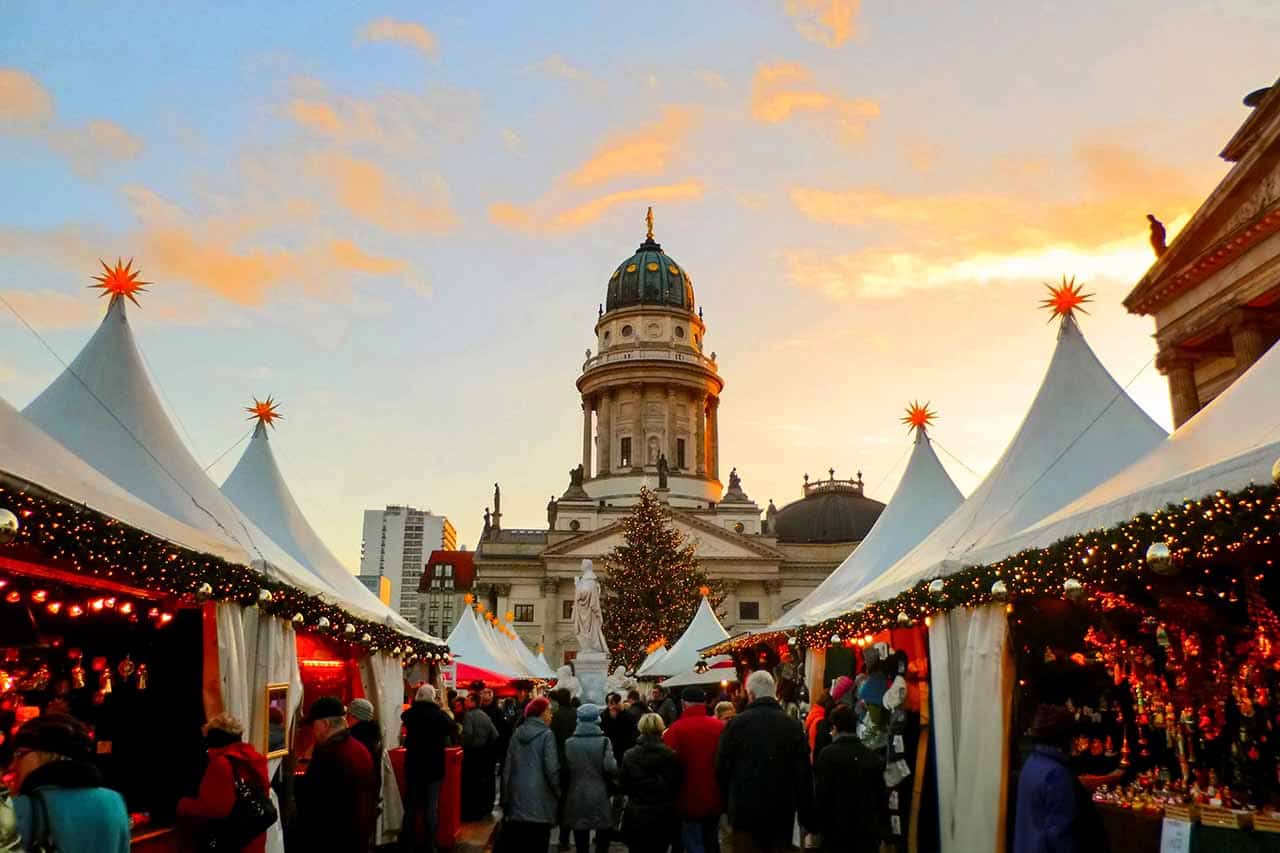
One of the most iconic is the Christmas market at Gendarmenmarkt, set between stunning historic buildings and known for its artisan stalls and cozy yet refined feel. Another standout is the Berliner Weihnachtszeit near the Rotes Rathaus, where you’ll find a nostalgic old Berlin vibe, complete with a Ferris wheel, an open-air ice rink circling the Neptune Fountain, and stalls that evoke the charm of the early 1900s. Potsdamer Platz brings a more playful side to Berlin’s festive season, with its lively Winterwelt that includes a toboggan run right in the heart of the city.
What makes Berlin’s Christmas market scene so special is the contrast. You can sip Glühwein in front of the Charlottenburg Castle in one moment, and stroll through a Scandinavian themed market the next. The city’s size means it never feels overcrowded, and there’s always a new corner to explore.
We especially love how easy it is to combine market-hopping with Berlin’s top sights – from Museum Island to Brandenburg Gate – without going out of your way. The mix of tradition and creativity here makes Berlin one of the most dynamic places to experience the holiday season in Germany.
Cologne Christmas Market

Dates for 2026: November 16 – December 23, 2026
Opening hours: 11 AM – 9 PM (Sun-Wed); 11 AM – 10 PM (Thu-Fri); 10 AM – 10 PM (Sat)
Entry fee: Free
Where to stay: Excelsior Hotel Ernst am Dom
🎄 Christmas Markets nearby worth visiting: Aachen, Dusseldorf, Essen, Dortmund
If you’re looking for a Christmas market experience with atmosphere, history, and festive variety, Cologne has it all. Set beneath the soaring twin towers of its iconic Gothic cathedral, the city’s main Christmas market offers a stunning backdrop that’s hard to beat. A massive decorated Christmas tree lights up the square, while red-roofed stalls stretch out beneath a canopy of twinkling stars. It’s one of the most visited markets in Germany – and for good reason.
But Cologne doesn’t stop at just one. With more than ten markets scattered across the city, there’s something for every taste. From the elegant Angels’ Market at Neumarkt to the riverside Harbour Market by the Chocolate Museum, each brings a unique twist.
💡 This Cologne Christmas Markets Tour takes you to three of Cologne’s best markets and gives you additional information for visiting all the other markets in the city.
Our favorite is Heinzel’s Winter Fairy Tale, a nostalgic setup across the Alter Markt and Heumarkt in the heart of the Old Town. Inspired by the legend of the Heinzelmännchen (Cologne’s helpful house gnomes) it features themed alleys, live craft demonstrations from across Europe, and a spectacular open-air ice skating rink that winds through the square. It’s charming, lively, and full of local character.
Even with the crowds, food and drink stalls are plentiful, so you rarely wait long. Whether you’re visiting one or a few of Cologne’s many markets, strolling through these festive corners of the city is a real highlight of the season.
Dresden Christmas Market

Dates for 2026: November 25 – December 24, 2026 (some re-open after Christmas and run until early January)
Opening hours: 10 AM – 9 PM (Fri-Sat 10 PM)
Entry fee: Free
Where to stay: Star G Hotel Premium Dresden Altmarkt or NH Collection Dresden Altmarkt (both have direct Christmas market views)
🎄 Christmas Markets nearby worth visiting: Leipzig, Zwickau, Annaberg-Buchholz
Dresden’s Christmas markets are some of the most atmospheric in Germany. The city’s festive charm is centered around the Striezelmarkt, Germany’s oldest Christmas market, dating back to 1434. Held on Altmarkt Square, it features over 200 stalls, a towering wooden pyramid from the Ore Mountains, and the city’s signature treat Dresden Stollen. The Saxon traditions and the historic backdrop make it a must-see and our favorite German Christmas market.
💡 Stroll through the cobbled streets of Dresden’s historic center on this small-group walking tour and experience the oldest Christmas market in Germany.
Nearby, the Weihnachtsmarkt an der Frauenkirche winds through Münzgasse with traditional crafts like pottery, lace, and glass art. An eight-meter walk-in pyramid and daily Santa visits make it a favorite for families. Right next to it, the Advent auf dem Neumarkt brings history to life with guild-based artisans – bell makers, chocolatiers, toymakers – all selling their handmade wares in front of the baroque Frauenkirche.
For a unique experience, the Medieval Market in the Stallhof, inside the courtyard of the Royal Palace, recreates the past with open fires, costumed craftsmen, and even hot tubs in giant wooden barrels.
On the Neustadt side of the Elbe, the Augustusmarkt brings an international flair to Dresden’s Christmas scene. Set beneath the Golden Rider statue and stretching along Hauptstraße, its white-and-gold pagodas and glowing blue Christmas tree blend Saxon tradition with global flavors. Here, you’ll find everything from Danish Gløgg and French mustard to Belgian chocolates, Finnish cookies, and Italian Christmas cakes.
Frankfurt Christmas Market

Dates for 2026: November 23 – December 22, 2026
Opening hours: 10 AM – 9 PM (Mo-Sat); 11 AM – 9 PM (Sun)
Entry fee: Free
Where to stay: Steigenberger Icon Frankfurter Hof
🎄 Christmas Markets nearby worth visiting: Heidelberg, Würzburg, Mainz
Set in the heart of Germany’s financial hub, the Frankfurt Christmas Market blends centuries-old tradition with a lively, modern energy. Stretching from the Rossmarkt and Hauptwache to the historic Römerberg and down to the Main River, over 200 beautifully decorated stalls create one long festive route through the city.
What makes it special is the contrast between the old and new – half-timbered facades set against Frankfurt’s sleek skyline. The massive Christmas tree on Römerberg is the glowing centerpiece, surrounded by stalls selling seasonal crafts, gifts, and international specialties. Despite its size, the market feels walkable and welcoming.
Local treats are another highlight. The soft marzipan Bethmännchen and a mug of hot Apfelwein, the region’s beloved spiced apple wine, are a perfect pairing on a cold winter day. For a unique souvenir, pick up a Quetschemännchen – whimsical figures made from dried plums and nuts, traditionally said to bring good luck.
We loved how this market combines high-quality craftsmanship with casual local food and festive flair. If you’re looking for a Christmas market that brings together Old-World charm and big-city buzz, Frankfurt is a great choice.
Leipzig Christmas Market

Dates for 2026: November 24 – December 23, 2026
Opening hours: 11 AM – 9 PM (Sun-Thu); 11 AM – 10 PM (Fri-Sat)
Entry fee: Free
Where to stay: NH Leipzig Zentrum
🎄 Christmas Markets nearby worth visiting: Dresden, Annaberg-Buchholz, Erfurt
In the heart of Saxony, the Leipzig Christmas Market brings an enchanting blend of history, warmth and festive joy. With origins stretching back to the 15th century, this market is among Germany’s oldest and now features around 300 stalls across multiple squares in the old town. That makes Leipzig the biggest Christmas market in Germany based on the number of stalls.
What makes the Leipzig Christmas Market unique is the way it unfolds across the entire city center. It begins on the grand market square (Marktplatz) with its tall, shining tree and the Old Town Hall backdrop, then winds through the nostalgic Salzgäßchen, Naschmarkt and the twinkling Grimmaische Straße before reaching Augustusplatz, which is home to a lively fairground including the Märchenwald with life-sized scenes from Grimm’s fairy tales as well as a Finnish and a cozy South Tyrolean Christmas village.
💡 Why not explore the enchanting Leipzig Christmas Market and discover its festive traditions on this authentic Leipzig Christmas Market Tour?
We loved the variety of what’s on offer on the different markets – high‑quality crafts at the historic Naschmarkt, the festive charm of the Marktplatz, and family‑friendly fun at Augustusplatz with its wheel and winter village. The atmosphere is lively yet relaxed, making it easy to wander, stop for a mug of Glühwein, and browse handmade decorations and sweets. For a Christmas market that combines rich tradition with genuine festive spirit, Leipzig is a wonderful destination.
Munich Christmas Market

Dates for 2026: November 20 – December 24, 2026
Opening hours: 10 AM – 9 PM (Sun 8 PM; some smaller markets may open only in the afternoon)
Entry fee: Free
Where to stay: DO & CO Hotel München
🎄 Christmas Markets nearby worth visiting: Augsburg, Nuremberg, Passau, Regensburg
Munich’s Christmas season is centered around the Christkindlmarkt on Marienplatz, one of Germany’s oldest and most picturesque holiday markets. Set against the backdrop of the neo-Gothic New Town Hall and a towering Christmas tree, it’s a traditional setting filled with handcrafted ornaments, Bavarian treats, and festive music that fills the heart of the city with seasonal charm.
Beyond Marienplatz, Munich impresses with a variety of themed markets across its neighborhoods. The Weihnachtsdorf in the Residenz offers a cozy, fairy-tale atmosphere complete with artisan stalls and a magical forest for kids. Just a short walk away, the Medieval Market at Wittelsbacherplatz transports visitors to another time with costumed vendors, historic craftsmanship, and mugs of spiced mead.
💡 You can explore several markets in Munich’s Old Town on this Munich Christmas Markets Food and Drink Tour.
Meanwhile, the Tollwood Winterfestival on Theresienwiese adds a creative edge with international street food, sustainable gifts, and cultural performances – all with an alternative vibe.
What makes Munich’s Christmas scene special is how easily you can experience different styles in a single trip. From the classic to the creative, each market has its own atmosphere – and with even more local markets throughout the city, there’s always another corner of festive cheer to discover.
Nuremberg Christmas Market

Dates for 2026: November 27 – December 24, 2026
Opening hours: 10 AM – 9 PM (every day); 10 AM – 2 PM (Dec. 24)
Entry fee: Free
Where to stay: Karl August – a Neighborhood Hotel
🎄 Christmas Markets nearby worth visiting: Rothenburg ob der Tauber, Regensburg, Munich
If there’s one Christmas market in Germany that captures enduring tradition, it’s the Nuremberg Christkindlesmarkt. Set in the medieval old‑town square, the market’s 180 red‑roofed wooden booths create a “little town of wood and cloth” that’s both timeless and festive. Nuremberg definitely belongs to the best Christmas markets in Germany.
What makes this market special is its deep roots and rich local character. The name derives from the “Christkind”, a young girl chosen to act as the angel‑like gift‑bringer, who officially opens the market each year from the balcony of the nearby church. Visitors will find iconic regional treats everywhere: the famed Nürnberger Lebkuchen (gingerbread), Nürnberger bratwurst (sausage) grilled over charcoal, and quirky “Zwetschgenmännle” (figures made of dried plums) sold as good‑luck charms.
Across the city, smaller themed areas add depth to the festive experience. At the Feuerzangenbowle village, you’ll find the world’s largest punch bowl. The Children’s Christmas Market is full of family-friendly charm, complete with a mini Ferris wheel, carousel, and hands-on crafts. The Original Regional Market offers high-quality handmade goods from the Franconia region, while the Market of Partner Cities gives the Christkindlesmarkt an international flair.
Don’t miss the giant Advent calendar displayed on the windows of the Pilatushaus, with a new window revealed each evening.
💡 Dive deeper into Nuremberg’s Christmas traditions and discover more insider tips on this Christmas Market History & Culinary Delights Tour.
We particularly loved how, despite its international fame, Nuremberg’s market feels authentic. The setting in the historic centre, framed by Gothic architecture and the famous Frauenkirche, adds a storybook touch to one of Germany’s most enchanting Christmas experiences.
Regensburg Christmas Market


Dates for 2026: November 23 – December 23, 2026
Opening hours: 10 AM – 8 PM (Sun-Wed); 10 AM – 9 PM (Thu-Sat); Market at Katharinenspital opens from 4 PM – 10 PM (Mo-Fri); 2 PM – 9/10 PM (Sat-Sun) and Romantic Christmas market opens from 3 PM – 10 PM (Mo-Thu); 3 PM – 11 PM (Fri); 12 PM – 11 PM (Sat); 12 PM – 10 PM (Sun)
Entry fee: Free except for the Romantic Christmas market which charges €6.50 (Mon), €9.50 (Tue–Fri & Sun), €13.50 (Sat).
Where to stay: Chin-Chin Hotel
🎄 Christmas Markets nearby worth visiting: Rothenburg ob der Tauber, Regensburg, Munich, Passau
In the heart of Bavaria lies the UNESCO‑listed city of Regensburg, and its Christmas markets reflect the city’s medieval charm with festive elegance. The main Christkindlmarkt on Neupfarrplatz boasts origins as far back as the 18th century, set around the Neupfarrkirche and considered one of Germany’s most beautiful Advent markets. The historic cobbled squares and soft glow of the stalls create an atmosphere that feels both genuine and magical.
What makes Regensburg special is the variety and intimacy of its markets, each with a distinct character. The Romantic Christmas Market at Schloss Thurn und Taxis offers a castle‑courtyard setting complete with fire‑lit stalls, gourmet cuisine, and artisan demonstrations.
If you’re looking to shop for handcrafted gifts, the Lucrezia Arts & Crafts Market at Haidplatz and Kohlenmarkt features exquisite design, pottery, and quality goods from local makers. The smaller Advent Market at Katharinenspital, tucked alongside the Danube near the Old Stone Bridge, offers a quieter, cozy vibe with a great city‑scape view and fewer crowds.
Rothenburg ob der Tauber Christmas Market

Dates for 2026: November 20 – December 23, 2026
Opening hours: 11 AM – 7 PM (Mon-Thu); 11 AM – 8 PM (Fri-Sun), closed on Nov. 22
Entry fee: Free
Where to stay: Romantik Hotel Markusturm
🎄 Christmas Markets nearby worth visiting: Nuremberg, Würzburg, Stuttgart
Few places capture the magic of the season like Rothenburg ob der Tauber. Often called one of the prettiest towns in Germany, it becomes even more enchanting during Christmas. With snow-dusted rooftops, cobbled lanes, glowing lanterns, and medieval architecture all around, the setting feels straight out of a fairy tale, making it the perfect backdrop for a traditional German Christmas market.
The Reiterlesmarkt is spread across the Marktplatz, Herrngasse, and Kirchplatz, framed by the town hall and centuries-old towers of St. Jakobi church. With more than 60 charming stalls, the atmosphere is both festive and intimate. A highlight is the appearance of the “Reiterle” – a mythical rider who opens the market, a tradition unique to Rothenburg. There’s also a large Advent calendar in the town hall windows, revealed day by day.
💡 Why not experience the magical town of Rothenburg ob der Tauber and its festive traditions on this authentic Rothenburg ob der Tauber Christmas Market Tour?
We especially enjoyed wandering around at dusk, sipping mulled wine as brass music echoed through the alleys. From regional food to handmade ornaments, everything here feels personal and steeped in history.
Wernigerode Christmas Market

Dates for 2026: November 20 – December 22, 2026
Opening hours: 12 PM – 9 PM (Sun-Thu); 12 PM – 10 PM (Fri-Sat); closed on Nov. 22
Entry fee: Free
Where to stay: Boutique-Hotel Anno 1910
🎄 Christmas Markets nearby worth visiting: Goslar, Leipzig, Hannover
Set in the heart of the Harz region, Wernigerode transforms into a true winter wonderland each year. The Christmas market runs across its historic Marktplatz, Breite Straße, and nearby Nicolaiplatz, surrounded by brightly painted half‑timbered houses and the softly glowing lights of the old town.
More than 60 stalls offer traditional crafts, local treats, and mulled wine specialties, all framed by the historic town hall and festive stage performances with Christmas music. Behind the Rathaus, the Sylvestrikirche becomes a glowing “Lichterkirche,” with illuminated trees and light sculptures of native Harz wildlife. On Nicolaiplatz, the charming Lebkuchenwald invites visitors to wander through and discover gingerbread figures hidden among the Christmas trees.
Wernigerode is a true gem! We loved how the market feels both joyful and relaxed. You’ll hear Christmas songs and festive music in the streets, smell the spice of gingerbread, and enjoy a setting that feels more village charm than big-city bustle.
Best Time to Visit the Christmas Markets in Germany
Most German Christmas markets open in the last third of November, typically between the 20th and 25th, and continue until Christmas Eve. A few stay open for a few extra days, even until New Year, giving travelers a bit more flexibility during the holiday season.
If your schedule allows, aim for a weekday visit in early December. The festive charm is in full swing, but the first rush has subsided and the crowds are thinner than during the busy weekends. Locals often head to their favorite local market after work or meet friends for a Glühwein on Friday and Saturday evenings, making those times the most crowded.
No matter when you go, there’s one moment that stands out: dusk. As the daylight fades and the lights begin to glow, the markets take on a magical feel that’s hard to describe – it’s the best time to soak in the atmosphere, snap a few photos, and enjoy the season at its most enchanting.

How to Get Around in Germany
To make the most of your Christmas market trip through Germany, we recommend renting a car. While Germany’s train network is extensive, winter travel often comes with delays, cancellations, and unexpected maintenance work, especially on long-distance routes. With a rental car, you’ll have more flexibility, avoid the hassle of rigid schedules, and be free to explore at your own pace.
If you’re flying in from abroad, choose the airport closest to the region you want to explore. Berlin, Munich, Frankfurt, Cologne, and Düsseldorf are all major hubs with good access to rental cars and nearby Christmas markets. Picking the right starting point can save you hours of travel across the country.
That said, regional trains are still a solid option for shorter distances, especially between neighboring cities. But if you’re planning to visit multiple markets per day or explore beyond the city centers, a car is by far the most convenient choice. Parking is widely available in all the cities and towns featured in this guide, so you won’t have trouble finding a spot near the festivities.
🚘 MY GO-TO CAR RENTAL COMPANY: DISCOVER CARS
When booking a rental car online, I personally recommend and always use Discover Cars. The platform compares both major international car rental companies and smaller local agencies, which often helps find better deals. Plus, there are no hidden costs and they offer free cancellation if your plans change. I typically opt for full coverage since the rates are very reasonable and it gives extra peace of mind while traveling.
Must-try Food and Drinks at the German Christmas Markets

No visit to a German Christmas market is complete without sampling the festive food and drinks that make these gatherings so memorable. Each town often puts its own spin on the classics, so if you spot something named after the city or region, it’s likely a local specialty worth trying.
Start with a warm cup of Glühwein, the mulled wine infused with cinnamon, cloves, and orange peel. It’s typically red, but many markets also offer white, rosé, or even fruit-infused versions like cherry or blueberry. For something a bit stronger, try Feuerzangenbowle, a theatrical twist on Glühwein where a rum-soaked sugar loaf is set on fire and drips into the wine. Eierpunsch, the German take on eggnog, and spiked versions of hot drinks like Hot Aperol or Hot Gin are popular alternatives. For kids and non-drinkers, Kinderpunsch is a sweet, warming treat.
On the food side, the variety is just as rich. Bratwurst – from the long, smoky Thüringer to the smaller, spiced Nürnberger sausages – are always a hit, served hot off the grill in crusty bread rolls. Gebrannte Mandeln (candied almonds) and heiße Maronen (roasted chestnuts) fill the air with a nostalgic aroma, perfect for snacking as you wander.
Sweets are where the markets truly shine. Lebkuchen, Germany’s iconic gingerbread, ranges from soft, richly spiced rounds to hard, heart-shaped cookies decorated with icing. In Nuremberg, Nürnberger Lebkuchen is so distinct it’s protected by PGI status. Christstollen, especially in Dresden, is a dense fruit loaf dusted with powdered sugar and steeped in centuries of tradition. Another regional favorite is the Schneeball (snowball), a pastry from Rothenburg ob der Tauber that comes in both classic and filled versions.
And if you’re lucky, you’ll find seasonal dishes like Käsespätzle (cheesy egg noodles with fried onions), potato pancakes with apple sauce (Reibekuchen or Kartoffelpuffer), or rich mushroom stews served in bread bowls – all comforting options when the temperatures drop.
Whatever your tastes, the markets are a feast for the senses and the perfect excuse to indulge a little.
You might also be interested in: Best Alsace Christmas Markets to Visit
What Souvenirs to buy at German Christmas Markets
One of the best parts of visiting German Christmas markets is browsing the stalls for souvenirs you won’t find anywhere else. Many of the items on display are handcrafted by local artisans and steeped in tradition, making them perfect keepsakes or thoughtful gifts.
Christmas mugs are a favorite among visitors. Each market typically has its own design – often dated and collectible. They’re a charming, practical reminder of your trip and perfect for your own mulled wine at home.
Among the most iconic souvenirs are traditional wooden crafts from regions like the Ore Mountains. These include Schwibbögen (wooden arches with candles or LED lights), Räuchermännchen (smoking incense figures), and hand-carved nutcracker soldiers. You’ll also find Christmas pyramids, the tiered wooden decorations that spin from candle heat, a festive centerpiece with deep German roots.
If you’re decorating your tree, look out for hand-painted ornaments, delicate glass baubles, and wooden figurines that bring a touch of old-world charm.

Insider Tips for Visiting German Christmas Markets
To make your Christmas market visit smooth and enjoyable, here are a few practical tips based on years of experience exploring markets across Germany.
First, don’t be confused by the names. Whether it’s called a Weihnachtsmarkt, Christkindlmarkt, or Adventsmarkt, they all mean the same thing: a festive gathering full of lights, stalls, and seasonal charm.
Dress for the weather. German winters can be cold and damp, especially in November and December. You’ll be outdoors for long stretches, so warm layers, a winter coat, scarf, gloves, and hat are essentials. Waterproof and comfortable shoes are another must. Expect to do a lot of walking and standing as you explore, eat, and shop.
Bring cash. While more vendors are starting to accept cards, most still prefer cash, and you’ll need euros. Smaller purchases, especially at food and craft stalls, are often cash-only.
Deposit are normal. When ordering a drink like Glühwein, expect to pay a small deposit for the mug, called Pfand. It usually ranges from €1 to €5 and is listed on the menu. You’ll get it back when you return the mug – unless you decide to keep it as a souvenir, in which case the deposit is essentially your purchase price.
Finally, bring a small bag if you plan on shopping. Between the sweets, handmade gifts, and maybe a souvenir mug or two, it’s good to have somewhere to stash your finds while keeping your hands free for snacks and sips.
I hope this guide helps you plan a festive trip through some of Germany’s most atmospheric Christmas markets. Each one has its own character shaped by local traditions, regional specialties, and the warmth of the season. Whether you’re traveling for a weekend escape or weaving a few markets into a longer winter journey, there’s something truly special about this time of year in Germany. The lights, the food, the music, the scent of spices in the air – it all comes together to create an experience that’s as memorable as it is magical.

FAQ – Best Christmas Markets in Germany
There’s no single answer, but Nuremberg, Munich, and Dresden consistently top the list for their festive atmosphere, historical settings, and variety of stalls. Each city has its own unique style, from Munich’s elegant Marienplatz market to Dresden’s centuries-old Striezelmarkt and Nuremberg’s world-famous Christkindlesmarkt.
It depends on what you’re looking for. Cologne’s markets are more traditional and scenic, especially the one beneath the cathedral. Berlin, on the other hand, offers a wider variety, with over 60 different markets ranging from classic to creative. If you’re after festive atmosphere and regional flair, choose Cologne. If you want options and diversity, Berlin wins.
Many visitors consider Rothenburg ob der Tauber’s Reiterlesmarkt the most beautiful. Set in a perfectly preserved medieval town, it looks like a scene from a Christmas storybook. With snow-dusted rooftops, glowing lanterns, and half-timbered houses, the setting is truly magical, and its size makes it feel intimate without losing any festive spirit.
Like this post? Pin it for later!

