What to Wear in Lapland: The Ultimate Packing List
Wondering what to wear in Lapland to stay warm in its freezing winter temperatures? Whether you’re planning a Lapland adventure filled with husky sledding, Northern Lights chasing, or snowmobiling, the right clothing is essential. With temperatures often dropping as low as -30°C, packing the wrong clothes can quickly turn your dream trip into an uncomfortable, shivering experience.
I’ve been there myself, and let me tell you – dressing correctly makes all the difference. On my Lapland trip, I was the only person in my group who never felt cold, even in extreme temperatures. The secret? Layering properly and choosing the right fabrics.
This packing list for Lapland will take the guesswork out of what to bring, helping you stay warm, dry, and comfortable throughout your trip. I’ll guide you through the essential thermal layers, insulated outerwear, and must-have accessories so you can fully enjoy every magical moment in Lapland without worrying about the cold.
Disclosure: This blog post contains affiliate links. I may receive a small commission for purchases made through these links, at no extra cost to you. As an Amazon Associate I earn from qualifying purchases. For more info, please read the Privacy Policy.
What to Wear in Lapland at a Glance
Below, you can find an overview of what to pack for Lapland to stay warm and comfortable in Arctic conditions. This Lapland winter packing list covers all the essentials for braving extreme cold while enjoying Lapland’s incredible outdoor activities. Knowing what to wear in Lapland in winter is key to making the most of your adventure – so let’s make sure you’re fully prepared!
Lapland winter packing list:
|
Category |
Essential Items |
|---|---|
|
Thermal Base Layers |
Thermal underwear (top & bottom), long-sleeved moisture-wicking shirt, wool or synthetic socks (avoid cotton!) |
|
Mid Layers |
Fleece or wool jumper or insulated mid-layer jacket |
|
Outer Layers |
Insulated waterproof jacket, snow-proof trousers or ski pants |
|
Footwear |
Insulated waterproof snow boots with good grip, extra wool socks |
|
Hand & Head Protection |
Warm mittens (better than gloves for extreme cold), thin thermal gloves for layering, wool or fleece hat, ear muffs, scarf, balaclava |
|
Accessories and Extras |
Heat pads for hands and feet, small backpack, water bottle, moisturizer & lip balm, sunglasses (for bright snow glare) |
|
Tech & Gadgets |
Camera with extra batteries (the cold drains them fast!), tripod (for capturing the Northern Lights), GoPro, portable charger, rechargeable hand warmer, flashlight |
|
Other Essentials |
Swimwear (for the sauna), dinner clothes (for restaurants/lodges) |
In the following, you can find our detailed Lapland packing list including more helpful tips for your Lapland adventure.

Complete Lapland Packing List


Thermal Base Layers
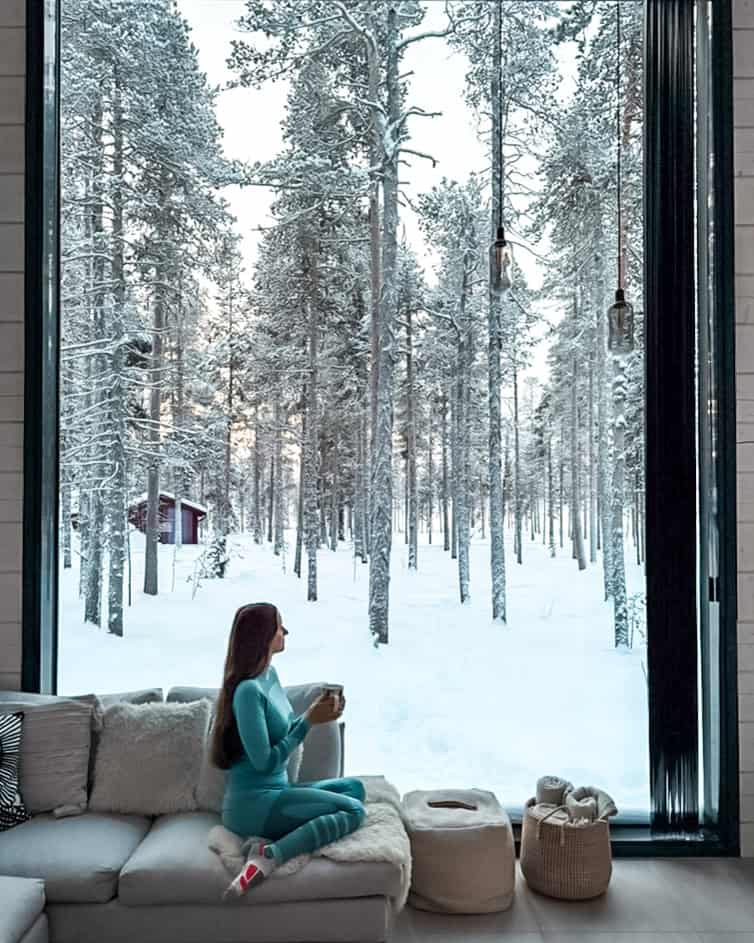
When it comes to your warm winter clothing list, thermal base layers are the foundation of staying warm in Lapland’s extreme cold. These layers are designed to trap body heat while wicking away moisture, keeping you dry and comfortable even in freezing temperatures.
For the best insulation, choose merino wool or synthetic thermal fabrics – both are excellent at regulating body temperature. Your thermal clothing for Lapland should include:
- Thermal underwear (top & bottom): Long-sleeved thermals and thermal leggings or trousers.
- Additional moisture-wicking shirt: If you get cold easily (like I do), adding an extra base layer on top can make all the difference. I wore an additional fleece-lined thermal shirt every day in Lapland and never felt cold, even at -30°C.
- Wool or synthetic socks (no cotton!): I packed a set of thermal synthetic socks with fleece lining and was amazed at how well they kept my feet warm and dry.


A well-chosen thermal base layer will help you enjoy your Lapland adventure comfortably, whether you’re husky sledding, snowmobiling, or simply exploring the snowy landscapes. It’s definitely worth investing in high quality base layers made from merino wool.
Mid Layers
Mid layers are crucial for insulation in Lapland’s extreme temperatures, as they help to trap heat close to your body while allowing moisture to escape. These layers provide an extra barrier between the cold and your thermal base layers, ensuring you stay warm without feeling too bulky.
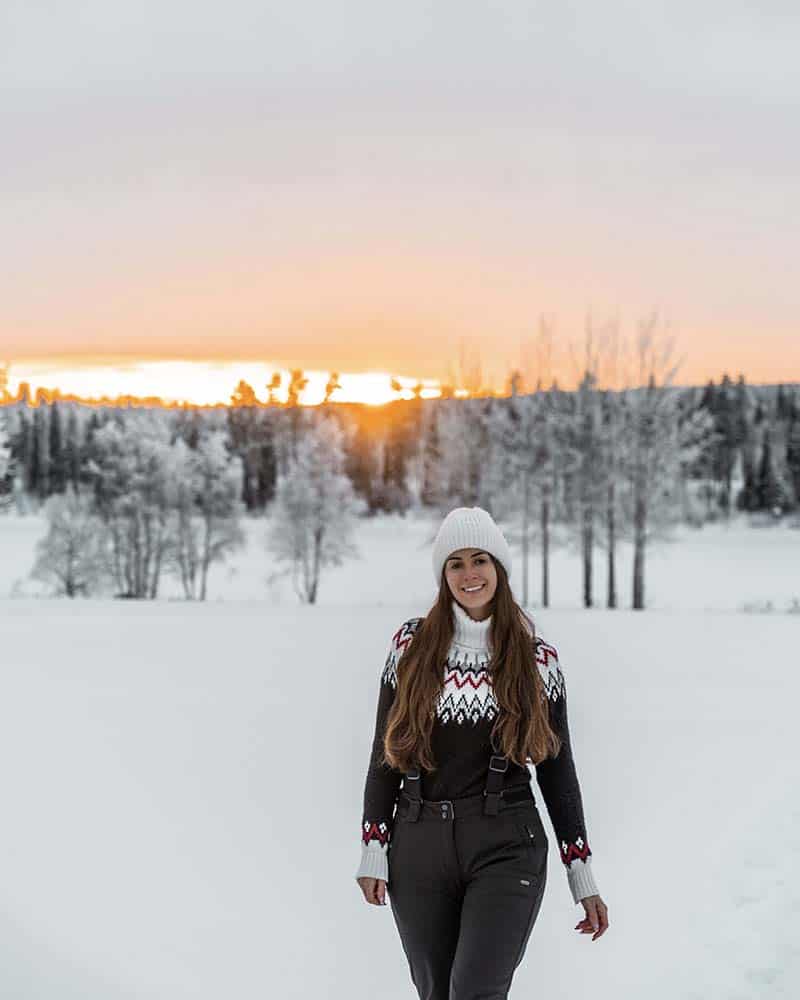
The best fabrics for mid-layers are fleece or wool, as they are both lightweight yet highly effective at retaining heat. For the upper body, a thick fleece jumper or mid-layer fleece jacket is ideal. I personally opted for a cozy woolen jumper, with Nordic motifs and Christmas designs (perfect for Santa Claus Village!). Not only did it keep me warm, but it also added a bit of festive flair to my outfit. Baggy jumpers work best, as they allow for extra room, creating a “blanket” of hot air around your body.
For the bottom half, as a woman, I find that my thighs and butt get cold quickly in freezing temperatures. If temperatures drop below -10°C, layering fleece-lined pants or joggers over your thermal leggings will add extra warmth, especially in those areas that tend to get colder. Just make sure to avoid cotton, as it traps moisture and can leave you feeling chilled.


Mid layers are also perfect for transitioning indoors, so you can stay stylish and warm during dinners or cozy nights in!

Outer Layers
When braving the extreme Lapland winter weather, your outer layers are essential for shielding you from snow, wind, and freezing temperatures. These layers are your primary defense, keeping the cold out while allowing your body to stay warm and dry.
In Lapland, wind chill can make the temperatures feel even colder, so having windproof and waterproof outer layers is critical. A ski jacket or waterproof winter jacket is a must-have. Make sure the jacket is long enough (extra insulation for your core) and protects your lower back from snow and cold winds. Additionally, it should be spacious enough to comfortably fit your base and mid layers underneath. Look for jackets with built-in insulation to keep you warm without compromising mobility.
For the lower half, insulated ski pants or trousers are perfect for protecting your legs from snow and wind. Choose pants with waterproof properties to keep you dry, especially during outdoor activities.


You might also be interested in: The Perfect Lapland Itinerary for First-Time Visitors
Essential Footwear
Your footwear is just as important as any other layer of clothing! Waterproof, insulated snow boots are best for keeping your feet dry and warm in freezing temperatures, especially when you’re walking through deep snow or icy surfaces.
Look for boots with thick soles to provide excellent grip on icy surfaces, preventing slips while you explore. Snow boots should also be waterproof and feature a thermal layer to protect your toes from the extreme cold. It’s a good idea to choose boots that are at least one shoe size larger than your regular size. This extra room allows for 1-2 pairs of wool socks and provides space for the warm air layer that helps keep your feet cozy. Be sure that you can still wiggle your toes – this is key for maintaining circulation and preventing frostbite.
Personally, I added foot warmers (heat pads) to my fleece liner socks, and topped them with the thick wool socks my grandma knit. This combination was incredibly effective in keeping my feet toasty even in temperatures as low as -30°C.


Hand Protection: Gloves & Mittens
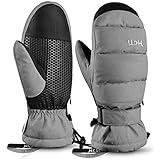
Keeping your hands warm is crucial, as they (along with your feet) are often the first parts of your body to get cold. That’s why it’s essential to choose the best gloves for Lapland to keep your hands comfortable during your adventure:
Mittens are generally warmer than gloves because they have less surface area for heat to escape and allow your fingers to stay close together, sharing warmth, which helps retain heat. Thermal mittens are perfect for extreme cold, but to maximize warmth and comfort, layering is key.
Start with thin thermal gloves as a base layer – they help improve insulation by absorbing sweat and adding an extra layer of warmth beneath your mittens. I personally added heat pads to my liner gloves for extra warmth, especially because I tend to have cold hands.
The heat pads were a lifesaver, keeping my hands warm even in sub-zero temperatures. This also allowed me to occasionally remove my mittens to take photos with my phone and camera without freezing my fingers off, as my thin thermal gloves had a touchscreen-friendly surface.


Head & Neck Protection
Keeping your head and neck warm is essential for heat retention in Lapland’s freezing temperatures. Your head is one of the best areas for retaining heat, so wearing the right protection is crucial to staying warm and comfortable.
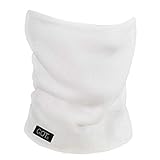
A warm hat is a must – preferably made from wool or fleece, as these materials provide excellent insulation while remaining breathable. Choose a hat that covers your ears properly to prevent heat loss. On warmer winter days, you can opt for cute ear muffs to keep your ears cozy without overheating.
For your neck and face, it’s important to protect against wind chill and the risk of frostbite. A scarf, balaclava, or buff is perfect for shielding your skin from icy winds. I personally found that a balaclava or fleece-lined buff was ideal for keeping my face warm while still allowing me to breathe comfortably in extreme cold.



Accessories and Extras
When packing for Lapland, don’t forget the special extras that will keep you comfortable during your Arctic adventure. These small but essential items can make all the difference in extreme cold.
A small backpack is perfect for carrying essentials on excursions, like extra layers, snacks, or your camera. Speaking of essentials, I can’t emphasize enough how much I love my hand and foot warmers – I’m obsessed with them!
Lapland’s air is incredibly dry, so a good moisturizer and lip balm are a must to prevent dry, cracked skin. Staying hydrated is also key, so bring a reusable water bottle to make sure you’re drinking enough fluids throughout the day.


For those sunny days in the snow, sunglasses will protect your eyes from the bright glare. And don’t forget to pack swimwear – whether you’re enjoying a relaxing sauna or feeling adventurous enough for an ice swim, you’ll be glad you brought it along!

Tech & Gadgets
Bringing the right tech and gadgets to Lapland will help you capture unforgettable moments and stay prepared in the extreme cold. Since cold temperatures drain batteries quickly, it’s important to come prepared with backups and power sources.
A camera with extra batteries is a must, especially if you plan on photographing the stunning Northern Lights or the snow-covered landscapes. For the best aurora shots, a camera tripod is essential – it helps stabilize long-exposure photos, allowing you to capture the magical green lights dancing across the sky.
If you’re planning on action-packed adventures like husky sledding or snowmobiling, a GoPro is perfect for filming without worrying about bulky gear.
To keep your devices powered in the freezing temperatures, pack a portable charger. Phones and other electronics lose battery life much faster in subzero weather, so having a power bank ensures you can keep taking unlimited photos and videos of your Lapland memories.
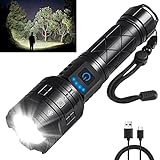
Other essentials include a rechargeable pocket hand warmer for extra warmth and a headlamp or flashlight, which are especially useful if you’re staying in a wilderness cabin or heading out on evening adventures.




What Not to Wear in Lapland
While packing for your Lapland adventure, it’s just as important to know what not to wear as it is to know what to bring. Some materials and clothing items can make your experience uncomfortable or even dangerously cold.
First and foremost, avoid cotton (!). I know I’ve mentioned it a couple of times, but I cannot emphasize it enough – cotton is one of the worst materials for cold weather. It absorbs moisture and stays wet, which means it won’t keep you warm if you sweat or get snow on you. Instead, stick to wool, fleece, or synthetic fabrics that provide insulation while wicking away moisture.
Another big no-no is jeans. Denim offers no insulation and, if it gets wet, it stays wet for a long time making it a terrible choice for Arctic conditions. Instead, opt for thermal leggings or insulated trousers designed for extreme cold.
Finally, avoid fashion boots or regular sneakers. They won’t provide the warmth or grip you need. Stick to proper waterproof snow boots to keep your feet warm and dry.
When it comes to dressing for the Arctic cold, the key takeaway is simple: layers, layers, and more layers! Choosing the right fabrics (wool, fleece, and synthetics) and layering them properly will make all the difference in keeping you warm, dry, and comfortable during your trip. By following this packing list for your Lapland holiday, you’ll be fully prepared to enjoy every moment, from chasing the Northern Lights to dog sledding through snowy forests.
Investing in high-quality winter gear is well worth it, especially if you plan to visit other cold destinations in the future. However, if you don’t want to buy everything, renting some gear in Lapland is a great option. Many local tour operators offer rental services for items like snowsuits and boots, so you can stay warm without breaking the bank.
Now that you know exactly what to pack for Lapland, it’s time to start planning your trip! Be sure to check out my Lapland itinerary for the best activities, must-see spots, and insider tips to make the most of your Arctic adventure. Stay warm, dress smart, and enjoy every magical moment!

FAQ – Lapland Packing List
Restaurants in Lapland are generally casual, even in higher-end places. You can wear a warm jumper, thermal leggings or trousers, and winter boots for a cozy yet presentable look. After a day in heavy snow gear, it’s nice to change into something more comfortable.
Since you’ll be stepping into freezing temperatures upon arrival, it’s best to layer up for the flight. You can wear comfortable leggings or trousers, a jumper, and your winter boots during the flight and keep your jacket, hat, and gloves handy so you can put them on immediately when you land.
Yes! Many tour operators and rental shops in Lapland offer snowsuits, boots, and gloves for rent. This is a great option if you don’t want to invest in expensive winter gear or if you’re traveling light.
Check out my other Lapland travel guides below for more Lapland tips!
Like this post? Pin it for later!